

Feb . 11, 2026 00:01 Back to list
hdpe pipe connectors factories Performance Analysis

Introduction
High-Density Polyethylene (HDPE) pipe connectors are critical components in fluid and gas transmission systems, representing a significant segment of the industrial piping infrastructure. These connectors, utilized extensively across municipal water, industrial processing, oil and gas, and agricultural sectors, facilitate the joining of HDPE pipes, ensuring leak-proof and durable connections. Their technical position within the industry chain is pivotal, bridging the gap between pipe extrusion and system implementation. Core performance characteristics center on maintaining pressure integrity, chemical resistance, and long-term reliability under diverse operational conditions. The escalating demand for robust, corrosion-resistant, and cost-effective piping solutions drives continuous innovation in HDPE connector design, manufacturing processes, and material formulations. A core pain point in the industry is ensuring consistent dimensional accuracy and weldability across different manufacturing facilities, particularly given the varied HDPE resin grades utilized. Another key challenge is addressing the long-term creep resistance of connectors under sustained mechanical stress.
Material Science & Manufacturing
HDPE pipe connectors are predominantly manufactured from high-density polyethylene resins, specifically those conforming to PE100 or PE80 standards. The raw material’s properties dictate the connector's overall performance. HDPE exhibits excellent chemical inertness, high tensile strength-to-density ratio, and good impact resistance. Critical material properties include molecular weight distribution (MWD), melt flow index (MFI), and density. A narrower MWD generally translates to improved creep resistance. Manufacturing processes vary depending on connector type, including injection molding, compression molding, and extrusion. Injection molding is prevalent for producing intricate connector designs, while extrusion is common for producing larger diameter fittings. Key parameters in injection molding include melt temperature (typically 200-240°C), mold temperature (30-50°C), and injection pressure (60-100 MPa). Precise control of these parameters is crucial to avoid warping, shrinkage, and internal stresses. For electrofusion connectors, the embedded heating coils are meticulously positioned during the molding process. Welding processes, like butt fusion and electrofusion, are vital for creating the final joint. Butt fusion requires precise temperature control (typically 120-140°C) and pressure application to ensure homogenous material blending. Electrofusion relies on a controlled electrical current to melt the connector and pipe interface. Post-molding annealing is sometimes employed to relieve residual stresses and improve long-term dimensional stability.
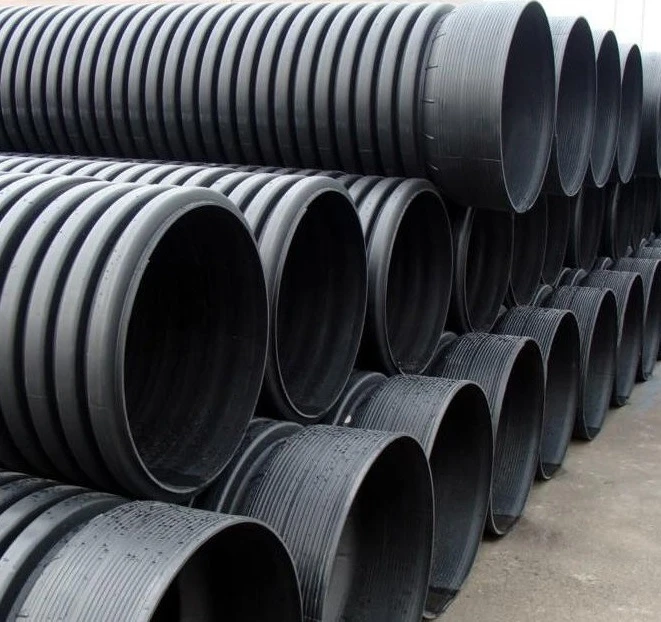
Performance & Engineering
The performance of HDPE pipe connectors is governed by several engineering principles. Stress analysis, particularly finite element analysis (FEA), is used to optimize connector geometry and predict stress distribution under internal pressure and external loads. Burst pressure testing, conducted according to ASTM D1597, validates the connector’s ability to withstand high internal pressures. Long-term hydrostatic strength (LTHS) is assessed according to ISO 1167, determining the connector’s resistance to creep failure over extended periods. Environmental resistance is a critical consideration; HDPE connectors must maintain their integrity when exposed to UV radiation, temperature fluctuations, and soil chemicals. UV stabilizers are often incorporated into the HDPE formulation to mitigate degradation from sunlight. Connector designs must also account for thermal expansion and contraction of the HDPE pipe, incorporating features that allow for some degree of movement without compromising the joint’s integrity. Compliance with industry standards such as ANSI/AWWA standards for potable water systems is paramount. The selection of the appropriate connector type (e.g., socket fusion, butt fusion, mechanical fittings) depends on pipe diameter, operating pressure, fluid type, and installation environment. Creep resistance is particularly important in applications involving sustained pressure, such as gravity sewer systems. Joint deflection angles are also specified to accommodate ground settlement or seismic activity.
Technical Specifications
| Parameter | Unit | PE100 Connector | PE80 Connector |
|---|---|---|---|
| Material Density | g/cm³ | 0.950 – 0.965 | 0.941 – 0.955 |
| Hydrostatic Design Stress (HDS) | MPa | 10.0 | 6.3 |
| Burst Pressure | MPa | ≥ 1.5 x HDS | ≥ 1.5 x HDS |
| Operating Temperature Range | °C | -40 to +60 | -40 to +40 |
| Melt Flow Index (MFI) | g/10min | 0.3 – 1.0 | 0.5 – 2.0 |
| Long-Term Hydrostatic Strength (LTHS) – 50 Years | % of HDS | ≥ 75% | ≥ 63% |
Failure Mode & Maintenance
HDPE pipe connector failures typically fall into several categories. Fatigue cracking can occur under cyclic pressure loading, especially at stress concentration points in the connector geometry. Creep failure, a time-dependent deformation, is a concern in long-term, high-stress applications. Environmental stress cracking (ESC) can result from exposure to aggressive chemicals or sustained tensile stress. Oxidation, particularly at elevated temperatures, can degrade the HDPE material, reducing its strength and ductility. Delamination can occur in electrofusion connectors if the heating coil fails to uniformly melt the interface. Proper installation is crucial to prevent many failures. This includes ensuring clean pipe ends, correct alignment, and adherence to recommended welding parameters. Regular visual inspections should be conducted to identify any signs of cracking, deformation, or leakage. Periodic hydrostatic testing can verify the integrity of the pipeline system. If a leak is detected, the affected connector should be replaced immediately. Preventative maintenance programs should include monitoring of operating pressures and temperatures, as well as regular cleaning to remove any corrosive substances. For mechanical fittings, bolt tension should be periodically checked and adjusted as needed. Proper storage of connectors is also important, protecting them from UV exposure and extreme temperatures.
Industry FAQ
Q: What is the primary difference between PE100 and PE80 connectors in terms of long-term performance?
A: PE100 connectors exhibit significantly higher hydrostatic design stress (HDS) and long-term hydrostatic strength (LTHS) compared to PE80 connectors. This means PE100 connectors can withstand higher sustained pressures over a longer service life, making them preferred for critical applications and larger diameter pipelines.
Q: What causes environmental stress cracking (ESC) in HDPE connectors and how can it be prevented?
A: ESC is caused by the combined effect of tensile stress and exposure to certain chemicals, such as strong acids or detergents. Prevention involves selecting HDPE formulations with enhanced ESC resistance, avoiding contact with incompatible chemicals, and minimizing sustained tensile stresses during installation and operation.
Q: How important is proper surface preparation before welding HDPE connectors?
A: Proper surface preparation is critical. Pipe ends and connector interiors must be clean, dry, and free of contaminants such as dirt, oil, or moisture. Any contamination can compromise the weld quality, leading to premature failure. Typically, a cleaning solvent recommended by the HDPE resin manufacturer is used.
Q: What are the key considerations when selecting a connector for a specific application?
A: Key considerations include operating pressure, fluid type, pipe diameter, temperature range, and soil conditions. The connector material (PE100 vs. PE80) should be chosen based on the required HDS and LTHS. The connector type (e.g., electrofusion, butt fusion, mechanical) should be selected based on the application’s specific requirements and installation constraints.
Q: What is the recommended procedure for inspecting HDPE pipe connector welds?
A: Visual inspection is the first step, looking for any signs of incomplete fusion, burn marks, or surface defects. Non-destructive testing (NDT) methods, such as ultrasonic testing, can be used to detect internal flaws. Destructive testing, involving sample cutting and mechanical testing, is typically performed for quality control purposes during manufacturing.
Conclusion
HDPE pipe connectors represent a vital component in modern piping infrastructure, offering a compelling combination of durability, chemical resistance, and cost-effectiveness. Their performance is intimately linked to material science, precise manufacturing processes, and adherence to rigorous engineering principles. Understanding the material properties of HDPE, the nuances of welding techniques, and the potential failure modes is crucial for ensuring long-term system reliability.
Future advancements in HDPE connector technology will likely focus on developing enhanced creep resistance materials, improving weldability for a wider range of HDPE grades, and integrating smart sensor technologies for real-time monitoring of pipeline integrity. Continued innovation in connector design and manufacturing processes will be essential to meet the evolving demands of industries reliant on robust and sustainable piping solutions.
-
DN25 HDPE Compression Fitting-HORON INTERNATIONAL|Reliable Irrigation Solutions
NewsFeb.11,2026
-
hdpe coupling joint product Manufacturing Analysis
News2026-11-18
-
ppr pipe heating time products Performance Analysis
News2026-11-16
-
hdpe pipe sizes factory Performance Analysis
News2026-11-09
-
HDPE Pipe Sizes Service Performance Analysis
News2026-10-26
-
wholesale 15mm ppr pipe Material Science and Performance Analysis
News2026-10-20
-
wholesale pvc pipe price per foot Technical Analysis
News2026-09-21
-
wholesale long pvc pipe Technical Analysis and Manufacturing Specifications
News2026-09-15
-
wholesale plumbing kitchen sink water lines Material Performance
News2026-09-15
-
wholesale hdpe drip irrigation Material Science
News2026-09-15
-
wholesale hot water ppr pipe Performance Analysis
News2026-09-15
-
wholesale ppr plumbing Performance Analysis
News2026-09-15
-
wholesale ppr pipe supplier Performance Analysis
News2026-09-13
-
wholesale 50mm ppr pipe Performance Analysis
News2026-09-13
-
wholesale hdpe drip pipe Performance Analysis
News2026-09-13
-
wholesale hdpe pipe 63mm price Manufacturing Specification and Performance Analysis
News2026-09-13