

Feb . 11, 2026 00:01 Back to list
hdpe corrugated pipe sizes manufacturer Manufacturing Specifications and Performance Analysis
Introduction
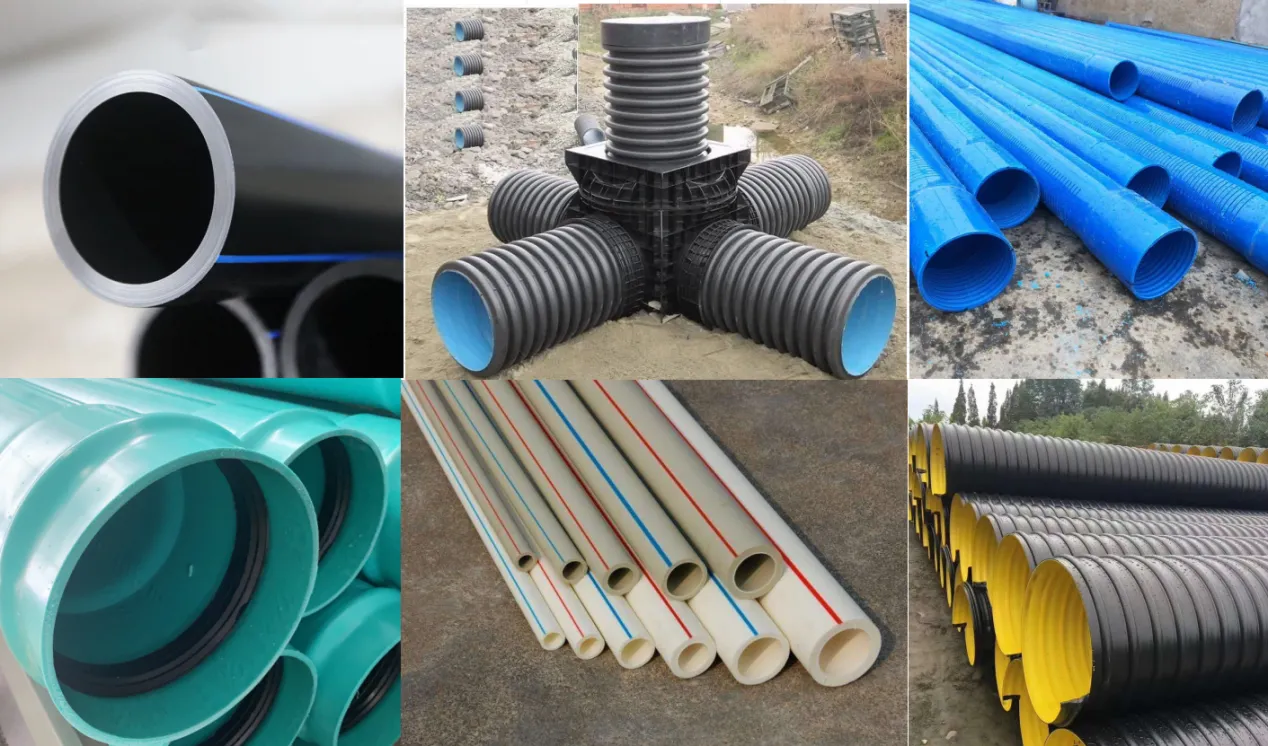
High-Density Polyethylene (HDPE) corrugated pipe represents a significant advancement in subsurface drainage and conduit applications. Positioned within the broader infrastructure supply chain, it serves as a critical component in stormwater management, agricultural drainage, and protective conduit for utilities like fiber optic cables and electrical wiring. Unlike traditional materials such as concrete, steel, or PVC, HDPE corrugated pipe offers a unique combination of flexibility, durability, and cost-effectiveness. Its corrugated structure provides substantial ring stiffness for load bearing capabilities, while the HDPE material itself exhibits high resistance to chemical degradation and environmental stress cracking. Core performance characteristics include hydraulic capacity dictated by pipe diameter and ring stiffness, load-bearing capacity determined by buried depth and soil conditions, and long-term durability in harsh subsurface environments. A key industry pain point centers on ensuring consistent quality across varying manufacturing processes and meeting increasingly stringent regulatory demands for material performance and lifespan.
Material Science & Manufacturing
HDPE, the base material, is a thermoplastic polymer produced from the polymerization of ethylene. Its key physical properties relevant to corrugated pipe include a density ranging from 0.941 to 0.965 g/cm³, a tensile strength typically between 20-30 MPa, and a relatively low coefficient of friction. Chemical compatibility is excellent with most soils and common industrial chemicals, though prolonged exposure to strong oxidizing agents should be avoided. Manufacturing of HDPE corrugated pipe typically involves extrusion and corrugation. The HDPE resin is melted and extruded through a circular die, forming a continuous pipe profile. This profile then passes through a corrugating unit consisting of multiple sets of rollers that impart the characteristic corrugated shape. Critical parameters include extrusion temperature (typically 180-210°C), corrugation speed, and cooling rate. Precise control of these parameters is essential to maintain dimensional accuracy and prevent warping. Resin molecular weight distribution significantly impacts the pipe's long-term creep resistance. Post-extrusion, the pipe may undergo quality control checks including hydrostatic pressure testing and dimensional inspection to ensure adherence to industry standards. The polyethylene grade used impacts the pipe's PE rating (e.g., PE32, PE40, PE63) which denotes its minimum required strength.
Performance & Engineering
The performance of HDPE corrugated pipe is heavily influenced by its structural integrity under load. Force analysis centers around hoop stress (stress around the circumference of the pipe) and longitudinal stress (stress along the length of the pipe). These stresses are induced by external loads such as soil overburden, traffic loads, and hydrostatic pressure. Ring stiffness, a measure of the pipe's resistance to flattening, is a critical engineering parameter. It is calculated based on the pipe diameter, wall thickness, and the corrugation profile. Environmental resistance is another key aspect. HDPE exhibits excellent resistance to UV degradation, however, prolonged exposure should be minimized through the use of UV stabilizers in the resin formulation. Temperature fluctuations can cause expansion and contraction, requiring appropriate joint design to accommodate these movements. Compliance requirements are governed by standards such as ASTM F2306 (Standard Specification for Corrugated Polyethylene (PE) Pipe for Storm Drains and Drainage Fields) and regional regulations regarding stormwater management. Proper installation techniques, including adequate bedding and backfill compaction, are crucial to ensure optimal performance and prevent premature failure.
Technical Specifications
| Nominal Pipe Diameter (inches) | Ring Stiffness (psi) | Minimum Tensile Strength (MPa) | Maximum Allowable Burial Depth (feet) |
|---|---|---|---|
| 12 | 34 | 22 | 8 |
| 15 | 48 | 25 | 10 |
| 18 | 60 | 28 | 12 |
| 24 | 72 | 30 | 15 |
| 30 | 85 | 32 | 18 |
| 36 | 98 | 35 | 20 |
Failure Mode & Maintenance
Failure modes in HDPE corrugated pipe typically stem from excessive loading, improper installation, or material degradation. Fatigue cracking can occur due to repeated loading and unloading, particularly in areas with high stress concentration such as joints or corrugation peaks. Delamination, the separation of layers within the corrugated structure, can result from inadequate bonding during manufacturing or impact damage. Environmental stress cracking (ESC) can occur when the pipe is exposed to certain chemicals or high stress in combination with a susceptible environment. Oxidation, though relatively slow in HDPE, can gradually reduce the material's mechanical properties over extended periods. Maintenance primarily focuses on preventative measures. Regular inspection of joints and connections for leaks or damage is crucial. Ensuring proper drainage to prevent hydrostatic pressure buildup is also important. In the event of a failure, localized repairs using appropriate HDPE welding techniques or couplings are generally preferred over complete replacement. Addressing soil settlement around the pipe and ensuring adequate backfill compaction can significantly extend the service life. Addressing any root intrusion is vital as roots can physically damage the pipe and compromise its structural integrity.
Industry FAQ
Q: What is the impact of soil corrosivity on the lifespan of HDPE corrugated pipe?
A: While HDPE is generally resistant to chemical attack, highly corrosive soils can accelerate degradation over time. Soils with high sulfate content or acidic pH levels can promote ESC. Selecting a higher PE grade (e.g., PE63) and applying a protective coating can mitigate these risks. Geotechnical investigations are crucial to assess soil corrosivity before installation.
Q: How does pipe diameter influence hydraulic capacity and head loss?
A: Larger diameter pipes offer increased hydraulic capacity and reduced head loss due to a lower flow velocity and larger cross-sectional area. However, increased diameter also typically results in higher material costs and potentially greater installation complexity. Hydraulic calculations, considering flow rate, pipe slope, and Manning's roughness coefficient, are necessary to determine the optimal pipe diameter for a specific application.
Q: What are the key differences between smooth-wall HDPE pipe and corrugated HDPE pipe in terms of applications?
A: Smooth-wall HDPE pipe is generally used for pressure applications like water transmission and distribution, requiring a solid, seamless structure. Corrugated HDPE pipe is optimized for gravity flow applications such as stormwater drainage and culverts, where flexibility and cost-effectiveness are paramount. The corrugated structure provides ring stiffness for load support without the need for a thick wall.
Q: What is the recommended bedding material for HDPE corrugated pipe installations?
A: The recommended bedding material is typically granular material (e.g., sand, gravel) that is non-corrosive and provides adequate support to the pipe. Proper compaction is essential to prevent settlement and maintain pipe alignment. Bedding requirements vary depending on the pipe diameter, burial depth, and soil conditions; consulting relevant installation guidelines is crucial.
Q: How do temperature variations affect the performance of HDPE corrugated pipe joints?
A: HDPE expands and contracts with temperature changes. Joints must be designed to accommodate these movements to prevent stress buildup and potential failure. Flexible couplings or proper welding techniques are employed to allow for thermal expansion and contraction without compromising the joint's integrity.
Conclusion
HDPE corrugated pipe stands as a robust and versatile solution for a wide range of subsurface infrastructure applications. Its advantageous combination of material properties, manufacturing efficiency, and cost-effectiveness has positioned it as a preferred alternative to traditional materials in many scenarios. Understanding the interplay between material science, engineering principles, and installation best practices is crucial to ensuring long-term performance and minimizing the risk of failure.
Future developments in HDPE corrugated pipe technology are likely to focus on enhanced material formulations with improved UV resistance and creep resistance, as well as advanced corrugation profiles optimized for specific load-bearing requirements. Increased adoption of smart monitoring systems integrated into the pipe structure will also enable proactive detection of potential issues, further extending the lifespan and reliability of these critical infrastructure components.
-
DN25 HDPE Compression Fitting-HORON INTERNATIONAL|Reliable Irrigation Solutions
NewsFeb.11,2026
-
hdpe coupling joint product Manufacturing Analysis
News2026-11-18
-
ppr pipe heating time products Performance Analysis
News2026-11-16
-
hdpe pipe sizes factory Performance Analysis
News2026-11-09
-
HDPE Pipe Sizes Service Performance Analysis
News2026-10-26
-
wholesale 15mm ppr pipe Material Science and Performance Analysis
News2026-10-20
-
wholesale pvc pipe price per foot Technical Analysis
News2026-09-21
-
wholesale long pvc pipe Technical Analysis and Manufacturing Specifications
News2026-09-15
-
wholesale plumbing kitchen sink water lines Material Performance
News2026-09-15
-
wholesale hdpe drip irrigation Material Science
News2026-09-15
-
wholesale hot water ppr pipe Performance Analysis
News2026-09-15
-
wholesale ppr plumbing Performance Analysis
News2026-09-15
-
wholesale ppr pipe supplier Performance Analysis
News2026-09-13
-
wholesale 50mm ppr pipe Performance Analysis
News2026-09-13
-
wholesale hdpe drip pipe Performance Analysis
News2026-09-13
-
wholesale hdpe pipe 63mm price Manufacturing Specification and Performance Analysis
News2026-09-13