

Feb . 11, 2026 00:01 Back to list
hdpe corrugated pipe product Manufacturing
Introduction
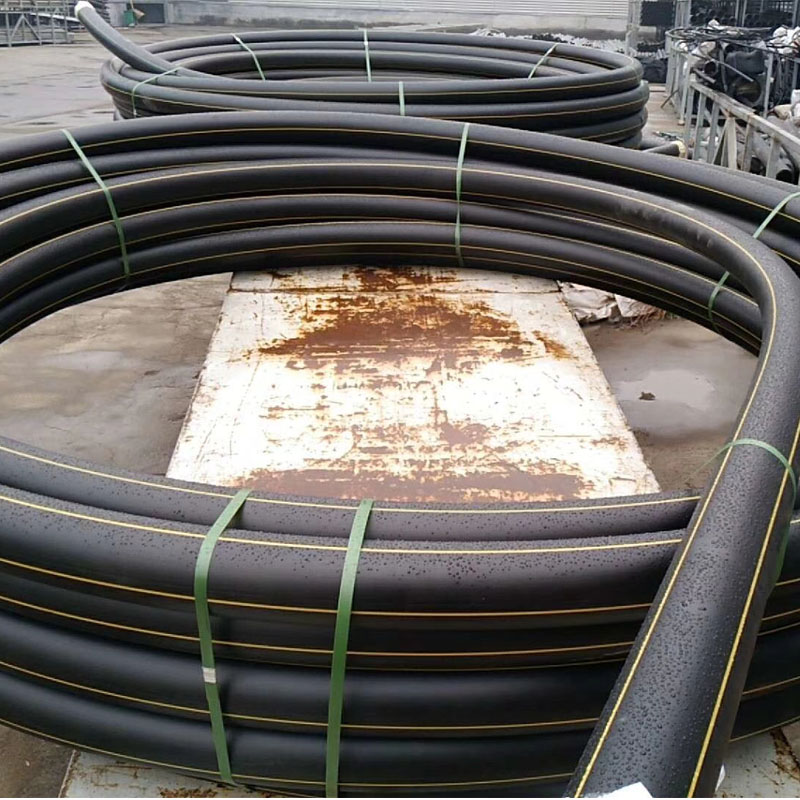
High-Density Polyethylene (HDPE) corrugated pipe is a flexible, lightweight piping solution widely utilized in gravity flow and pressure applications. Positioned primarily within the infrastructure and drainage sectors, it serves as a cost-effective and durable alternative to traditional materials like concrete, steel, and PVC. Its primary function is conveying fluids—ranging from stormwater and wastewater to agricultural drainage—over varying distances. Core performance characteristics include its high ring stiffness, resistance to chemical degradation, and ease of installation, making it a staple in municipal, agricultural, and industrial engineering projects. A key advantage over rigid pipe materials lies in its ability to conform to ground movements, minimizing the risk of joint failures in unstable soil conditions. The growing demand for sustainable infrastructure solutions further drives the adoption of HDPE corrugated pipe due to its recyclability and long service life.
Material Science & Manufacturing
The fundamental material for HDPE corrugated pipe is high-density polyethylene, a thermoplastic polymer produced from the polymerization of ethylene. HDPE exhibits a high strength-to-density ratio, excellent impact resistance, and inherent chemical inertness. Raw material selection is critical; typically, HDPE resins with a Melt Flow Index (MFI) within a specific range (e.g., 0.5-1.5 g/10min) are chosen to optimize processing characteristics and final pipe properties. The manufacturing process predominantly involves extrusion. Granular HDPE resin is fed into an extruder, where it's heated and plasticized. This molten material is then forced through a circular die to form a continuous pipe. Subsequently, a corrugating unit shapes the pipe’s outer surface, increasing its ring stiffness. Precise control of extrusion parameters – temperature profiles, screw speed, and die pressure – is paramount. Improper control can lead to inconsistencies in wall thickness, corrugation geometry, and ultimately, reduced structural integrity. Cooling is crucial; water baths rapidly solidify the extruded pipe, preserving the corrugated shape. Post-extrusion, pipes are often subjected to quality control checks, including dimensional measurements and hydrostatic pressure testing to ensure compliance with industry standards. The polyethylene grade and extrusion parameters significantly affect long-term creep resistance and environmental stress cracking resistance (ESCR), key determinants of service life.
Performance & Engineering
HDPE corrugated pipe performance is heavily influenced by hydraulic capacity, structural integrity, and long-term durability. Hydraulic analysis focuses on flow velocity, friction losses, and sediment transport characteristics. Manning's equation is commonly employed to determine flow capacity based on pipe diameter, slope, and roughness coefficient. Structural performance hinges on the pipe's ability to withstand external loads – soil overburden, traffic loads, and hydrostatic pressure. Ring stiffness, a measure of the pipe’s resistance to flattening, is a critical engineering parameter. Finite Element Analysis (FEA) is routinely used to model stress distribution under various loading conditions, optimizing corrugation geometry for maximum load-bearing capacity. Long-term performance requires consideration of creep, environmental stress cracking (ESCR), and UV degradation. Creep, the gradual deformation under sustained load, is minimized by selecting appropriate HDPE resin grades with high molecular weight and narrow molecular weight distribution. ESCR is mitigated through the inclusion of carbon black or other stabilizers in the HDPE formulation. UV degradation, a concern for exposed applications, necessitates the addition of UV inhibitors. Installation practices are also critical; proper bedding and backfill compaction are essential to distribute external loads evenly and prevent pipe deformation. Compliance with relevant standards, such as ASTM F2306 and EN 13476, ensures that the pipe meets minimum performance requirements.
Technical Specifications
| Parameter | Unit | Typical Value (12" Diameter) | Testing Standard |
|---|---|---|---|
| Nominal Diameter | inches | 12 | ASTM D3212 |
| Ring Stiffness | psi | 60 | ASTM D2412 |
| Pipe Stiffness | psi | 25 | ASTM D2412 |
| Tensile Strength at Yield | psi | 4,000 | ASTM D638 |
| Elongation at Break | % | 500 | ASTM D638 |
| Hydrostatic Design Stress | psi | 1,600 | ASTM F2306 |
Failure Mode & Maintenance
HDPE corrugated pipe, while durable, is susceptible to specific failure modes. Fatigue cracking can occur under cyclic loading, particularly at bell and spigot joints, due to stress concentrations. Environmental Stress Cracking (ESCR) is a major concern, initiated by exposure to aggressive chemicals or sustained tensile stress. Degradation due to UV exposure can lead to embrittlement and loss of impact resistance. Joint failures, often stemming from improper installation or differential settlement, are common. Creep, while typically slow, can result in gradual deformation over extended periods, compromising hydraulic capacity. Oxidation, particularly at elevated temperatures, can degrade the HDPE material. Maintenance is primarily preventative. Regular inspections should focus on identifying signs of deformation, cracking, or joint displacement. Proper bedding and backfill compaction during installation are paramount to minimizing stress on the pipe. Avoid exposing the pipe to harsh chemicals unless it's specifically designed for that application. For UV-exposed applications, consider using UV-stabilized HDPE or providing shielding. In the event of a localized crack, repair can often be achieved using heat fusion welding, provided the crack is not extensive. Hydrostatic testing can verify the integrity of the pipe system and identify leaks. Routine cleaning to remove sediment buildup maintains hydraulic capacity and prevents corrosion from occurring in downstream components.
Industry FAQ
Q: What are the key advantages of HDPE corrugated pipe over concrete pipe in stormwater drainage applications?
A: HDPE corrugated pipe offers significant advantages in weight – it’s considerably lighter than concrete, simplifying handling and installation, reducing labor costs, and minimizing heavy equipment requirements. Its flexibility allows it to conform to ground movements, reducing the risk of joint failures in unstable soils. Additionally, HDPE is corrosion-resistant, offering a longer service life in aggressive environments. Finally, HDPE's smooth interior reduces friction losses compared to concrete, potentially increasing flow capacity.
Q: How does the corrugated design contribute to the pipe’s structural performance?
A: The corrugated profile significantly increases the pipe's ring stiffness, which is its resistance to flattening under external loads. The corrugations act as arches, distributing the load more effectively and allowing the pipe to withstand substantial soil overburden and traffic loads without deformation. The geometry of the corrugations is carefully engineered to maximize this structural benefit.
Q: What is Environmental Stress Cracking (ESCR) and how is it mitigated in HDPE corrugated pipe?
A: ESCR is a failure mechanism where the polyethylene material degrades and cracks when exposed to both tensile stress and certain chemicals. Mitigation involves using HDPE resins with high molecular weight and narrow molecular weight distribution, as these materials are less susceptible to ESCR. Additionally, the incorporation of carbon black or other stabilizers into the HDPE formulation provides further protection against chemical attack.
Q: What are the typical installation requirements for HDPE corrugated pipe to ensure long-term performance?
A: Proper installation is crucial. This includes ensuring adequate bedding and backfill material with appropriate compaction to evenly distribute external loads. Avoid sharp bends or kinks in the pipe alignment. Proper joint connection techniques, following manufacturer’s recommendations, are essential to maintain hydraulic integrity. Consideration should also be given to potential settlement and differential movement of the surrounding soil.
Q: How does HDPE corrugated pipe compare to PVC corrugated pipe in terms of long-term durability and cost?
A: While PVC corrugated pipe is often initially less expensive, HDPE generally offers superior long-term durability. HDPE exhibits greater impact resistance, higher tensile strength, and better resistance to environmental stress cracking. It also possesses a longer service life. While the upfront cost of HDPE might be higher, its increased durability and reduced maintenance requirements can result in a lower lifecycle cost.
Conclusion
HDPE corrugated pipe represents a robust and cost-effective solution for a wide range of drainage and infrastructure applications. Its inherent material properties – flexibility, chemical resistance, and durability – combined with optimized manufacturing processes and adherence to rigorous industry standards, position it as a preferred alternative to traditional pipe materials. The ability to withstand significant external loads, adapt to ground movements, and resist long-term degradation makes it an ideal choice for demanding environments.
Looking ahead, advancements in HDPE resin technology and manufacturing techniques will continue to enhance the performance and sustainability of corrugated pipe systems. Increased emphasis on lifecycle cost analysis and environmental considerations will further drive the adoption of HDPE as a responsible infrastructure material. Continued research into mitigation strategies for ESCR and UV degradation will ensure the longevity and reliability of these critical infrastructure components.
-
DN25 HDPE Compression Fitting-HORON INTERNATIONAL|Reliable Irrigation Solutions
NewsFeb.11,2026
-
china 4 hdpe to pvc coupling Performance Analysis
News2026-06-14
-
china dn500 Ductile Iron Pipe Performance Analysis
News2026-06-14
-
china hdpe corrugated pipe Performance Analysis
News2026-06-14
-
china pvc pipe dimensions Technical Analysis
News2026-06-14
-
china perforated pvc pipe for drainage Performance Analysis
News2026-06-14
-
china 2.5 pvc pipe Performance Analysis
News2026-06-13
-
china ppr pipe coupling Performance Analysis
News2026-06-13
-
china hdpe pipe used for Performance Analysis
News2026-06-13
-
china 300mm pvc pipe Performance Analysis
News2026-06-13
-
china ppr pipe 40mm Performance Analysis
News2026-06-13
-
china ppr pipes in full Performance Engineering
News2026-06-12
-
china 63mm ppr pipe Technical Analysis
News2026-06-12
-
china pvc pipe is used for Performance Analysis
News2026-06-12
-
china hdpe pipe price list Performance Analysis
News2026-06-12
-
china ppr hot and cold water pipe Performance Analysis
News2026-06-12