

Feb . 11, 2026 00:01 Back to list
hdpe conduit fittings factory Performance Analysis

Introduction
High-Density Polyethylene (HDPE) conduit fittings represent a critical component within electrical, telecommunications, and infrastructure projects. They facilitate the secure and reliable routing of cabling and wiring, offering a robust alternative to traditional metallic conduits. Positioned downstream from the HDPE resin manufacturing process, fitting factories specialize in transforming raw HDPE into a diverse range of connectors, couplings, elbows, and other accessories. Core performance characteristics include impact resistance, corrosion resistance, flexibility, and a high degree of dielectric strength. The increasing demand for these fittings is driven by their lightweight nature, ease of installation, and adherence to increasingly stringent safety and environmental regulations. A primary industry pain point lies in maintaining dimensional accuracy during molding and ensuring long-term UV stability to prevent material degradation and cracking. Effective fitting design must also account for thermal expansion and contraction to avoid stress on the installed cabling.
Material Science & Manufacturing
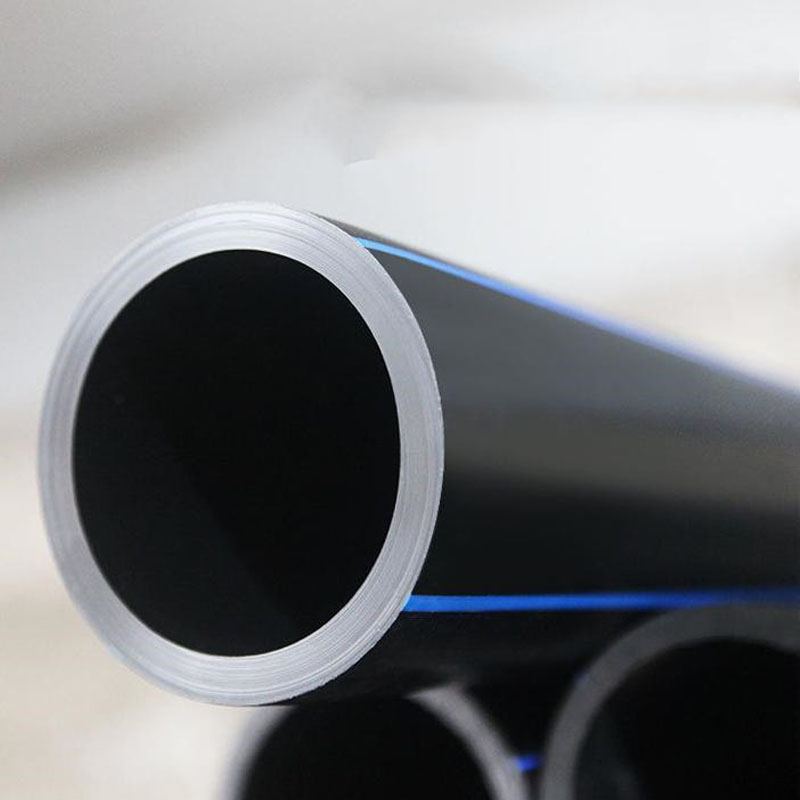
HDPE conduit fittings are predominantly manufactured from high-density polyethylene resin, a thermoplastic polymer derived from petroleum. Key raw material properties include a density typically ranging from 0.941 to 0.965 g/cm³, a tensile strength between 21 and 35 MPa, and a relatively low coefficient of friction. The crystalline structure of HDPE contributes to its rigidity and resistance to chemical attack. Manufacturing processes commonly employed include injection molding, compression molding, and, for larger diameter fittings, rotational molding. Injection molding is favored for high-volume production due to its speed and precision. Critical parameters in injection molding include melt temperature (typically 180-220°C), mold temperature (30-60°C), injection pressure (70-100 MPa), and cooling rate. Insufficient cooling can lead to warping and dimensional instability. Post-molding operations often include deburring, quality control inspection, and UV stabilization treatment. Chemical compatibility is paramount; HDPE exhibits excellent resistance to acids, alkalis, and most solvents, but prolonged exposure to oxidizing agents can cause degradation. Material variations, such as the inclusion of carbon black for UV protection, also impact the fitting’s final properties. Proper control of resin molecular weight distribution is also essential to achieve optimal impact strength and melt flow characteristics.
Performance & Engineering
The performance of HDPE conduit fittings is dictated by several engineering considerations. Force analysis focuses on load-bearing capacity, particularly the resistance to crushing and impact forces. Fittings are typically tested according to standards like UL 651, which specifies impact resistance requirements. Environmental resistance is crucial, encompassing UV degradation, temperature cycling, and exposure to moisture. UV stabilization is achieved through the addition of carbon black or other UV absorbers to the HDPE compound. Temperature cycling tests assess the fitting’s ability to withstand repeated expansion and contraction without cracking or deformation. Compliance with relevant industry standards, such as the National Electrical Code (NEC) in the US and IEC standards internationally, is non-negotiable. Specifically, NEC Article 352 governs the installation of nonmetallic conduits, including HDPE. Functional implementation demands tight dimensional tolerances to ensure a secure and watertight connection with the conduit and associated electrical equipment. Stress analysis is performed to identify potential failure points, particularly at the thread interfaces of threaded fittings. Proper grounding and bonding practices must also be considered to maintain electrical safety. The choice of fitting material and design must also take into account the specific application; for example, fittings used in direct burial applications require enhanced protection against soil chemicals and mechanical damage.
Technical Specifications
| Parameter | Unit | Typical Value | Test Standard |
|---|---|---|---|
| Material | - | HDPE (High-Density Polyethylene) | ASTM D3350 |
| Tensile Strength | MPa | 28-35 | ASTM D638 |
| Impact Strength (Izod Notched) | J/m | >500 | ASTM D256 |
| Water Absorption | % (24 hr) | <0.5 | ASTM D570 |
| Operating Temperature Range | °C | -40 to +85 | - |
| UV Resistance | Hours to 50% Loss of Tensile Strength | >1000 | ASTM G154 |
Failure Mode & Maintenance
HDPE conduit fitting failures typically manifest as cracking, splitting, or deformation. Fatigue cracking can occur due to repeated mechanical stress, especially in fittings subjected to vibration or thermal cycling. Environmental stress cracking (ESC) is another common failure mode, triggered by the combined action of tensile stress and exposure to aggressive chemicals. Delamination can occur in laminated fittings due to inadequate bonding between layers. Oxidation, particularly at elevated temperatures, can lead to material embrittlement and loss of impact strength. UV degradation, if not adequately addressed through stabilization, results in surface chalking, discoloration, and eventual cracking. Failure analysis often involves microscopic examination of fracture surfaces to determine the root cause. Maintenance primarily focuses on preventative measures. Regular visual inspections should be conducted to identify any signs of cracking or deformation. Fittings should be protected from direct sunlight whenever possible. Avoid exposing fittings to harsh chemicals or extreme temperatures. Proper installation techniques, including the use of appropriate tightening torques for threaded fittings, are essential to prevent stress-induced failures. When replacing fittings, ensure compatibility with the existing conduit system and adhere to all applicable electrical codes. Proper storage of fittings in a cool, dry environment is also critical to preserve their long-term integrity.
Industry FAQ
Q: What is the primary advantage of HDPE conduit fittings over metallic counterparts?
A: The principal advantage lies in their inherent corrosion resistance. Unlike metal conduits, HDPE fittings will not rust or corrode, even in harsh environments. This translates to a longer service life and reduced maintenance costs. They are also significantly lighter in weight, simplifying installation and reducing labor requirements. Furthermore, HDPE offers superior electrical insulation properties.
Q: How does UV exposure affect HDPE conduit fittings, and what mitigation strategies are employed?
A: Prolonged UV exposure can cause HDPE to degrade, leading to embrittlement, discoloration, and eventual cracking. To counteract this, manufacturers incorporate UV stabilizers, typically carbon black, into the HDPE compound. The concentration of carbon black is carefully controlled to provide optimal UV protection without compromising other material properties. Darker colored fittings generally offer better UV resistance.
Q: What considerations are important when selecting the appropriate HDPE fitting for direct burial applications?
A: Fittings for direct burial must be specifically designed to withstand the stresses imposed by soil pressure, moisture, and potential chemical attack. Look for fittings that are rated for direct burial and feature a robust design with adequate wall thickness. Consider using fittings with a sealing gasket to prevent water ingress. Ensure compliance with relevant industry standards regarding direct burial conduit installation.
Q: How does temperature affect the performance and installation of HDPE conduit fittings?
A: HDPE exhibits a relatively high coefficient of thermal expansion. This means that the fitting will expand and contract with changes in temperature. During installation, it's crucial to account for this thermal expansion to avoid stress on the conduit system. Avoid installing fittings at extreme temperatures, as this can affect their dimensional stability. Follow manufacturer's recommendations regarding temperature limits during installation.
Q: What are the key quality control checks performed during the manufacturing of HDPE conduit fittings?
A: Key quality control checks include dimensional verification using calibrated instruments, impact strength testing, tensile strength testing, and visual inspection for defects such as cracks, voids, and discoloration. Melt flow index (MFI) testing ensures consistent material properties. Regular testing of raw materials is also conducted to verify compliance with specifications. Statistical process control (SPC) is often employed to monitor and control the manufacturing process.
Conclusion
HDPE conduit fittings represent a durable, cost-effective, and reliable solution for a wide range of cabling and wiring applications. Their inherent resistance to corrosion, lightweight nature, and ease of installation make them increasingly popular over traditional metallic conduits. Successful implementation relies on a thorough understanding of the material science, manufacturing processes, and engineering principles governing their performance.
Looking forward, advancements in HDPE resin technology and manufacturing techniques will continue to enhance the performance and versatility of these fittings. Focus areas include the development of more sustainable HDPE formulations, improved UV stabilization methods, and the integration of smart features for real-time monitoring of conduit system health. Proper selection, installation, and maintenance, adhering to established industry standards, will ensure the longevity and reliability of HDPE conduit systems.
-
DN25 HDPE Compression Fitting-HORON INTERNATIONAL|Reliable Irrigation Solutions
NewsFeb.11,2026
-
hdpe coupling joint product Manufacturing Analysis
News2026-11-18
-
ppr pipe heating time products Performance Analysis
News2026-11-16
-
hdpe pipe sizes factory Performance Analysis
News2026-11-09
-
HDPE Pipe Sizes Service Performance Analysis
News2026-10-26
-
wholesale 15mm ppr pipe Material Science and Performance Analysis
News2026-10-20
-
wholesale pvc pipe price per foot Technical Analysis
News2026-09-21
-
wholesale long pvc pipe Technical Analysis and Manufacturing Specifications
News2026-09-15
-
wholesale plumbing kitchen sink water lines Material Performance
News2026-09-15
-
wholesale hdpe drip irrigation Material Science
News2026-09-15
-
wholesale hot water ppr pipe Performance Analysis
News2026-09-15
-
wholesale ppr plumbing Performance Analysis
News2026-09-15
-
wholesale ppr pipe supplier Performance Analysis
News2026-09-13
-
wholesale 50mm ppr pipe Performance Analysis
News2026-09-13
-
wholesale hdpe drip pipe Performance Analysis
News2026-09-13
-
wholesale hdpe pipe 63mm price Manufacturing Specification and Performance Analysis
News2026-09-13