

Feb . 11, 2026 00:01 Back to list
gray pvc pipe manufacturer Performance Analysis
Introduction
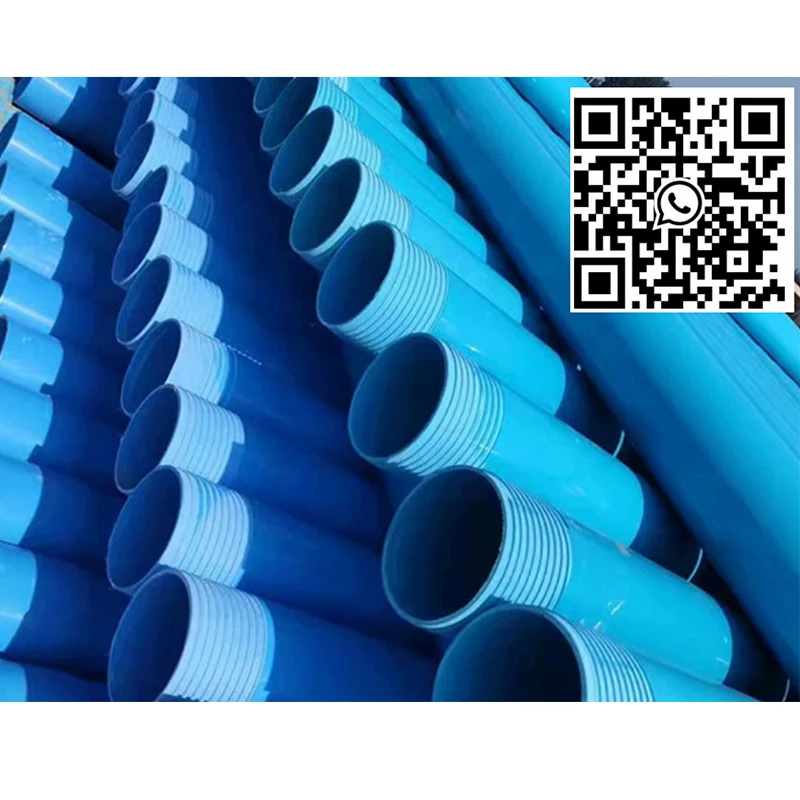
Polyvinyl chloride (PVC) pipe, specifically gray PVC, is a ubiquitous material in infrastructure, industrial processing, and fluid conveyance systems. This technical guide details the composition, manufacturing processes, performance characteristics, failure modes, and relevant industry standards for gray PVC pipe. Gray PVC distinguishes itself from white PVC primarily through the addition of UV inhibitors and, sometimes, recycled PVC content, resulting in a color change and enhanced resistance to degradation from sunlight exposure. Positioned within the broader polymer piping industry, gray PVC serves critical applications including underground drainage, irrigation, venting, and non-pressure industrial piping, offering a cost-effective alternative to metal and other plastic piping solutions. Core performance attributes include chemical resistance, dimensional stability, ease of installation, and a relatively long service life, dependent on application and environmental conditions. The increasing focus on sustainable infrastructure and reduced lifecycle costs drives ongoing demand and innovation in gray PVC pipe manufacturing.
Material Science & Manufacturing
Gray PVC pipe is fundamentally composed of PVC resin, a thermoplastic polymer produced from the polymerization of vinyl chloride monomer (VCM). The resin constitutes approximately 57-65% of the pipe’s formulation. Remaining constituents include plasticizers (typically phthalates or alternatives like DINCH, accounting for 20-30%), stabilizers (often lead-based compounds, calcium-zinc, or organotin compounds, approximately 1-5%), lubricants (stearic acid, polyethylene wax, 0.5-2%), fillers (calcium carbonate, talc, 5-10%), and pigments (titanium dioxide for opacity, carbon black for gray coloration, <1%). The manufacturing process typically begins with the dry blending of these raw materials. The mixture is then fed into an extruder – either single-screw or twin-screw – where it undergoes melting, homogenization, and shaping. Extrusion parameters are critical: barrel temperature profiles (160-210°C), screw speed (30-80 RPM), and die temperature (180-220°C) directly impact the molecular weight distribution, melt viscosity, and ultimately, the pipe’s mechanical properties. Post-extrusion, the pipe is cooled in a water bath to solidify its shape, then cut to length, and subjected to quality control inspections. Critical process controls focus on maintaining consistent wall thickness, diameter, and minimizing internal stresses. The addition of UV stabilizers, such as hindered amine light stabilizers (HALS) and carbon black, imparts resistance to photodegradation, extending the pipe’s service life in outdoor applications. Recycled PVC content, when incorporated, must meet stringent quality specifications to avoid compromising mechanical integrity.
Performance & Engineering
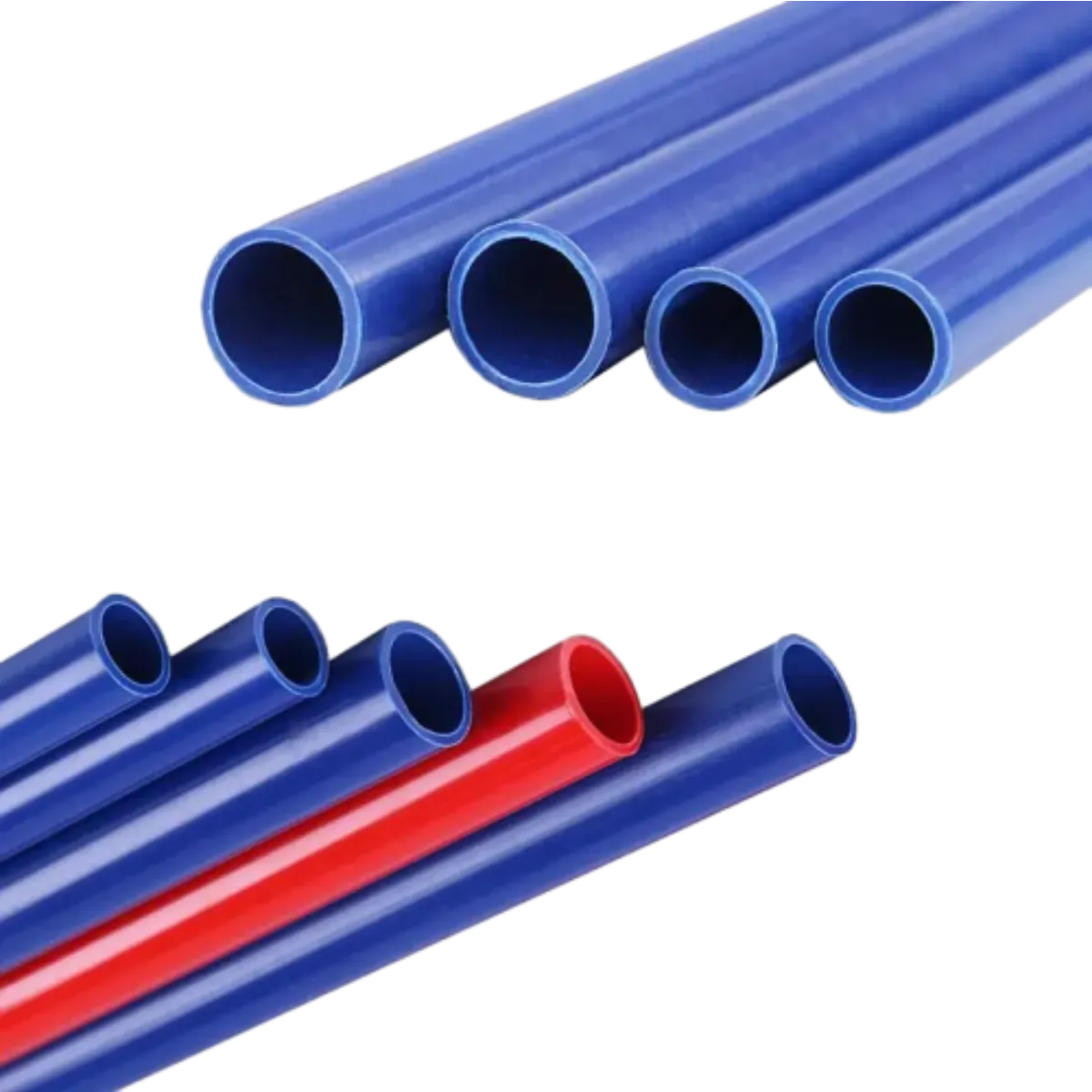
The performance of gray PVC pipe is dictated by its mechanical and chemical properties. Key engineering considerations include hoop strength (resistance to collapse under external pressure, calculated using Barlow’s formula: S = (P D) / (2 t), where S is hoop strength, P is internal pressure, D is pipe diameter, and t is wall thickness), tensile strength (typically 50-70 MPa), and modulus of elasticity (2.5-3.5 GPa). Environmental resistance is paramount; PVC exhibits excellent resistance to acids, bases, and salts, but can be affected by prolonged exposure to chlorinated hydrocarbons and aromatic solvents. Temperature dependence is significant; PVC becomes brittle at temperatures below 0°C and its strength diminishes above 60°C. Therefore, applications exceeding these temperature limits require specialized PVC compounds or alternative materials. Furthermore, the coefficient of thermal expansion (approximately 8 x 10⁻⁵ /°C) must be accounted for in piping system design to prevent stress and potential failure due to thermal cycling. Compliance requirements, depending on the intended application, often dictate specific testing protocols such as hydrostatic pressure testing (to verify burst pressure), impact resistance testing (to assess resistance to sudden loads), and chemical resistance testing (to ensure compatibility with conveyed fluids). Long-term creep resistance is also crucial; PVC exhibits time-dependent deformation under sustained stress, which needs to be factored into the design to prevent gradual pipe deformation or failure. Proper jointing techniques – solvent cementing or gasketed joints – are essential to maintain system integrity and prevent leakage.
Technical Specifications
| Parameter | Schedule 40 (Standard Wall) | Schedule 80 (Heavy Wall) | ASTM D1785 Dimension Ratio (DR) |
|---|---|---|---|
| Nominal Pipe Size (NPS) - inches | 0.5 to 12 | 0.5 to 24 | Varies by size and schedule |
| Outside Diameter (OD) - inches | 0.625 to 12.75 | 0.625 to 13.5 | Standardized per NPS |
| Wall Thickness - inches | 0.05 to 0.375 | 0.065 to 0.55 | Determined by schedule and OD |
| Pressure Rating @ 73°F (23°C) - PSI | Up to 400 | Up to 600 | Dependent on DR and diameter |
| Tensile Strength - MPa | 55-65 | 55-65 | Consistent across schedules |
| Impact Strength (Izod Notched) - J/m | 400-600 | 500-700 | Typically higher for Schedule 80 |
Failure Mode & Maintenance
Gray PVC pipe, while durable, is susceptible to several failure modes. Environmental Stress Cracking (ESC) is a primary concern, induced by the combined effect of sustained mechanical stress, aggressive chemicals, and temperature. ESC manifests as brittle fractures, often originating at stress concentrators. UV Degradation, despite the presence of UV stabilizers, can occur over extended exposure, leading to surface chalking, discoloration, and loss of impact strength. Hydrostatic Failure results from exceeding the pipe’s pressure rating, causing catastrophic rupture. Joint Failure is common due to improper solvent cementing (insufficient solvent, poor surface preparation) or gasket failure (deterioration, improper installation). Soil Creep in buried applications can impose external stresses, leading to ovalization or cracking. Maintenance strategies include visual inspections for cracks, discoloration, or deformation. Pressure testing should be conducted periodically to verify system integrity. Joints should be regularly inspected for leaks. In areas prone to soil movement, flexible joints or bedding materials should be used to mitigate stress. For ESC prevention, avoid contact with incompatible chemicals and ensure adequate support to minimize stress. Surface cleaning to remove dirt and debris can help maintain the effectiveness of UV stabilizers. Preventative maintenance programs, including regular inspections and repairs, are crucial for maximizing the service life of gray PVC piping systems.
Industry FAQ
Q: What is the primary difference between Schedule 40 and Schedule 80 gray PVC pipe, and when would you specify one over the other?
A: The primary difference lies in the wall thickness. Schedule 80 has a thicker wall than Schedule 40 for the same nominal pipe size. This translates to a higher pressure rating and increased resistance to impact and deformation. Schedule 80 is typically specified for applications requiring higher pressure capacity, such as industrial processes handling corrosive fluids, or in areas subject to potential mechanical damage. Schedule 40 is sufficient for lower-pressure applications like irrigation and drainage systems.
Q: How does the chemical compatibility of gray PVC pipe affect its long-term performance in industrial applications?
A: PVC exhibits good resistance to many chemicals, but it’s crucial to verify compatibility. Prolonged exposure to chlorinated hydrocarbons, ketones, esters, and aromatic solvents can cause swelling, softening, and eventual failure. Consult chemical resistance charts before using PVC pipe in contact with specific chemicals. Consider using alternative materials like CPVC or polypropylene if chemical compatibility is a concern.
Q: What are the best practices for solvent cementing gray PVC pipe to ensure a leak-proof joint?
A: Proper surface preparation is critical – ensure surfaces are clean, dry, and free of contaminants. Use the correct primer and solvent cement specifically formulated for PVC. Apply primer evenly to both surfaces, followed by a generous, uniform coat of solvent cement. Immediately assemble the joint with a slight twist to ensure complete coverage and avoid creating voids. Allow sufficient curing time as specified by the cement manufacturer before pressurizing the system.
Q: How does UV exposure impact the lifespan of gray PVC pipe, and what measures can be taken to mitigate degradation?
A: While gray PVC contains UV stabilizers, prolonged exposure to sunlight will eventually cause degradation, leading to surface chalking, discoloration, and reduced impact strength. Mitigation strategies include burying the pipe, painting it with a UV-reflective coating, or using PVC pipe with a higher concentration of UV stabilizers. Periodic inspections and replacement of exposed sections may also be necessary.
Q: What are the implications of temperature fluctuations on gray PVC piping systems, and how can thermal expansion and contraction be addressed?
A: PVC expands and contracts with temperature changes. This thermal movement can induce stress on joints and supports. To address this, incorporate expansion loops or joints, and provide adequate support to allow for thermal movement without overstressing the pipe. Avoid rigid restraint that prevents expansion and contraction. Consider the operating temperature range when selecting the appropriate PVC compound.
Conclusion
Gray PVC pipe remains a highly versatile and cost-effective solution for a wide range of fluid conveyance applications. Its robust chemical resistance, ease of installation, and relatively low cost contribute to its widespread adoption. Understanding the material science fundamentals, manufacturing processes, and performance characteristics of gray PVC is essential for engineers and procurement professionals to select the appropriate pipe for a given application and ensure long-term system reliability. Proper installation techniques, preventative maintenance, and adherence to relevant industry standards are critical for maximizing the service life of gray PVC piping systems.
Future trends in gray PVC pipe technology include the development of more sustainable formulations utilizing bio-based plasticizers and increased incorporation of recycled PVC content. Research is also focused on enhancing UV resistance and improving resistance to ESC, further extending the pipe’s service life and broadening its range of applications. The continued demand for durable, cost-effective infrastructure will ensure that gray PVC pipe remains a key material in the construction and industrial sectors.
-
DN25 HDPE Compression Fitting-HORON INTERNATIONAL|Reliable Irrigation Solutions
NewsFeb.11,2026
-
hdpe coupling joint product Manufacturing Analysis
News2026-11-18
-
ppr pipe heating time products Performance Analysis
News2026-11-16
-
hdpe pipe sizes factory Performance Analysis
News2026-11-09
-
HDPE Pipe Sizes Service Performance Analysis
News2026-10-26
-
wholesale 15mm ppr pipe Material Science and Performance Analysis
News2026-10-20
-
wholesale pvc pipe price per foot Technical Analysis
News2026-09-21
-
wholesale long pvc pipe Technical Analysis and Manufacturing Specifications
News2026-09-15
-
wholesale plumbing kitchen sink water lines Material Performance
News2026-09-15
-
wholesale hdpe drip irrigation Material Science
News2026-09-15
-
wholesale hot water ppr pipe Performance Analysis
News2026-09-15
-
wholesale ppr plumbing Performance Analysis
News2026-09-15
-
wholesale ppr pipe supplier Performance Analysis
News2026-09-13
-
wholesale 50mm ppr pipe Performance Analysis
News2026-09-13
-
wholesale hdpe drip pipe Performance Analysis
News2026-09-13
-
wholesale hdpe pipe 63mm price Manufacturing Specification and Performance Analysis
News2026-09-13