

Feb . 11, 2026 00:01 Back to list
dual wall corrugated pipe product Performance Analysis
Introduction
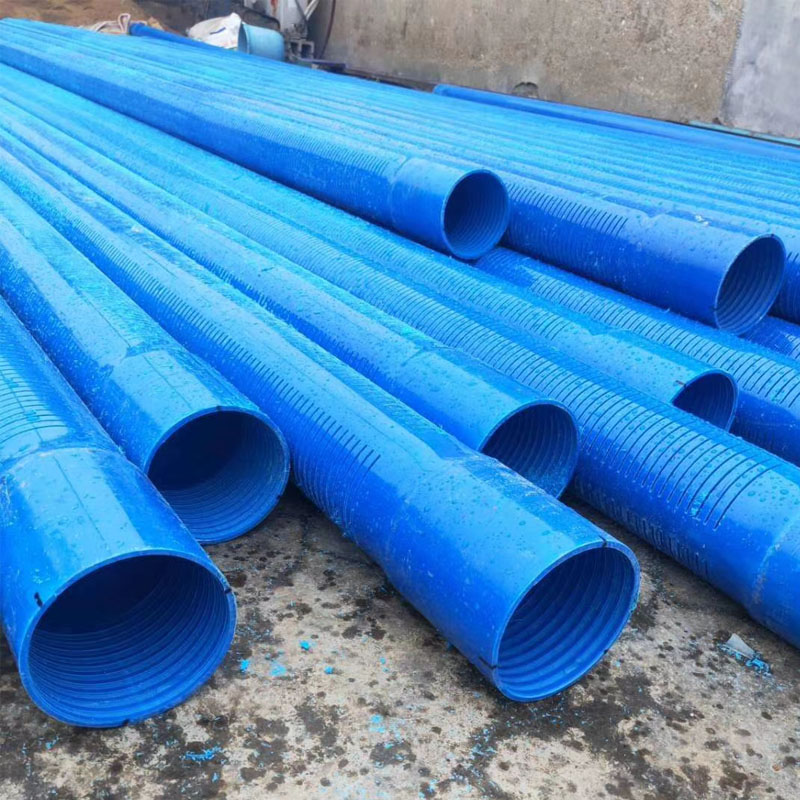
Dual wall corrugated pipe is a semi-rigid piping system commonly utilized in subsurface drainage, stormwater management, and industrial applications. Technically positioned as a cost-effective alternative to traditional reinforced concrete or solid-wall PVC pipe, it comprises an inner layer for fluid conveyance and an outer corrugated layer providing structural integrity. Its performance hinges on a combination of ring stiffness, crush resistance, and chemical inertness. Core performance characteristics include the ability to withstand soil loads, resist corrosion, and facilitate efficient fluid transport. A primary industry pain point is the variability in material quality and manufacturing consistency leading to premature failure in demanding applications. Proper understanding of its material science and installation protocols are crucial for long-term operational reliability.
Material Science & Manufacturing
The primary material for dual wall corrugated pipe is typically high-density polyethylene (HDPE), chosen for its balance of strength, flexibility, and chemical resistance. HDPE resin grades are selected based on their molecular weight distribution and density, influencing final product properties. The inner layer often utilizes Polypropylene (PP) due to its enhanced chemical resistance to certain aggressive substances. Manufacturing involves two primary processes: extrusion and corrugation. The inner layer is extruded as a smooth, solid tube. Simultaneously, the HDPE outer layer is extruded and formed into a corrugated profile using specialized rollers. Precise control of extrusion temperature, roller gap, and cooling rate is essential to maintain consistent wall thickness and corrugation geometry. The two layers are then joined, often through a co-extrusion process, creating a permanent bond. Critical parameters include die temperature (180-220°C for HDPE, 200-250°C for PP), haul-off speed (2-10 m/min), and cooling water temperature (15-25°C). Material compatibility between HDPE and PP is ensured through the use of compatible adhesion promoters. Raw material quality control, particularly monitoring melt flow index (MFI) and density, is paramount to prevent defects. Failure to control these parameters can result in variations in ring stiffness and susceptibility to environmental stress cracking.
Performance & Engineering
Performance is heavily influenced by the pipe’s ability to withstand external loads, specifically soil overburden pressure. Ring stiffness, measured in psi, dictates the pipe’s resistance to flattening. Force analysis involves calculating the hoop stress induced by external loads, considering soil density, burial depth, and pipe dimensions. Environmental resistance is another key factor. HDPE exhibits good resistance to most chemicals commonly found in soil and wastewater, but prolonged exposure to oxidizing agents or hydrocarbons can cause degradation. Compliance requirements vary by region, but typically involve testing to ASTM D2412 (crush resistance), ASTM D2412 (ring stiffness), and ASTM F477 (joint tightness). Engineering considerations extend to proper installation practices. Bedding and backfill material must be properly compacted to provide uniform support and prevent localized stress concentrations. Slope stability analyses are crucial in areas prone to landslides or erosion to ensure the pipe remains adequately supported. Long-term creep performance is also a concern, particularly in applications with sustained high loads. Finite Element Analysis (FEA) is frequently employed to model stress distribution and predict long-term behavior under various loading conditions.
Technical Specifications
| Parameter | Units | Typical Value (12-inch pipe) | Testing Standard |
|---|---|---|---|
| Nominal Diameter | inches | 12 | ASTM D3212 |
| Ring Stiffness | psi | 42 | ASTM D2412 |
| Crush Strength | lbs/ft | 1720 | ASTM D2412 |
| Manning’s Roughness Coefficient | - | 0.012 | ASTM D3212 |
| Tensile Strength (HDPE) | psi | 4,000 – 5,000 | ASTM D638 |
| Elongation at Break (HDPE) | % | 300 – 600 | ASTM D638 |
Failure Mode & Maintenance
Common failure modes include creep rupture, environmental stress cracking, and joint separation. Creep rupture occurs due to long-term deformation under sustained load, particularly at elevated temperatures. Environmental stress cracking is initiated by the combined effect of tensile stress and exposure to aggressive chemicals. Joint separation can result from improper installation, thermal expansion/contraction, or degradation of the sealing mechanism. Failure analysis often involves microscopic examination of fractured surfaces to identify the root cause. Fatigue cracking can occur in areas of stress concentration, such as near corrugation peaks or joints. Oxidation can lead to embrittlement of the HDPE material, reducing its impact resistance. Maintenance typically involves periodic inspection for signs of deformation, cracking, or joint leakage. Preventative maintenance measures include ensuring proper bedding and backfill compaction, avoiding contact with incompatible chemicals, and implementing regular cleaning to remove debris that could contribute to clogging. Repair options range from localized patching to full pipe replacement, depending on the severity of the damage. Addressing soil settlement and ensuring proper drainage around the pipe are critical for extending its service life.
Industry FAQ
Q: What is the impact of UV exposure on the long-term performance of dual wall corrugated pipe?
A: While HDPE possesses inherent UV resistance, prolonged and direct exposure can lead to surface degradation, causing discoloration and reducing tensile strength. The addition of UV stabilizers during the manufacturing process mitigates this effect, but it’s still recommended to protect the pipe from direct sunlight during storage and installation. Burial provides adequate protection, but exposed sections should be shielded or coated with a UV-resistant coating.
Q: How does temperature affect the performance characteristics of dual wall corrugated pipe?
A: Temperature influences both the strength and flexibility of HDPE. Higher temperatures can reduce ring stiffness and increase the susceptibility to creep. Lower temperatures can make the pipe more brittle and prone to cracking. Installation guidelines typically specify temperature limitations to ensure proper joint sealing and prevent damage during handling. Thermal expansion and contraction must also be considered during installation to avoid stress buildup.
Q: What are the limitations of using dual wall corrugated pipe in applications involving heavy loads or traffic?
A: While dual wall corrugated pipe is designed to withstand significant loads, it has limitations. Extremely heavy loads, such as those from frequent heavy truck traffic, can lead to deformation and creep. In such cases, a more robust piping system, such as reinforced concrete pipe, may be required. Proper bedding and backfill compaction are crucial for maximizing load-bearing capacity.
Q: What is the recommended bedding material for dual wall corrugated pipe installations?
A: The recommended bedding material is typically granular material, such as sand or gravel, that provides uniform support and promotes drainage. Avoid using materials containing large rocks or debris that could damage the pipe. The bedding material should be compacted in layers to achieve the specified density. Geotextile fabric is often used to separate the bedding material from the surrounding soil and prevent contamination.
Q: How do you ensure watertight joints in dual wall corrugated pipe systems?
A: Watertight joints are achieved through the use of bell-and-spigot connections with elastomeric gaskets. Proper alignment and insertion of the spigot into the bell are crucial for creating a tight seal. The gaskets must be correctly positioned and lubricated to ensure proper compression. Joint tightness is typically verified through hydrostatic testing, as per ASTM F477.
Conclusion
Dual wall corrugated pipe represents a versatile and cost-effective solution for a wide range of drainage and conveyance applications. Its performance is intrinsically linked to material selection, manufacturing precision, and adherence to proper installation procedures. Understanding the material science, particularly the properties of HDPE and PP, is essential for predicting long-term behavior and mitigating potential failure modes.
Future development trends focus on enhancing material properties through the incorporation of recycled content and improved UV stabilizers, alongside advanced jointing technologies. Continued advancements in non-destructive testing methods will enable more reliable assessment of pipe integrity and proactive maintenance strategies. Ultimately, a thorough understanding of its technical limitations and adherence to industry standards are paramount for ensuring the longevity and reliability of dual wall corrugated pipe systems.
-
DN25 HDPE Compression Fitting-HORON INTERNATIONAL|Reliable Irrigation Solutions
NewsFeb.11,2026
-
hdpe coupling joint product Manufacturing Analysis
News2026-11-18
-
ppr pipe heating time products Performance Analysis
News2026-11-16
-
hdpe pipe sizes factory Performance Analysis
News2026-11-09
-
HDPE Pipe Sizes Service Performance Analysis
News2026-10-26
-
wholesale 15mm ppr pipe Material Science and Performance Analysis
News2026-10-20
-
wholesale pvc pipe price per foot Technical Analysis
News2026-09-21
-
wholesale long pvc pipe Technical Analysis and Manufacturing Specifications
News2026-09-15
-
wholesale plumbing kitchen sink water lines Material Performance
News2026-09-15
-
wholesale hdpe drip irrigation Material Science
News2026-09-15
-
wholesale hot water ppr pipe Performance Analysis
News2026-09-15
-
wholesale ppr plumbing Performance Analysis
News2026-09-15
-
wholesale ppr pipe supplier Performance Analysis
News2026-09-13
-
wholesale 50mm ppr pipe Performance Analysis
News2026-09-13
-
wholesale hdpe drip pipe Performance Analysis
News2026-09-13
-
wholesale hdpe pipe 63mm price Manufacturing Specification and Performance Analysis
News2026-09-13