

Feb . 11, 2026 00:01 Back to list
dual wall corrugated pipe manufacturer Performance Engineering
Introduction
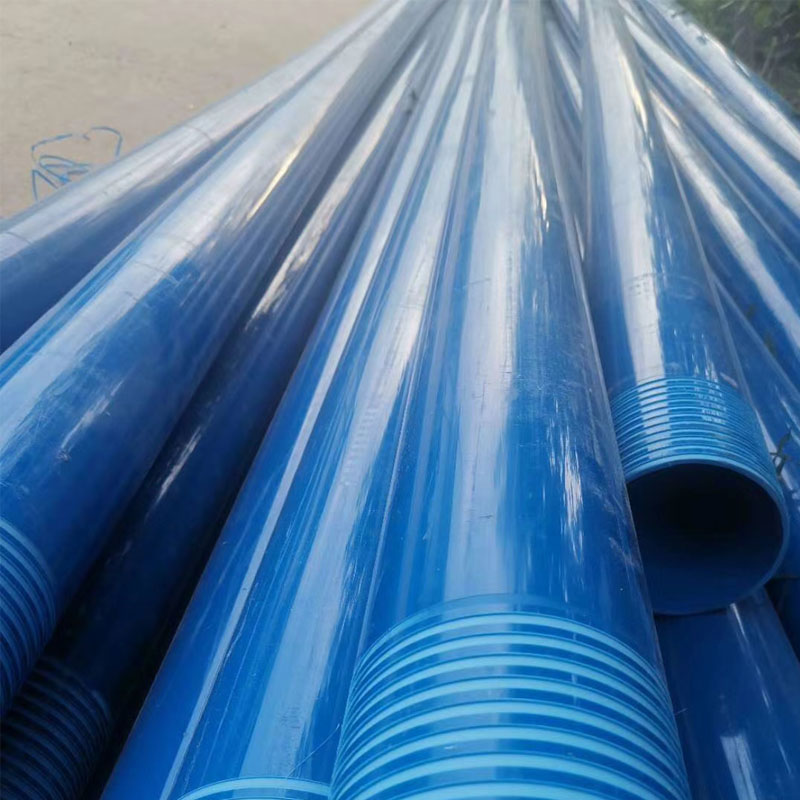
Dual wall corrugated pipe represents a significant advancement in subsurface drainage and conduit applications. Positioned within the infrastructure supply chain, it serves as a critical component for stormwater management, agricultural drainage, and increasingly, for protective casing for sensitive utilities like fiber optic cables and electrical conduits. Unlike single-wall corrugated polyethylene (HDPE) pipe, the dual-wall construction—typically comprising a smooth inner layer and a corrugated outer layer—provides enhanced structural integrity and resistance to deformation under load. Its core performance characteristics revolve around ring stiffness, crush resistance, and long-term durability in challenging soil environments. This guide provides an in-depth technical overview of dual-wall corrugated pipe, encompassing material science, manufacturing processes, performance engineering, failure analysis, and relevant industry standards. A primary industry pain point is ensuring long-term performance in aggressive soil chemistries and accurately calculating load-bearing capacity based on site-specific conditions. Understanding the intricacies of material degradation and appropriate installation protocols is paramount for project success.
Material Science & Manufacturing
Dual wall corrugated pipe is predominantly manufactured from high-density polyethylene (HDPE), chosen for its excellent chemical resistance, impact strength, and flexibility. The raw material HDPE exhibits a semi-crystalline structure, influencing its mechanical properties. Molecular weight distribution and the degree of crystallinity are critical parameters; higher molecular weight and greater crystallinity typically correlate to improved tensile strength and stiffness. The inner smooth layer frequently utilizes a resin formulated for reduced friction, often incorporating additives like PTFE to minimize drag for cable pulling or fluid flow. The corrugated outer layer uses HDPE formulated for optimal ring stiffness. Manufacturing typically involves a co-extrusion process. HDPE pellets are melted and fed into a circular die, forming a continuous tube. This tube is then corrugated using specialized rollers which impart the characteristic ribbed pattern. Critical parameters during extrusion include melt temperature (typically 180-220°C), die pressure, and cooling rate. Insufficient cooling can lead to dimensional instability and warping. The corrugated structure is then dimensionally stabilized through a controlled cooling process. Parameter control during the extrusion and corrugation process directly impacts the pipe’s ring stiffness, crush resistance, and overall structural integrity. Variations in wall thickness, corrugation profile, and material composition affect performance characteristics. The use of recycled HDPE is increasingly common, requiring rigorous quality control to ensure consistent material properties.
Performance & Engineering
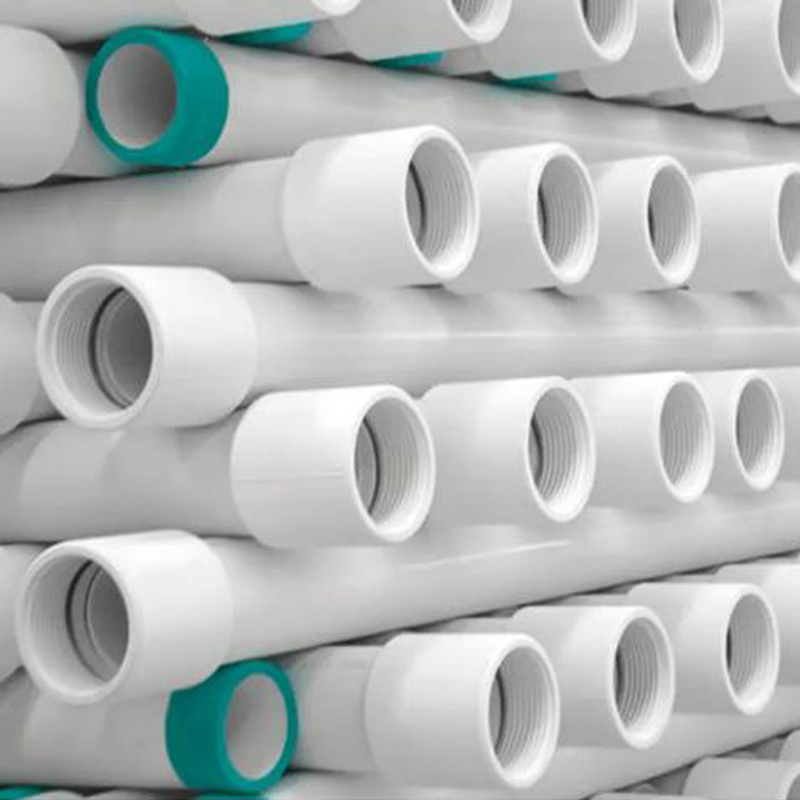
The performance of dual wall corrugated pipe is primarily governed by its ability to withstand external loads – specifically, soil overburden and live loads (traffic). Ring stiffness, measured in psi, is a critical parameter, defining the pipe's resistance to flattening under a concentrated load. The relationship between ring stiffness and load-bearing capacity is non-linear, necessitating careful engineering calculations based on Poisson’s ratio of the HDPE, the pipe’s diameter, and the surrounding soil properties. Backfill material selection significantly impacts performance; granular materials provide better support than cohesive soils. Long-term creep performance is also vital. HDPE, while strong, exhibits time-dependent deformation under sustained stress. This creep behavior can lead to gradual flattening of the pipe over its service life. Environmental resistance is another crucial factor. Exposure to UV radiation can cause degradation of the HDPE, reducing its tensile strength and impact resistance. The addition of UV stabilizers to the HDPE formulation mitigates this effect. Chemical resistance is also important, particularly in applications where the pipe is exposed to aggressive soil chemistries (e.g., high sulfate concentrations). HDPE exhibits good resistance to most common soil chemicals, but prolonged exposure to certain acids or solvents can lead to material degradation. Compliance with industry standards, such as ASTM F894 and AASHTO M294, ensures that the pipe meets minimum performance requirements.
Technical Specifications
| Parameter | Units | Typical Value (12" Diameter, Schedule 40) | Test Method |
|---|---|---|---|
| Diameter | inches | 12.0 | ASTM D2412 |
| Ring Stiffness | psi | 80 | ASTM F894 |
| Crush Resistance | psi | 1200 | ASTM F894 |
| Tensile Strength | psi | 4000 | ASTM D638 |
| Elongation at Break | % | 300 | ASTM D638 |
| Impact Resistance (Notch Izod) | ft-lb/in | 10 | ASTM D256 |
Failure Mode & Maintenance
Common failure modes in dual wall corrugated pipe include ovalization (flattening), cracking, and joint separation. Ovalization typically results from inadequate backfill compaction or excessive external loads, leading to reduced flow capacity and potential instability. Cracking can occur due to stress concentrations at corrugation peaks, particularly in cold temperatures or due to impact damage during installation. Environmental Stress Cracking (ESC) is a significant concern, particularly in soils with aggressive chemical constituents. Joint separation can result from improper joint assembly during manufacturing or thermal expansion/contraction cycles. Delamination between the smooth inner layer and the corrugated outer layer, while less common, can occur due to poor adhesion during the co-extrusion process. Maintenance is typically limited to visual inspection for signs of damage. Regular inspections should focus on areas prone to loading or settlement. Preventative measures include ensuring proper installation procedures, utilizing appropriate backfill materials, and avoiding excessive loading. Repairs typically involve localized excavation and replacement of the damaged section. Long-term monitoring of pipe deformation using laser profiling or other surveying techniques can help identify potential problems before they escalate. Avoid direct contact between the pipe and sharp objects during handling and installation to prevent puncture and cracking. Proper UV protection during storage is also vital.
Industry FAQ
Q: What is the impact of soil pH on the long-term performance of dual wall corrugated pipe?
A: Soil pH significantly impacts HDPE durability. Highly acidic (low pH) or alkaline (high pH) soils can accelerate degradation. Acidic conditions promote oxidative degradation, while alkaline conditions can cause hydrolysis. Selecting HDPE formulations with enhanced chemical resistance and utilizing appropriate backfill materials (e.g., buffered soils) are critical mitigation strategies.
Q: How does pipe schedule (e.g., Schedule 40 vs. Schedule 80) affect load-bearing capacity?
A: Pipe schedule directly correlates to wall thickness. A higher schedule number (e.g., Schedule 80) indicates a thicker wall, resulting in increased ring stiffness and crush resistance. This translates to a higher load-bearing capacity. The appropriate schedule should be selected based on the anticipated load and burial depth.
Q: What are the critical considerations for proper joint installation to ensure a watertight seal?
A: Proper joint installation requires precise alignment and engagement of the pipe sections. Follow the manufacturer’s recommendations regarding joint assembly procedures, including the use of appropriate lubricants and sealing materials. Ensure that the joint is fully engaged and that the sealing surfaces are clean and free of debris. Verify the integrity of the joint through visual inspection and, if necessary, pressure testing.
Q: What methods can be used to assess the structural integrity of existing dual wall corrugated pipe installations?
A: Non-destructive testing (NDT) methods, such as ground-penetrating radar (GPR) and laser profiling, can be used to assess the structural integrity of existing installations. GPR can detect voids or collapses, while laser profiling can measure pipe deformation and ovalization. Visual inspection during excavation is also crucial for identifying cracks or other damage.
Q: Is there a correlation between the density of HDPE and its long-term creep resistance?
A: Generally, higher density HDPE exhibits improved creep resistance. Higher density materials have a more crystalline structure, which provides greater resistance to time-dependent deformation under sustained stress. However, molecular weight distribution and the presence of additives also play a significant role in creep performance.
Conclusion
Dual wall corrugated pipe offers a robust and cost-effective solution for a wide range of drainage and conduit applications. Its performance is dictated by a complex interplay of material science, manufacturing precision, and engineering considerations. Understanding the impact of factors such as soil chemistry, external loads, and UV exposure is critical for ensuring long-term durability and system reliability. Proper installation practices, including appropriate backfill compaction and joint assembly, are paramount to maximizing performance and minimizing the risk of failure.
Future developments in this field are likely to focus on enhancing HDPE formulations for improved chemical resistance and creep performance, incorporating smart sensors for real-time monitoring of pipe integrity, and developing more sustainable manufacturing processes utilizing recycled materials. The continued refinement of design and installation standards will also play a crucial role in ensuring the long-term success of dual wall corrugated pipe infrastructure projects.
-
DN25 HDPE Compression Fitting-HORON INTERNATIONAL|Reliable Irrigation Solutions
NewsFeb.11,2026
-
hdpe coupling joint product Manufacturing Analysis
News2026-11-18
-
ppr pipe heating time products Performance Analysis
News2026-11-16
-
hdpe pipe sizes factory Performance Analysis
News2026-11-09
-
HDPE Pipe Sizes Service Performance Analysis
News2026-10-26
-
wholesale 15mm ppr pipe Material Science and Performance Analysis
News2026-10-20
-
wholesale pvc pipe price per foot Technical Analysis
News2026-09-21
-
wholesale long pvc pipe Technical Analysis and Manufacturing Specifications
News2026-09-15
-
wholesale plumbing kitchen sink water lines Material Performance
News2026-09-15
-
wholesale hdpe drip irrigation Material Science
News2026-09-15
-
wholesale hot water ppr pipe Performance Analysis
News2026-09-15
-
wholesale ppr plumbing Performance Analysis
News2026-09-15
-
wholesale ppr pipe supplier Performance Analysis
News2026-09-13
-
wholesale 50mm ppr pipe Performance Analysis
News2026-09-13
-
wholesale hdpe drip pipe Performance Analysis
News2026-09-13
-
wholesale hdpe pipe 63mm price Manufacturing Specification and Performance Analysis
News2026-09-13