

Feb . 11, 2026 00:01 Back to list
dual wall corrugated pipe factory Manufacturing Analysis
Introduction
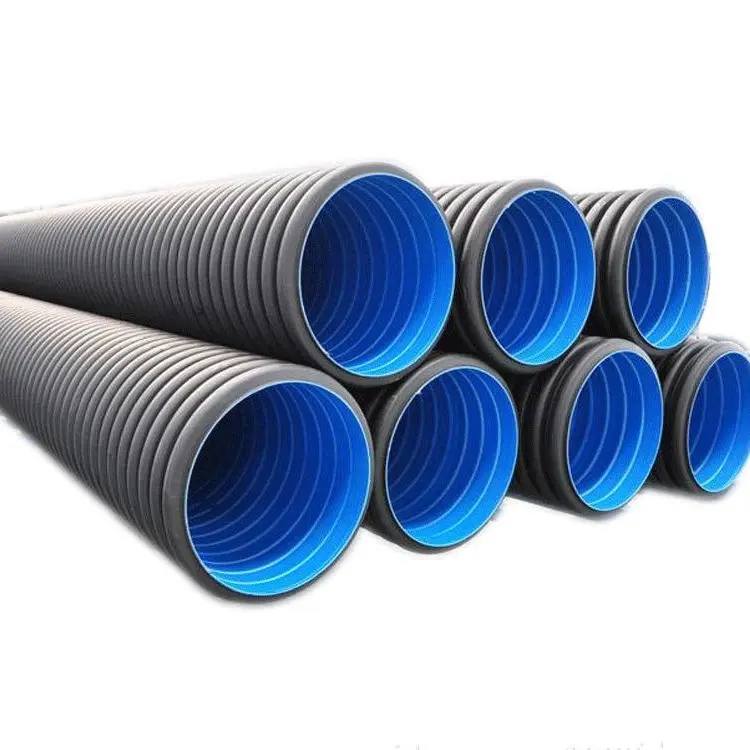
Dual wall corrugated pipe represents a significant advancement in subsurface drainage and conduit solutions. Positioned within the infrastructure supply chain, it serves as a critical component for stormwater management, agricultural drainage, and protective casing for utilities like fiber optics and electrical cabling. Unlike single-wall corrugated pipe, the dual-wall construction, typically consisting of an inner smooth wall and an outer corrugated wall, provides enhanced hydraulic capacity, improved structural integrity, and increased resistance to deformation under load. Its core performance characteristics center around load-bearing capacity (measured in PSI), hydraulic conductivity, and long-term durability in corrosive soil environments. A key industry pain point is consistently achieving consistent annular ring stiffness and ensuring robust connection methods that prevent infiltration and maintain structural stability over the lifespan of the installation.
Material Science & Manufacturing
The predominant material used in dual wall corrugated pipe manufacturing is high-density polyethylene (HDPE), specifically grades conforming to ASTM F894 standards. HDPE is selected for its high tensile strength (typically 40-55 MPa), flexibility, chemical resistance, and low moisture absorption. The raw HDPE resin undergoes extrusion processes. The outer corrugated wall is formed through a single- or double-wall extrusion process, creating the characteristic rings. The inner smooth wall is similarly extruded and then bonded to the corrugated exterior. Critical parameters during extrusion include melt temperature (180-220°C), die pressure (2500-3500 psi), and cooling rate. Precise control of these parameters is vital to ensuring dimensional accuracy, consistent wall thickness, and optimal molecular weight distribution within the HDPE. Welding techniques, such as butt fusion or socket fusion, are employed to create leak-proof joints between pipe sections. The quality of the weld is dependent on temperature control, pressure, and surface cleanliness. Furthermore, the addition of UV stabilizers (typically carbon black) is crucial for preventing degradation from prolonged sun exposure, particularly in above-ground applications. Manufacturing defects, such as incomplete fusion, ovality, and inconsistent wall thickness, are monitored through rigorous quality control procedures, including hydrostatic pressure testing and visual inspection.
Performance & Engineering
Performance of dual wall corrugated pipe is fundamentally governed by its ability to withstand external loads (soil cover, traffic load) without collapsing and to efficiently convey fluids. Force analysis involves calculating the hoop stress and longitudinal stress acting on the pipe wall under various loading conditions. The Annular Ring Stiffness (ARS), measured in PSI, is a critical parameter indicating the pipe's resistance to flattening. Environmental resistance is paramount; HDPE is generally chemically inert but can be susceptible to degradation from prolonged exposure to certain aggressive chemicals. Soil corrosivity, particularly the presence of sulfates and chlorides, can accelerate degradation. Compliance requirements dictate adherence to local, state, and federal regulations regarding stormwater management and environmental protection. For example, many jurisdictions require pipes to meet specific infiltration rates to prevent flooding and groundwater contamination. The inner smooth wall is engineered to minimize friction loss, maximizing hydraulic capacity. Connection systems, including couplings and fittings, are designed to maintain structural integrity and prevent infiltration. Proper installation techniques, including adequate bedding and compaction, are essential for achieving the designed performance characteristics. Finite element analysis (FEA) is frequently employed during the design phase to optimize the pipe geometry and material selection for specific application requirements.
Technical Specifications
| Parameter | Units | Typical Value (12" Diameter, Schedule 40) | Testing Standard |
|---|---|---|---|
| Annular Ring Stiffness (ARS) | PSI | 60 | ASTM F894 |
| Manning's Roughness Coefficient | - | 0.012 | ASTM D3212 |
| Crush Strength (10% Deformation) | PSI | 1800 | ASTM F894 |
| Tensile Strength | MPa | 50 | ASTM D638 |
| Elongation at Break | % | 300 | ASTM D638 |
| Hydrostatic Design Head | Feet | 150 | ASTM F894 |
Failure Mode & Maintenance
Common failure modes in dual wall corrugated pipe include ovalation (deformation of the pipe cross-section), cracking (often initiated at stress concentrations or defects), and joint failure (due to inadequate welding or improper installation). Fatigue cracking can occur under cyclic loading, particularly in areas subject to vibration or repeated impact. Delamination, though less common, can occur if the bond between the corrugated and smooth walls is compromised. Environmental degradation, caused by UV exposure, chemical attack, and temperature fluctuations, can also contribute to failure. Oxidation of the HDPE material over extended periods can reduce its mechanical properties. Preventative maintenance involves regular visual inspection for signs of deformation, cracking, or joint leakage. Backfilling procedures must adhere to manufacturer’s specifications to provide adequate support and prevent excessive stress on the pipe. Proper sediment traps should be installed upstream to prevent debris accumulation and blockage. In the event of a failure, repair options include localized patching with compatible HDPE materials or complete pipe replacement. Detailed failure analysis, including material testing and fracture surface examination, is essential for identifying the root cause of the failure and implementing corrective actions.
Industry FAQ
Q: What is the impact of soil corrosivity on the long-term performance of HDPE corrugated pipe?
A: Soil corrosivity, particularly the presence of sulfates and chlorides, can accelerate the degradation of HDPE. These chemicals can cause stress cracking and reduce the material's tensile strength over time. Selecting HDPE formulations with enhanced chemical resistance and implementing protective measures, such as cathodic protection or barrier coatings, can mitigate these effects. Regular soil testing is recommended to assess the corrosivity levels and inform material selection.
Q: How does annular ring stiffness correlate with the load-bearing capacity of the pipe?
A: Annular Ring Stiffness (ARS) is a direct measure of the pipe’s resistance to flattening under external loads. Higher ARS values indicate greater load-bearing capacity. ARS is a critical parameter for determining the appropriate pipe schedule for a given application, considering factors such as soil cover depth, traffic loads, and potential for impact.
Q: What are the key considerations for ensuring a watertight seal at pipe joints?
A: Achieving a watertight seal requires proper welding technique (butt fusion or socket fusion), meticulous surface preparation (cleaning and drying), and adherence to manufacturer’s specifications for temperature and pressure. Regular inspection of welds for defects, such as porosity or incomplete fusion, is crucial. The use of appropriate gasket materials and proper installation of couplings are also essential.
Q: What is the recommended backfill material and compaction procedure for optimal pipe performance?
A: The recommended backfill material is typically granular material, such as sand or gravel, that provides adequate support and drainage. Compaction should be performed in layers, achieving a specified density (typically 85-95% Proctor density) to minimize settlement and prevent excessive stress on the pipe. Avoid using rocky or abrasive materials that can damage the pipe wall.
Q: How does UV exposure affect the lifespan of HDPE corrugated pipe, and what mitigation strategies are available?
A: Prolonged UV exposure can cause HDPE to become brittle and lose its mechanical properties. Mitigation strategies include incorporating UV stabilizers (carbon black is common) into the HDPE formulation, burying the pipe below ground, or applying a protective coating. For above-ground applications, periodic inspection and re-coating may be necessary.
Conclusion
Dual wall corrugated pipe, leveraging the inherent properties of HDPE, provides a robust and cost-effective solution for a wide range of drainage and conduit applications. Its performance is fundamentally linked to careful material selection, precise manufacturing controls, and adherence to established engineering principles. Understanding the potential failure modes – encompassing mechanical stress, environmental degradation, and improper installation – is crucial for ensuring long-term reliability and minimizing life-cycle costs.
Future developments will likely focus on enhancing material formulations with improved UV resistance and chemical inertness, optimizing pipe geometry for increased hydraulic capacity, and implementing advanced monitoring systems for early detection of potential failures. Continued innovation in connection technologies and installation practices will further enhance the overall performance and sustainability of dual wall corrugated pipe systems.
-
DN25 HDPE Compression Fitting-HORON INTERNATIONAL|Reliable Irrigation Solutions
NewsFeb.11,2026
-
hdpe coupling joint product Manufacturing Analysis
News2026-11-18
-
ppr pipe heating time products Performance Analysis
News2026-11-16
-
hdpe pipe sizes factory Performance Analysis
News2026-11-09
-
HDPE Pipe Sizes Service Performance Analysis
News2026-10-26
-
wholesale 15mm ppr pipe Material Science and Performance Analysis
News2026-10-20
-
wholesale pvc pipe price per foot Technical Analysis
News2026-09-21
-
wholesale long pvc pipe Technical Analysis and Manufacturing Specifications
News2026-09-15
-
wholesale plumbing kitchen sink water lines Material Performance
News2026-09-15
-
wholesale hdpe drip irrigation Material Science
News2026-09-15
-
wholesale hot water ppr pipe Performance Analysis
News2026-09-15
-
wholesale ppr plumbing Performance Analysis
News2026-09-15
-
wholesale ppr pipe supplier Performance Analysis
News2026-09-13
-
wholesale 50mm ppr pipe Performance Analysis
News2026-09-13
-
wholesale hdpe drip pipe Performance Analysis
News2026-09-13
-
wholesale hdpe pipe 63mm price Manufacturing Specification and Performance Analysis
News2026-09-13