

Feb . 11, 2026 00:01 Back to list
dual wall corrugated pipe factories Performance Analysis
Introduction
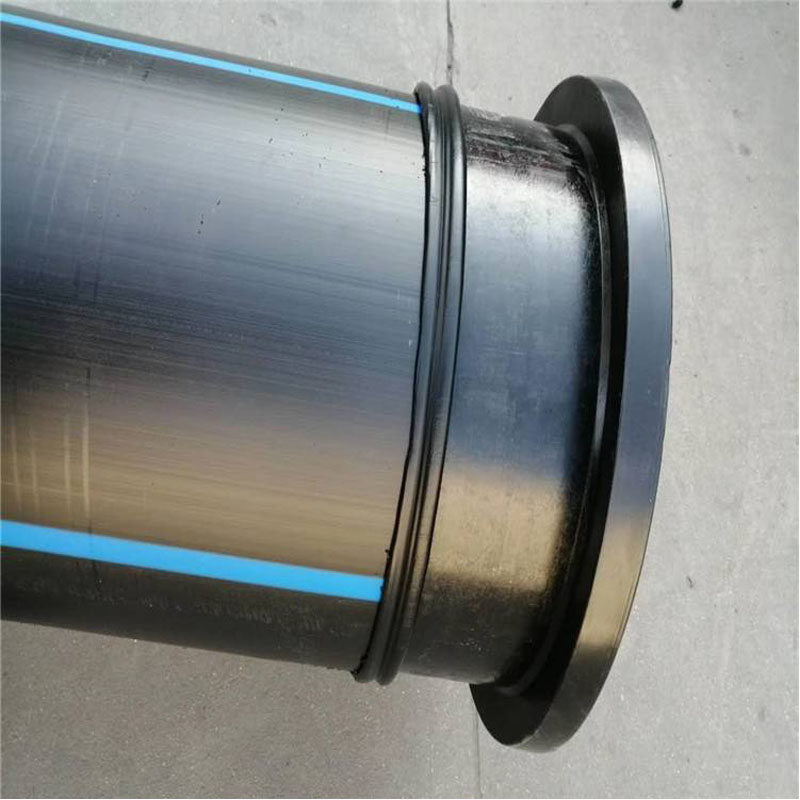
Dual wall corrugated pipe, specifically High-Density Polyethylene (HDPE) dual wall pipe, represents a significant advancement in subsurface drainage and conduit systems. Positioned within the broader infrastructure industry, it serves as a critical component in stormwater management, agricultural drainage, and increasingly, for protective conduit for power and communication cabling. Unlike single-wall corrugated pipe, the dual-wall construction – a smooth inner wall and a corrugated outer wall – offers superior hydraulic capacity, ring stiffness, and overall durability. Core performance characteristics revolve around its ability to withstand soil loads, resist crushing and impact, and maintain long-term integrity in corrosive environments. A primary pain point within the industry centers on ensuring consistent wall thickness and material uniformity during production to guarantee adherence to stringent load-bearing and longevity requirements dictated by various engineering specifications. This guide provides a comprehensive technical overview of dual wall corrugated pipe, encompassing material science, manufacturing processes, performance characteristics, failure modes, and relevant industry standards.
Material Science & Manufacturing
The dominant material for dual wall corrugated pipe is HDPE, chosen for its exceptional chemical resistance, high strength-to-weight ratio, and flexibility. HDPE grades utilized typically fall within the Resin Designation Code (RDC) #2 category, exhibiting a density ranging from 0.93 to 0.97 g/cm³. Key raw material properties include Melt Flow Index (MFI), which dictates processability, and Hydrostatic Design Basis (HDB), defining long-term burst pressure resistance. Manufacturing commences with HDPE resin pelletization, followed by extrusion. The inner layer is created via a smooth-bore extrusion process, ensuring minimal friction for optimal flow. The corrugated outer layer is formed using a specialized corrugating machine, applying a repeating wave pattern to the extruded HDPE. Critical parameters during extrusion include melt temperature (typically 180-220°C), die pressure, and cooling rate. Precise control of these parameters is vital to achieving uniform wall thickness and consistent corrugation profile. Post-extrusion, the pipe undergoes quality control checks, including dimensional verification, hydrostatic pressure testing, and impact resistance assessment. The coupling system, integral to pipe joining, commonly employs split-bell couplers which engage with the pipe’s outer corrugations, creating a watertight seal. Material compatibility with surrounding backfill is also critical; aggressive soils containing high levels of sulfates or chlorides can initiate stress corrosion cracking, necessitating the use of specific HDPE formulations or protective coatings.

Performance & Engineering
The performance of dual wall corrugated pipe is fundamentally governed by its structural integrity under applied loads. Key engineering considerations include vertical load resistance (soil overburden), horizontal load resistance (traffic loads), and impact resistance. Ring stiffness, measured in psi, is a critical parameter, indicating the pipe’s ability to resist flattening under external pressure. Higher ring stiffness values are required for deeper burial depths and areas subject to heavy loads. The corrugated outer wall provides enhanced buckling resistance compared to smooth-wall pipe. Force analysis involves calculating hoop stress and longitudinal stress based on soil pressure, pipe diameter, and wall thickness. Environmental resistance is also paramount. HDPE exhibits excellent resistance to UV degradation, but prolonged exposure can lead to embrittlement. Temperature fluctuations induce thermal expansion and contraction, which must be accounted for in installation procedures to prevent joint separation or pipe deformation. Compliance requirements vary by region and application. In stormwater management, adherence to local drainage regulations is essential. For conduit applications, compliance with electrical and telecommunications standards is mandatory. Specific standards address minimum pipe stiffness, crush resistance, and watertightness. Furthermore, the pipe’s hydraulic capacity, determined by Manning’s equation, dictates its suitability for specific flow rates and drainage requirements.
Technical Specifications
| Parameter | Units | Typical Value | Test Method |
|---|---|---|---|
| Ring Stiffness | psi | 75 - 120 | ASTM D2412 |
| Pipe Diameter | inches | 12 – 60 | ASTM D3212 |
| Manning’s Roughness Coefficient | dimensionless | 0.012 | Calculated |
| Hydrostatic Design Basis (HDB) | psi | 300 – 500 | ASTM D2837 |
| Impact Resistance | ft-lbs | 12 – 20 | ASTM D2444 |
| Joint Leakage | gpm/ft of joint | <0.1 | ASTM D3212 |
Failure Mode & Maintenance
Dual wall corrugated pipe, while durable, is susceptible to several failure modes. Fatigue cracking can occur due to repeated stress cycles from soil movement or traffic loads, particularly at the pipe’s crown. Delamination, the separation of the inner and outer layers, can arise from manufacturing defects or prolonged exposure to moisture. Chemical degradation, caused by aggressive soil constituents, leads to embrittlement and reduced strength. Oxidation, although less common with HDPE, can occur over extended periods, particularly in areas with limited oxygen diffusion. Creep, the slow deformation under sustained load, can affect long-term performance, especially at higher temperatures. Impact damage from construction equipment or excavation activities represents another significant failure source. Maintenance primarily focuses on preventative measures. Proper bedding and backfill compaction are crucial to distribute loads evenly and minimize stress concentration. Regular inspections, particularly in areas prone to settlement or erosion, can identify early signs of damage. Joint integrity should be periodically assessed for leakage. Repair options include localized patching with HDPE welding compounds or, in severe cases, pipe replacement. The selection of appropriate backfill material, avoiding materials with sharp edges or high chemical reactivity, is also a key preventative maintenance strategy.
Industry FAQ
Q: What is the impact of soil pH on the long-term performance of HDPE dual wall pipe?
A: Soil pH significantly influences HDPE durability. Highly acidic or alkaline soils can accelerate polymer degradation. Acidic soils promote oxidation, while alkaline soils can cause saponification, leading to embrittlement. It’s crucial to select HDPE formulations with appropriate stabilizers and, in severely corrosive environments, consider protective coatings or alternative materials.
Q: How does the pipe’s corrugated profile affect its hydraulic capacity compared to smooth-wall pipe?
A: While the corrugations reduce the cross-sectional area for flow, the increased ring stiffness and resistance to ovalization under load maintain a more consistent internal diameter, resulting in higher hydraulic capacity, especially when partially full. The roughness coefficient is slightly higher due to the corrugations, but the overall performance is superior in most applications.
Q: What are the critical considerations for selecting the appropriate ring stiffness for a given application?
A: Ring stiffness selection depends on burial depth, soil type, and anticipated traffic loads. Deeper burial depths and heavier loads require higher ring stiffness values to prevent pipe collapse. Soil type influences the load distribution; cohesive soils exert higher lateral pressure than granular soils. Engineering calculations should be performed to determine the minimum required ring stiffness based on site-specific conditions.
Q: What is the role of the split-bell coupler in ensuring a watertight joint?
A: The split-bell coupler creates a watertight seal by engaging with the outer corrugations of the pipe, compressing the material and forming an interference fit. The coupler’s design incorporates a gasket, typically made of EPDM rubber, that further enhances the seal and compensates for minor irregularities. Proper installation, ensuring full engagement of the coupler, is essential for a reliable connection.
Q: How does temperature affect the installation process and long-term performance of the pipe?
A: HDPE expands and contracts with temperature changes. Installation should avoid excessive tension or compression during cold weather, as this can lead to stress cracking. In hot weather, the pipe becomes more flexible, requiring careful handling to maintain alignment. Long-term performance can be affected by extreme temperature fluctuations, necessitating adequate bedding and backfill support to accommodate thermal movement.
Conclusion
Dual wall corrugated HDPE pipe represents a robust and cost-effective solution for a wide range of drainage and conduit applications. Its superior structural performance, coupled with its inherent chemical resistance and longevity, makes it a preferred choice over traditional materials like concrete or steel. However, successful implementation hinges on a thorough understanding of material properties, manufacturing processes, and engineering principles.
Moving forward, advancements in HDPE formulations, coupled with improved manufacturing techniques, are likely to further enhance the performance and sustainability of dual wall corrugated pipe. The increasing focus on lifecycle cost analysis and environmental responsibility will continue to drive demand for this durable and reliable infrastructure component. Continued adherence to industry standards and best practices in installation and maintenance will be critical to ensuring its long-term integrity and maximizing its service life.
-
DN25 HDPE Compression Fitting-HORON INTERNATIONAL|Reliable Irrigation Solutions
NewsFeb.11,2026
-
hdpe coupling joint product Manufacturing Analysis
News2026-11-18
-
ppr pipe heating time products Performance Analysis
News2026-11-16
-
hdpe pipe sizes factory Performance Analysis
News2026-11-09
-
HDPE Pipe Sizes Service Performance Analysis
News2026-10-26
-
wholesale 15mm ppr pipe Material Science and Performance Analysis
News2026-10-20
-
wholesale pvc pipe price per foot Technical Analysis
News2026-09-21
-
wholesale long pvc pipe Technical Analysis and Manufacturing Specifications
News2026-09-15
-
wholesale plumbing kitchen sink water lines Material Performance
News2026-09-15
-
wholesale hdpe drip irrigation Material Science
News2026-09-15
-
wholesale hot water ppr pipe Performance Analysis
News2026-09-15
-
wholesale ppr plumbing Performance Analysis
News2026-09-15
-
wholesale ppr pipe supplier Performance Analysis
News2026-09-13
-
wholesale 50mm ppr pipe Performance Analysis
News2026-09-13
-
wholesale hdpe drip pipe Performance Analysis
News2026-09-13
-
wholesale hdpe pipe 63mm price Manufacturing Specification and Performance Analysis
News2026-09-13