

Feb . 11, 2026 00:01 Back to list
double walled corrugated pipe factory Manufacturing Analysis
Introduction
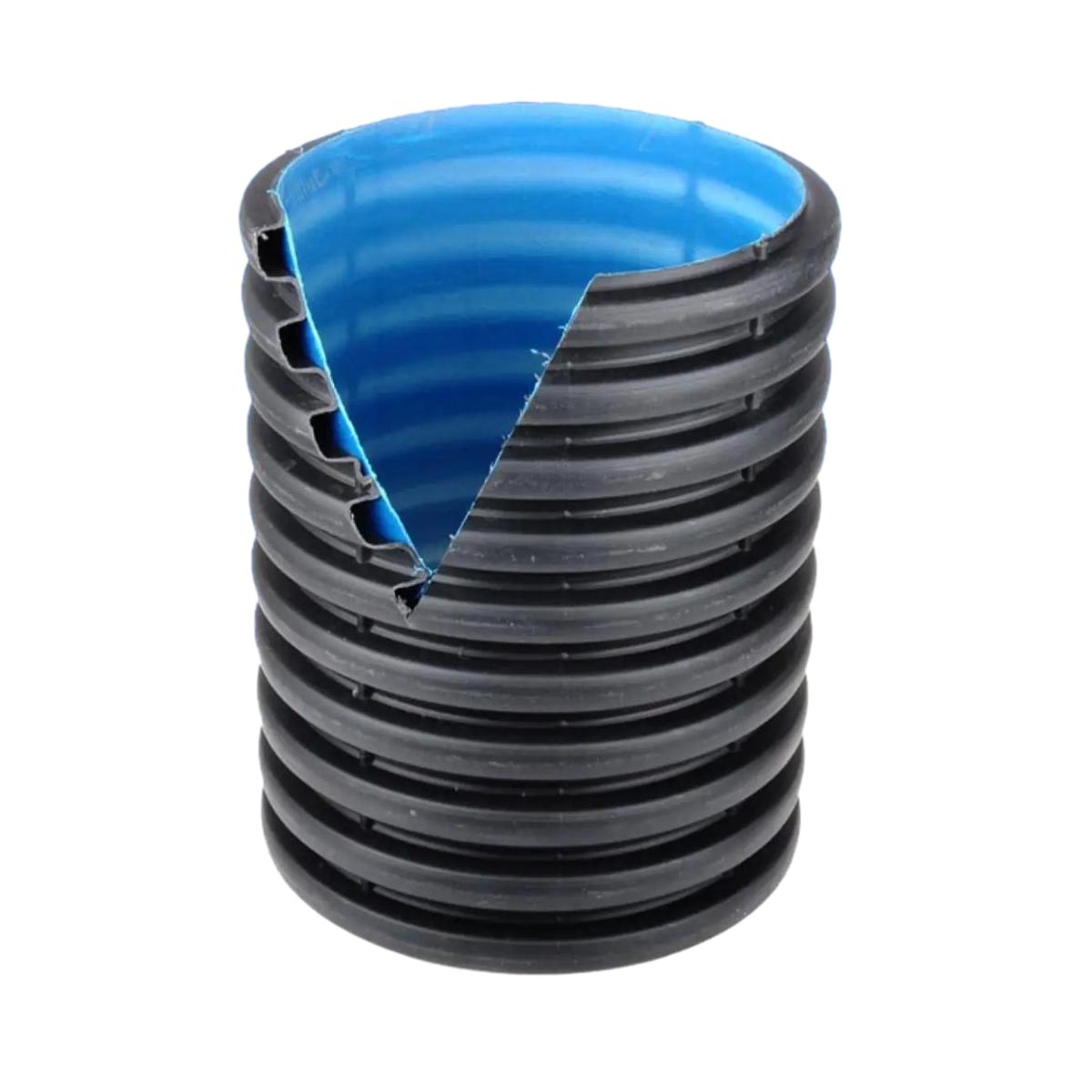
Double walled corrugated pipe represents a significant advancement in subsurface drainage and fluid conveyance systems. Positioned within the broader infrastructure industry, specifically the pipe manufacturing sector, these pipes address critical shortcomings of traditional single-walled corrugated solutions. Their primary function is to provide a robust, long-lasting, and environmentally secure method for stormwater management, sanitary sewer applications, and industrial drainage. Core performance characteristics include enhanced structural integrity due to the dual-layer construction, superior resistance to soil loading and impact, and improved hydraulic capacity. The increased rigidity and smooth inner liner minimize infiltration and exfiltration, preventing groundwater contamination and maximizing flow efficiency. This guide will comprehensively detail the material science, manufacturing processes, performance parameters, potential failure modes, and relevant industry standards governing double walled corrugated pipe production and application. A key industry pain point is the need for durable, corrosion-resistant piping solutions capable of withstanding aggressive soil conditions and heavy loads, particularly in infrastructure projects demanding extended service life and minimal maintenance.
Material Science & Manufacturing
Double walled corrugated pipes are typically manufactured from high-density polyethylene (HDPE), a thermoplastic polymer selected for its excellent chemical resistance, high strength-to-weight ratio, and durability. The outer corrugated layer, responsible for structural rigidity, commonly utilizes HDPE resins with a melt flow index (MFI) optimized for extrusion and corrugation. The inner smooth layer, crucial for hydraulic performance, typically employs HDPE resins with lower MFI values to ensure a consistent, seamless inner surface. Additives such as UV stabilizers and antioxidants are incorporated into the HDPE formulation to enhance resistance to environmental degradation. Manufacturing begins with the extrusion of both the corrugated and smooth HDPE layers simultaneously using a co-extrusion process. This process involves feeding HDPE pellets into separate extruders, melting and shaping the plastic, and then combining the layers using a die. Key parameter control during extrusion includes maintaining precise temperature profiles along the extruder barrel to ensure complete melting and homogenous mixing of the HDPE and additives. Critical control points include die temperature, extrusion speed, and cooling rates – deviations impact layer adhesion and overall pipe dimensional accuracy. The corrugated profile is formed using a specialized corrugation unit immediately following extrusion. Post-extrusion, pipes undergo dimensional inspection and quality control checks to verify compliance with industry standards. The bond strength between the two layers is critically important and is assessed using peel tests and tensile adhesion tests.
Performance & Engineering
The performance of double walled corrugated pipe is heavily influenced by its structural integrity under load. The corrugated outer layer provides resistance to external loads such as soil overburden and surface traffic. Engineering calculations for load-bearing capacity utilize principles of ring compression theory, accounting for the pipe’s diameter, wall thickness, corrugation profile, and the modulus of elasticity of HDPE. A critical parameter is the Pipe Stiffness (PS), measured in PSI, representing the pipe’s resistance to flattening under a defined load. Environmental resistance is another key consideration. HDPE exhibits excellent resistance to most chemicals commonly found in soil and wastewater, but long-term exposure to certain aggressive substances can cause degradation. UV exposure can also lead to embrittlement over time; therefore, UV stabilizers are essential. Compliance requirements vary by region and application. For stormwater management, compliance with local drainage ordinances and environmental regulations is paramount. Sanitary sewer applications require adherence to stringent standards for leak tightness and resistance to wastewater components. Functional implementation necessitates careful consideration of installation procedures. Proper bedding and backfill materials are crucial to distribute loads evenly and prevent pipe deformation. Connection methods, such as bell-and-spigot or gasketed couplings, must ensure a watertight seal. Hydraulic analysis is essential to determine the appropriate pipe diameter and slope to achieve desired flow rates and prevent sedimentation.
Technical Specifications
| Parameter | Unit | Typical Value (12" Diameter Pipe) | Testing Standard |
|---|---|---|---|
| Pipe Diameter | inches | 12 | ASTM F894 |
| Pipe Stiffness (PS) | PSI | 54 | ASTM F894 |
| Manning's Roughness Coefficient | dimensionless | 0.012 | ASTM D3212 |
| Crush Strength | lbs/ft | 1600 | ASTM F894 |
| Tensile Strength (HDPE) | PSI | 4000 | ASTM D638 |
| Elongation at Break (HDPE) | % | 300 | ASTM D638 |
Failure Mode & Maintenance
Double walled corrugated pipes, while durable, are susceptible to specific failure modes. Fatigue cracking can occur under cyclic loading, particularly in areas of high stress concentration such as at joints or where the pipe is subjected to repeated bending. Delamination, separation of the inner and outer layers, can result from poor adhesion during manufacturing or exposure to extreme temperatures. Degradation of the HDPE material can be caused by prolonged UV exposure, resulting in embrittlement and reduced impact resistance. Oxidation can also occur, leading to changes in the polymer’s chemical structure and weakening of the pipe wall. Installation-related failures include improper bedding and backfill, which can lead to uneven load distribution and pipe deformation. Joint failures, caused by inadequate sealing or improper installation of couplings, can result in leakage. Maintenance primarily focuses on preventative measures. Regular visual inspections can identify signs of cracking, deformation, or joint leakage. Ensuring proper drainage around the pipe and avoiding heavy loads directly over the pipe can minimize stress and prolong service life. For minor cracking, HDPE repair sleeves can be used to reinforce the damaged area. In cases of significant delamination or structural failure, pipe replacement is typically required. Soil analysis can also help identify aggressive soil conditions that may accelerate degradation and inform appropriate mitigation strategies, such as the use of protective coatings or alternative pipe materials in highly corrosive environments.
Industry FAQ
Q: What is the impact of soil corrosivity on the long-term performance of double walled corrugated pipe?
A: Soil corrosivity, particularly the presence of sulfates and chlorides, can accelerate the degradation of HDPE. These chemicals can induce stress cracking and reduce the polymer’s impact resistance. Implementing protective measures, such as a geo-textile wrap or selecting HDPE formulations with enhanced chemical resistance, is crucial in corrosive soil environments. Regular soil testing is recommended to assess the level of corrosivity and inform appropriate mitigation strategies.
Q: How does the corrugation profile affect the pipe’s load-bearing capacity?
A: The corrugation profile significantly influences the pipe’s ability to resist external loads. Deeper and more frequent corrugations generally provide greater stiffness and load-bearing capacity. However, the profile must also be optimized for hydraulic efficiency; excessively deep corrugations can increase flow resistance. The specific profile design is typically dictated by the intended application and the anticipated load conditions.
Q: What are the key considerations for selecting the appropriate pipe diameter for a stormwater drainage system?
A: Selecting the correct pipe diameter requires a comprehensive hydraulic analysis. Factors to consider include the anticipated peak flow rate, slope of the pipe, roughness coefficient, and allowable headloss. Under-sizing the pipe can lead to backwater effects and flooding, while over-sizing can be unnecessarily expensive. Software modeling and adherence to local drainage codes are essential for accurate sizing.
Q: What is the significance of the bond strength between the inner and outer layers of the pipe?
A: The bond strength between the inner and outer layers is critical for maintaining the structural integrity of the pipe. Weak bonding can lead to delamination, reducing the pipe’s load-bearing capacity and increasing the risk of leakage. Manufacturing process control and quality assurance testing are essential to ensure adequate bond strength.
Q: What are the common installation errors that can lead to premature pipe failure?
A: Common installation errors include inadequate bedding and backfill compaction, improper joint assembly, and damage during handling. Proper bedding provides uniform support and distributes loads evenly. Compaction prevents settlement and ensures stability. Correct joint assembly guarantees a watertight seal. Careful handling minimizes the risk of cracking or deformation.
Conclusion
Double walled corrugated pipe represents a robust and versatile solution for a wide range of subsurface drainage and conveyance applications. Its inherent advantages in structural strength, chemical resistance, and hydraulic efficiency make it a preferred choice over traditional piping materials in many scenarios. Understanding the material science, manufacturing processes, and performance characteristics of these pipes is crucial for engineers, procurement managers, and installers to ensure optimal system performance and longevity.
Continued advancements in HDPE resin technology and manufacturing techniques will likely lead to further improvements in the performance and sustainability of double walled corrugated pipe. Focus areas include the development of more chemically resistant formulations, enhanced UV stabilization, and more efficient manufacturing processes. By adhering to relevant industry standards and best practices, stakeholders can maximize the benefits of this valuable infrastructure component.
-
DN25 HDPE Compression Fitting-HORON INTERNATIONAL|Reliable Irrigation Solutions
NewsFeb.11,2026
-
hdpe coupling joint product Manufacturing Analysis
News2026-11-18
-
ppr pipe heating time products Performance Analysis
News2026-11-16
-
hdpe pipe sizes factory Performance Analysis
News2026-11-09
-
HDPE Pipe Sizes Service Performance Analysis
News2026-10-26
-
wholesale 15mm ppr pipe Material Science and Performance Analysis
News2026-10-20
-
wholesale pvc pipe price per foot Technical Analysis
News2026-09-21
-
wholesale long pvc pipe Technical Analysis and Manufacturing Specifications
News2026-09-15
-
wholesale plumbing kitchen sink water lines Material Performance
News2026-09-15
-
wholesale hdpe drip irrigation Material Science
News2026-09-15
-
wholesale hot water ppr pipe Performance Analysis
News2026-09-15
-
wholesale ppr plumbing Performance Analysis
News2026-09-15
-
wholesale ppr pipe supplier Performance Analysis
News2026-09-13
-
wholesale 50mm ppr pipe Performance Analysis
News2026-09-13
-
wholesale hdpe drip pipe Performance Analysis
News2026-09-13
-
wholesale hdpe pipe 63mm price Manufacturing Specification and Performance Analysis
News2026-09-13