

Feb . 11, 2026 00:01 Back to list
63mm pvc pipe service Performance Analysis
Introduction
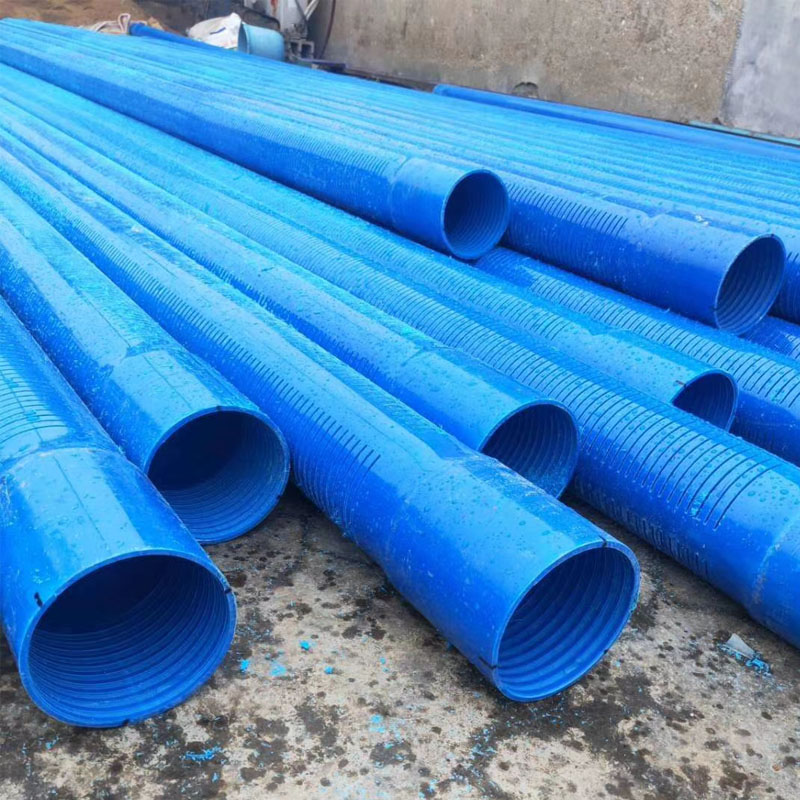
63mm Polyvinyl Chloride (PVC) pipe for service applications represents a critical component in potable water distribution, irrigation systems, drainage, and increasingly, gas distribution networks. Its position within the construction and utilities supply chain is as a cost-effective, durable, and chemically resistant piping solution. This technical guide details the material science, manufacturing processes, performance characteristics, potential failure modes, and relevant industry standards governing 63mm PVC service pipe. PVC’s adoption stems from its non-corrosive properties, ease of installation via solvent welding or rubber-gasketed joints, and significantly lower lifecycle cost compared to traditional metallic piping systems. Core performance characteristics, including pressure rating, tensile strength, impact resistance (notched Izod), and long-term hydrostatic strength, are paramount to ensuring reliable and safe operation within defined service conditions. This guide addresses common industry pain points related to material degradation, joint integrity, and adherence to regional regulations.
Material Science & Manufacturing
63mm PVC service pipe is primarily manufactured from Polyvinyl Chloride resin, typically suspension PVC (S-PVC), known for its balance of properties. The resin comprises approximately 97-99% of the pipe’s composition. Key additives include impact modifiers (e.g., chlorinated polyethylene - CPE, methyl methacrylate-butadiene-styrene - MBS) to enhance toughness, thermal stabilizers (e.g., organotin compounds, calcium-zinc stabilizers) to prevent degradation during processing and service, lubricants (e.g., stearates) to improve flow and processability, and pigments (e.g., titanium dioxide) for UV protection and color. The raw material’s K-value (molecular weight index) directly impacts the pipe’s strength and processing characteristics; typically, a K-value of 67-74 is employed for pressure-rated pipe. Manufacturing typically follows an extrusion process. PVC resin and additives are thoroughly mixed and fed into a twin-screw extruder where they are heated, melted, and homogenized. The molten PVC is then forced through a die to form a seamless pipe. Critical parameters during extrusion include die temperature (180-200°C), screw speed (20-60 rpm), and haul-off speed, which dictate pipe dimensions and wall thickness consistency. Subsequent cooling, typically using a water bath, solidifies the pipe. Quality control involves rigorous dimensional checks, hydrostatic pressure testing, and impact resistance testing according to established standards. Wall thickness control is particularly vital, as deviations significantly impact pressure-bearing capacity. Proper blending of additives is crucial to avoid localized degradation or brittleness.
Performance & Engineering
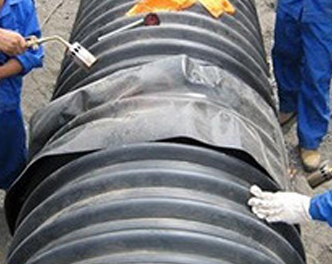
The performance of 63mm PVC service pipe is governed by several engineering principles. Firstly, hoop stress analysis is critical for determining the pipe’s pressure-bearing capacity. The Barlow's formula (σ = PD/2t, where σ is hoop stress, P is internal pressure, D is outer diameter, and t is wall thickness) dictates the stress experienced by the pipe wall. PVC exhibits a dual-failure behavior: brittle failure at low temperatures and ductile failure at higher temperatures. Long-term hydrostatic strength (LTHS) is a key design criterion, accounting for the reduction in strength over time due to creep. LTHS is typically determined through accelerated aging tests. Environmental resistance is also paramount. PVC is susceptible to degradation from prolonged UV exposure, leading to discoloration and embrittlement. The inclusion of UV stabilizers (e.g., titanium dioxide) mitigates this effect. Chemical compatibility is crucial, particularly in applications involving exposure to soil chemicals or treated water. PVC is generally resistant to most acids and bases, but can be attacked by certain chlorinated hydrocarbons and aromatic compounds. Joint integrity is another critical aspect, achieved through solvent welding or rubber-gasketed joints. Solvent welding creates a homogeneous joint, where the PVC material is chemically bonded. Gasketed joints rely on the compression of a rubber gasket between the pipe and fitting. These joints must withstand hydrostatic pressure and maintain watertightness over time. Compliance requirements, dictated by local regulations and industry standards, often specify minimum pressure ratings, material grades, and installation procedures.
Technical Specifications
| Parameter | Unit | Typical Value (Schedule 40) | Typical Value (Schedule 80) |
|---|---|---|---|
| Outer Diameter | mm | 63.5 | 63.5 |
| Inner Diameter (Schedule 40) | mm | 54.8 | N/A |
| Inner Diameter (Schedule 80) | mm | N/A | 48.3 |
| Wall Thickness (Schedule 40) | mm | 4.35 | N/A |
| Wall Thickness (Schedule 80) | mm | N/A | 7.9 |
| Pressure Rating (at 23°C) | MPa | 1.0 | 1.6 |
| Tensile Strength | MPa | 55 | 55 |
| Impact Strength (Notched Izod) | J/m | 40 | 60 |
| Long Term Hydrostatic Strength (LTHS) | % of Short Term Strength | 42 | 42 |
| Operating Temperature Range | °C | 0 - 60 | 0 - 60 |
| Density | g/cm³ | 1.40 | 1.40 |
Failure Mode & Maintenance
63mm PVC service pipe is susceptible to several failure modes. Slow crack growth (SCG) is a common issue, particularly in systems exposed to sustained tensile stress and certain aggressive chemicals. SCG manifests as small cracks that propagate slowly over time, eventually leading to catastrophic failure. Another prevalent failure mode is brittle fracture, occurring at low temperatures or due to impact loading. UV degradation, as previously mentioned, weakens the material and makes it more prone to cracking. Joint failures can occur due to improper solvent welding techniques (insufficient solvent application, inadequate dwell time) or gasket failures (damaged gaskets, improper installation). Soil settlement and ground movement can induce stress on the pipe, leading to cracking or joint separation. Oxidation, although relatively slow in PVC, can contribute to long-term degradation. Maintenance involves regular visual inspections to identify signs of cracking, discoloration, or joint leakage. Pressure testing can be conducted to assess the integrity of the system. For minor cracks, repair sleeves or couplings can be used. Joint leaks can often be addressed by re-tightening fittings or replacing gaskets. Preventative maintenance includes ensuring proper bedding and backfill around the pipe to minimize stress and providing UV protection where necessary. Cathodic protection, while typically used for metallic pipes, is not applicable to PVC. Proper installation techniques, adhering to industry standards, are the most effective means of preventing failures.
Industry FAQ
Q: What is the impact of water hammer on 63mm PVC pipe and how can it be mitigated?
A: Water hammer, or hydraulic transient pressure, can significantly stress PVC pipe. The sudden change in flow velocity creates a pressure surge that exceeds the pipe's design limits, potentially causing cracking or joint failure. Mitigation strategies include installing surge arrestors (air chambers or pressure relief valves) to absorb the pressure wave, using slow-closing valves, and ensuring proper pipe anchoring to prevent movement during pressure fluctuations. Careful system design to minimize flow velocity changes is also crucial.
Q: How does soil corrosivity affect the long-term performance of buried 63mm PVC pipe?
A: While PVC itself is not susceptible to corrosion, highly corrosive soils can indirectly impact its performance. Aggressive soil chemistries (e.g., high sulfate content, acidic conditions) can leach plasticizers from the PVC, making it more brittle over time. Additionally, soil movement caused by expansive clay soils can induce stress on the pipe. Protective measures include using a suitable bedding material, applying a protective coating, and conducting a thorough soil analysis prior to installation.
Q: What are the differences between Schedule 40 and Schedule 80 PVC pipe, and when should each be used?
A: Schedule 40 and Schedule 80 refer to the pipe's wall thickness. Schedule 80 has a thicker wall than Schedule 40, resulting in higher pressure-bearing capacity and increased rigidity. Schedule 40 is typically used for lower-pressure applications, such as irrigation and drainage systems. Schedule 80 is preferred for higher-pressure applications, such as potable water distribution and industrial processes, where greater strength and durability are required.
Q: What is the acceptable range of deflection for a 63mm PVC service line during installation?
A: Excessive deflection can induce stress on the pipe and joints, increasing the risk of failure. The acceptable range of deflection is typically specified by the manufacturer and relevant standards, but generally should not exceed 5% of the pipe's diameter (approximately 3.2mm for a 63mm pipe). Proper bedding and backfill support are essential to minimize deflection.
Q: What considerations should be made regarding thermal expansion and contraction of 63mm PVC pipe?
A: PVC expands and contracts with temperature changes. Failure to accommodate this movement can induce significant stress on the pipe and joints. Expansion and contraction joints should be incorporated into long pipe runs to allow for thermal movement. Proper anchoring and support are also important to control the movement and prevent buckling or joint separation. The coefficient of linear expansion for PVC is approximately 8 x 10⁻⁵ /°C.
Conclusion
63mm PVC service pipe represents a robust and cost-effective solution for a wide range of fluid conveyance applications. Its performance is intrinsically linked to material selection, manufacturing quality, proper installation practices, and an understanding of potential failure modes. A comprehensive evaluation of environmental factors, operating conditions, and adherence to relevant industry standards is paramount to ensuring long-term reliability and safe operation.
Future advancements in PVC formulations, including the incorporation of enhanced impact modifiers and UV stabilizers, will further improve the durability and lifespan of PVC piping systems. Continued research into SCG mitigation strategies and the development of improved jointing technologies are also critical areas of focus. By embracing a proactive approach to maintenance and inspection, coupled with a thorough understanding of the material’s inherent properties, the long-term value of 63mm PVC service pipe can be maximized.
-
DN25 HDPE Compression Fitting-HORON INTERNATIONAL|Reliable Irrigation Solutions
NewsFeb.11,2026
-
hdpe coupling joint product Manufacturing Analysis
News2026-11-18
-
ppr pipe heating time products Performance Analysis
News2026-11-16
-
hdpe pipe sizes factory Performance Analysis
News2026-11-09
-
HDPE Pipe Sizes Service Performance Analysis
News2026-10-26
-
wholesale 15mm ppr pipe Material Science and Performance Analysis
News2026-10-20
-
wholesale pvc pipe price per foot Technical Analysis
News2026-09-21
-
wholesale long pvc pipe Technical Analysis and Manufacturing Specifications
News2026-09-15
-
wholesale plumbing kitchen sink water lines Material Performance
News2026-09-15
-
wholesale hdpe drip irrigation Material Science
News2026-09-15
-
wholesale hot water ppr pipe Performance Analysis
News2026-09-15
-
wholesale ppr plumbing Performance Analysis
News2026-09-15
-
wholesale ppr pipe supplier Performance Analysis
News2026-09-13
-
wholesale 50mm ppr pipe Performance Analysis
News2026-09-13
-
wholesale hdpe drip pipe Performance Analysis
News2026-09-13
-
wholesale hdpe pipe 63mm price Manufacturing Specification and Performance Analysis
News2026-09-13