

Feb . 11, 2026 00:01 Back to list
48 inch hdpe pipe cost products Performance Analysis
Introduction
High-Density Polyethylene (HDPE) pipe, specifically in a 48-inch diameter, represents a significant component in large-scale infrastructure projects. Its application spans various industries including water and wastewater management, drainage systems, mining, and industrial fluid transport. This guide provides a comprehensive technical overview of 48-inch HDPE pipe, detailing its material science, manufacturing processes, performance characteristics, potential failure modes, and relevant industry standards. The increasing preference for HDPE over traditional materials like concrete and steel is driven by its inherent advantages in corrosion resistance, lightweight nature, ease of installation, and long-term cost-effectiveness. Understanding the nuances of this product is crucial for engineers, procurement managers, and project stakeholders involved in specifying and implementing pipeline systems. The “cost” component is inextricably linked to material grade, pressure rating (SDR - Standard Dimension Ratio), and geographical location due to shipping and regulatory variations.
Material Science & Manufacturing
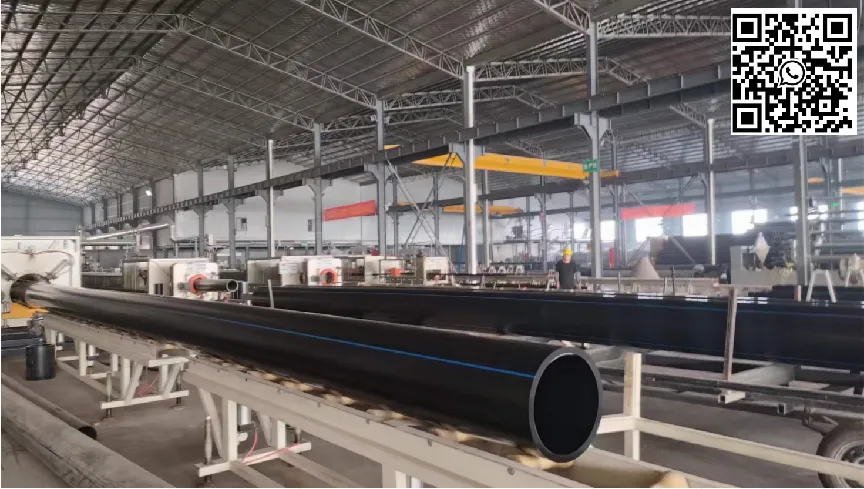
HDPE pipe is manufactured from polyethylene resin, typically utilizing high-density polyethylene grades conforming to PE 100, PE 80, or PE 63 standards. The resin’s properties, including molecular weight distribution, density, and melt flow index, directly influence the pipe's mechanical strength and long-term performance. The density of HDPE used in 48-inch pipe typically ranges from 0.93 to 0.97 g/cm³. Raw materials often include additives such as carbon black for UV protection, antioxidants to prevent thermal degradation, and stabilizers to enhance processing. Manufacturing primarily employs extrusion processes. The process begins with the polyethylene resin being fed into a large extruder, where it is heated and melted. This molten plastic is then forced through a circular die, forming a continuous pipe. Critical parameters during extrusion include maintaining precise temperature control (melt temperature typically between 180-210°C), consistent die pressure, and accurate wall thickness control. Larger diameter pipes, like the 48-inch, often utilize a spiral mandrel or continuous winding process to ensure dimensional stability and prevent sagging during cooling. Cooling is typically achieved using a water bath, followed by coiling or cutting to the desired length. Quality control measures involve rigorous testing of the raw material and the finished pipe for hydrostatic pressure, tensile strength, and dimensional accuracy.
Performance & Engineering
The performance of 48-inch HDPE pipe is dictated by its ability to withstand internal pressure, external loads, and environmental stresses. Hydrostatic design strength is a primary consideration, determined by the pipe’s SDR (Standard Dimension Ratio – the ratio of pipe diameter to wall thickness). Lower SDR values indicate thicker walls and higher pressure ratings. Force analysis involves accounting for internal pressure stress (Hoop stress), longitudinal stress, and external loads such as soil overburden, traffic loads, and hydrostatic uplift. HDPE exhibits excellent creep resistance, minimizing long-term deformation under sustained pressure. The pipe’s flexibility allows for some degree of ground movement without compromising its integrity. Environmental resistance is another key attribute. HDPE is highly resistant to chemical attack from most acids, bases, and solvents commonly encountered in industrial applications. However, prolonged exposure to strong oxidizing agents should be avoided. Installation methods influence performance. Proper bedding and backfill compaction are critical to distribute external loads and prevent pipe ovalation. Jointing techniques, typically involving butt fusion, electrofusion, or mechanical fittings, must ensure a leak-tight seal. Compliance requirements are governed by industry standards such as AWWA (American Water Works Association) standards for potable water systems, ASTM standards for material specifications, and local building codes.
Technical Specifications
| Parameter | Units | PE 100 (Typical) | PE 80 (Typical) |
|---|---|---|---|
| Nominal Diameter | inches | 48 | 48 |
| Standard Dimension Ratio (SDR) | - | 17 | 21 |
| Wall Thickness (SDR 17) | inches | 0.75 | 0.68 |
| Pressure Rating (at 73°F) | psi | 160 | 125 |
| Density | g/cm³ | 0.953 | 0.941 |
| Hydrostatic Stress Resistance (Minimum) | hours | 1000 | 800 |
Failure Mode & Maintenance
While HDPE is a durable material, several failure modes can occur in 48-inch pipe installations. Slow Crack Growth (SCG) is a primary concern, initiated by sustained tensile stress and exposure to certain chemicals or environmental factors. Fatigue cracking can occur due to cyclical pressure fluctuations or external loads. Joint failures, particularly in butt-fused joints, can result from improper fusion parameters or contamination during the welding process. External corrosion, though HDPE itself is corrosion-resistant, can affect metallic components within the pipeline system (e.g., fittings). UV degradation can occur in exposed sections of pipe, leading to embrittlement. Ground movement and settlement can induce excessive stress on the pipe, causing ovalation or cracking. Maintenance strategies involve regular inspections, pressure testing, and visual assessment of the pipeline. Leak detection surveys using acoustic monitoring or tracer gas techniques can identify potential failures. For butt-fused joints, non-destructive testing methods such as ultrasonic testing can verify weld integrity. Repair options include localized patching, sleeve repairs, or complete pipe replacement, depending on the severity of the damage. Preventive maintenance includes ensuring adequate bedding and backfill support, protecting exposed sections from UV radiation, and controlling chemical exposure within the pipeline.
Industry FAQ
Q: What is the typical lifespan of a 48-inch HDPE pipe installed in a potable water application?
A: A properly installed and maintained 48-inch HDPE pipe in a potable water application can realistically have a lifespan exceeding 50-100 years. The lifespan is influenced by factors such as water quality, operating pressure, soil conditions, and UV exposure. The inherent corrosion resistance of HDPE significantly contributes to this longevity, compared to metallic alternatives.
Q: How does the cost of 48-inch HDPE pipe compare to steel pipe of equivalent pressure rating?
A: Initially, the material cost of 48-inch HDPE pipe may be higher than steel. However, the total installed cost is often lower due to HDPE's lighter weight, which reduces transportation and installation costs. Furthermore, HDPE eliminates the need for corrosion protection measures (e.g., coatings, cathodic protection) associated with steel, resulting in significant long-term cost savings.
Q: What is the recommended bedding material for a 48-inch HDPE pipeline?
A: The recommended bedding material is typically granular material, free of rocks and sharp objects, providing uniform support to the pipe. Sand or gravel conforming to AWWA C111 specifications are commonly used. Proper compaction of the bedding material is crucial to distribute external loads and prevent pipe deformation.
Q: What are the primary considerations for butt fusion welding of 48-inch HDPE pipe?
A: Key considerations include ensuring clean and dry pipe ends, precise temperature control of the heating plates, appropriate fusion pressure and time, and proper alignment of the pipe segments. Qualified and certified fusion operators are essential. Non-destructive testing (NDT) should be performed to verify weld integrity.
Q: How does the flexibility of HDPE affect pipeline design in seismically active areas?
A: HDPE’s flexibility is a significant advantage in seismically active areas. It allows the pipeline to accommodate ground movement and deformation without fracturing. However, careful consideration must be given to anchoring and restraint systems to prevent excessive movement and potential pull-out at joints.
Conclusion
48-inch HDPE pipe represents a robust and cost-effective solution for large-diameter pipeline applications. Its inherent material properties, coupled with advanced manufacturing techniques, deliver exceptional performance in terms of corrosion resistance, durability, and ease of installation. The detailed understanding of material science, performance parameters, and potential failure modes outlined in this guide is essential for ensuring the long-term reliability and integrity of these critical infrastructure assets.
Future trends point towards increased adoption of HDPE in diverse applications, driven by growing demand for sustainable and resilient infrastructure. Advancements in HDPE resin technology will likely lead to even higher strength and improved performance characteristics. Continued research and development in jointing technologies and non-destructive testing methods will further enhance the reliability and longevity of HDPE pipeline systems. A focus on lifecycle cost analysis will continue to favor HDPE over traditional materials in many projects.
-
DN25 HDPE Compression Fitting-HORON INTERNATIONAL|Reliable Irrigation Solutions
NewsFeb.11,2026
-
hdpe coupling joint product Manufacturing Analysis
News2026-11-18
-
ppr pipe heating time products Performance Analysis
News2026-11-16
-
hdpe pipe sizes factory Performance Analysis
News2026-11-09
-
HDPE Pipe Sizes Service Performance Analysis
News2026-10-26
-
wholesale 15mm ppr pipe Material Science and Performance Analysis
News2026-10-20
-
wholesale pvc pipe price per foot Technical Analysis
News2026-09-21
-
wholesale long pvc pipe Technical Analysis and Manufacturing Specifications
News2026-09-15
-
wholesale plumbing kitchen sink water lines Material Performance
News2026-09-15
-
wholesale hdpe drip irrigation Material Science
News2026-09-15
-
wholesale hot water ppr pipe Performance Analysis
News2026-09-15
-
wholesale ppr plumbing Performance Analysis
News2026-09-15
-
wholesale ppr pipe supplier Performance Analysis
News2026-09-13
-
wholesale 50mm ppr pipe Performance Analysis
News2026-09-13
-
wholesale hdpe drip pipe Performance Analysis
News2026-09-13
-
wholesale hdpe pipe 63mm price Manufacturing Specification and Performance Analysis
News2026-09-13