

Feb . 11, 2026 00:01 Back to list
48 inch hdpe pipe cost product Performance Analysis
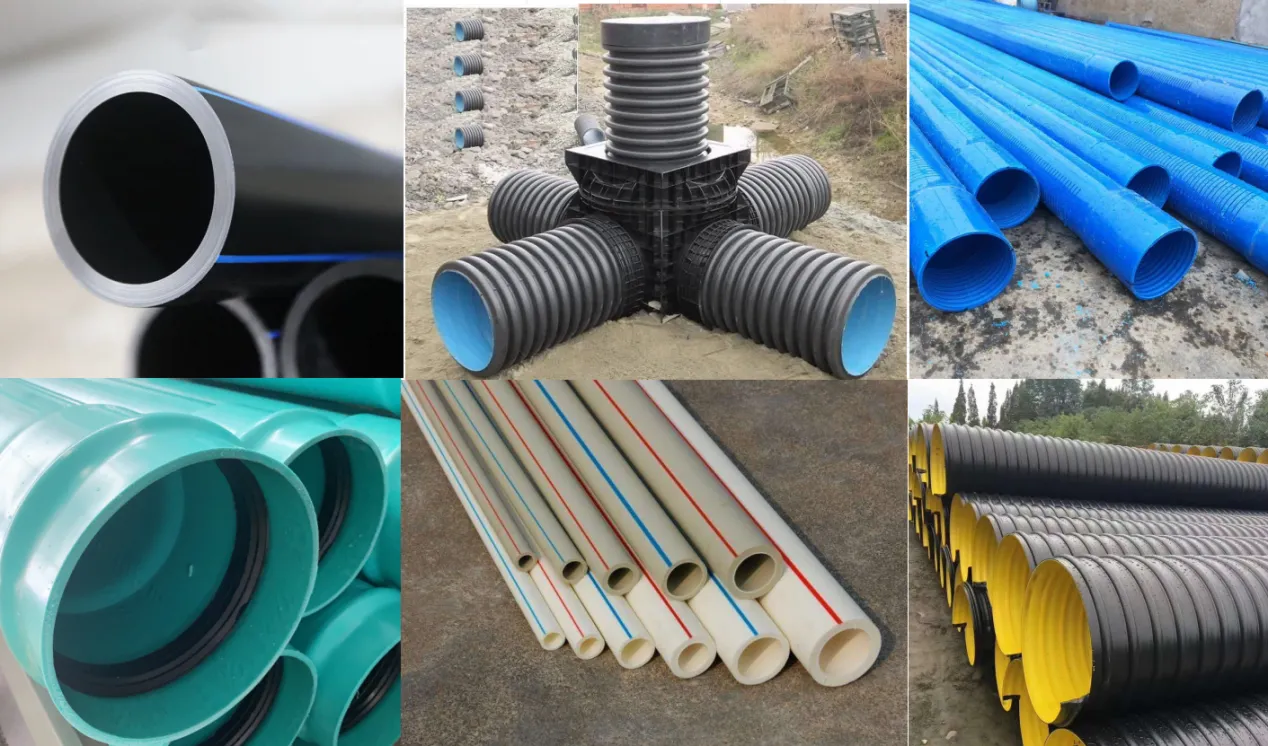
Introduction
High-Density Polyethylene (HDPE) pipe, specifically in a 48-inch diameter, represents a critical component in large-scale infrastructure projects. Its primary application lies in gravity-fed sewer systems, stormwater management, industrial effluent conveyance, and increasingly, water transmission lines. Positioned within the broader pipeline industry, 48-inch HDPE pipe offers a compelling alternative to traditional materials like concrete, steel, and ductile iron, primarily due to its lightweight nature, chemical resistance, and long-term durability. Core performance characteristics revolve around maintaining structural integrity under load, resisting internal and external pressures, ensuring leak-free operation, and facilitating efficient fluid transport. A significant industry pain point stems from the initial cost of HDPE versus established materials; however, a total cost of ownership analysis, factoring in installation, lifespan, and maintenance, often demonstrates HDPE's economic advantages. The increasing demand for sustainable infrastructure and reduced lifecycle costs drives the adoption of this technology.
Material Science & Manufacturing
HDPE pipe derives its properties from the polymerization of ethylene, resulting in a thermoplastic polymer characterized by high linear density. Raw material quality is paramount, typically meeting or exceeding ASTM D3350 specifications. Key physical properties include a density ranging from 0.93 to 0.97 g/cm³, tensile strength typically between 30-40 MPa, and a relatively low coefficient of friction. Chemically, HDPE exhibits excellent resistance to a wide range of acids, alkalis, and solvents, making it suitable for corrosive environments. The manufacturing process for 48-inch HDPE pipe predominantly utilizes extrusion. Large-scale extruders melt the HDPE resin, which is then forced through a circular die. Critical process parameters include melt temperature (typically 180-210°C), extrusion pressure, and cooling rate. Proper control of these parameters is essential to ensure consistent wall thickness, dimensional accuracy, and minimize residual stresses. Post-extrusion, pipes are often subjected to hydrostatic testing to verify their pressure-bearing capacity, adhering to standards like ISO 11679. Furthermore, the molecular weight distribution of the HDPE resin significantly impacts the pipe's long-term creep resistance, a critical factor for large diameter pipes under sustained load. Buttfusion is the standard joining method for these large diameters, requiring skilled operators and precise temperature control of both fusing surfaces to ensure a homogenous weld with comparable strength to the base material.
Performance & Engineering
The performance of a 48-inch HDPE pipe is dictated by its ability to withstand internal hydrostatic pressure (IHP), external loads, and long-term creep. IHP calculations are governed by Barlow’s formula, modified for HDPE’s ductile behavior. External loads include soil overburden, traffic loads, and impact forces. Proper bedding and backfill are crucial to distribute these loads evenly and prevent localized stress concentrations. Finite Element Analysis (FEA) is commonly employed to model complex loading scenarios and optimize pipe design. A critical engineering consideration is the pipe’s long-term creep resistance. HDPE, being a thermoplastic, exhibits time-dependent deformation under sustained stress. Creep rupture is a primary failure mechanism, particularly in large-diameter pipes. The use of bimodal HDPE resins with higher molecular weight fractions enhances creep resistance. Environmental factors, such as temperature and UV exposure, also impact performance. While HDPE is inherently resistant to UV degradation, prolonged exposure necessitates UV stabilization additives. Compliance requirements include adherence to AWWA standards for water transmission and ASTM standards for sewer applications. Furthermore, the pipe’s flexibility, while advantageous for seismic resistance, must be accounted for in design to prevent excessive bending stresses during installation and operation.
Technical Specifications
| Parameter | Unit | Specification (Typical) | Testing Standard |
|---|---|---|---|
| Nominal Diameter | inch | 48 | ASTM D3350 |
| Standard Dimension Ratio (SDR) | - | SDR 17 or SDR 21 | ASTM D3350 |
| Minimum Pipe Wall Thickness | mm | 12.7 - 19.1 (depending on SDR) | ASTM D3350 |
| Pressure Rating (Hydrostatic Design Basis) | psi | 160 - 100 (depending on SDR) | ASTM D3350 |
| Density | g/cm³ | 0.94 – 0.97 | ASTM D792 |
| Maximum Allowable Stress Design (MASD) | psi | 800 | ASTM D3350 |
Failure Mode & Maintenance
Failure modes in 48-inch HDPE pipe primarily include slow crack growth (SCG), brittle fracture, and joint failure. SCG, often initiated by stress concentrations around imperfections or during installation, is exacerbated by exposure to aggressive chemicals or sustained tensile stress. Brittle fracture, although less common in HDPE, can occur at low temperatures, particularly in areas with high stress concentrations. Joint failures are frequently attributed to inadequate fusion parameters during butt fusion, resulting in weak weld seams. Other potential failures include soil settlement causing excessive bending stress, and damage from external forces during construction or operation. Regular inspection utilizing non-destructive testing (NDT) methods, such as closed-circuit television (CCTV) inspection, is crucial for early detection of cracks or anomalies. Maintenance typically involves cleaning to remove debris and sediment, which can contribute to stress corrosion cracking. For joint repairs, re-fusion of the affected area may be possible, provided sufficient material remains. In cases of significant damage, section replacement is often the most practical solution. Preventative measures include proper installation techniques, appropriate bedding and backfill compaction, and cathodic protection in corrosive environments. The long-term durability of HDPE pipe relies on mitigating SCG through proper material selection, stress management, and environmental controls.
Industry FAQ
Q: What is the expected lifespan of a 48-inch HDPE pipe in a typical gravity sewer application?
A: A properly installed and maintained 48-inch HDPE pipe in a gravity sewer application can reasonably be expected to have a lifespan exceeding 100 years. This is based on accelerated aging studies and field performance data. However, lifespan is significantly influenced by factors such as soil corrosivity, loading conditions, and the quality of installation. Regular inspections and preventative maintenance are critical to maximizing the lifespan.
Q: How does HDPE pipe compare to concrete pipe in terms of installation cost?
A: While the material cost of HDPE is often higher, the overall installation cost can be lower. HDPE is significantly lighter than concrete, reducing the need for heavy lifting equipment and minimizing labor costs. Furthermore, HDPE is joined by heat fusion, eliminating the need for gaskets and specialized jointing techniques required for concrete pipe. Transportation costs are also lower due to the lighter weight.
Q: What are the key considerations for selecting the appropriate SDR (Standard Dimension Ratio) for a 48-inch HDPE pipe application?
A: SDR selection is dictated by the design pressure and external loads. Lower SDR values (e.g., SDR 17) offer higher pressure ratings and greater wall thickness, suitable for applications with higher internal pressures or substantial external loads. Higher SDR values (e.g., SDR 21) are appropriate for lower pressure applications and reduce material costs. A thorough engineering analysis is essential to determine the optimal SDR based on site-specific conditions.
Q: What are the potential environmental impacts associated with HDPE pipe production and disposal?
A: HDPE is a recyclable material (resin code #2), which reduces landfill waste. However, the production of HDPE relies on fossil fuels. Manufacturers are increasingly adopting sustainable practices, such as utilizing recycled content and optimizing manufacturing processes to reduce energy consumption. Proper end-of-life management, including recycling programs, is crucial to minimize the environmental footprint.
Q: What level of ground movement can a 48-inch HDPE pipe withstand without compromising its structural integrity?
A: HDPE pipe’s inherent flexibility allows it to accommodate a significant degree of ground movement, particularly differential settlement. The permissible ground movement depends on factors such as pipe stiffness, soil conditions, and the magnitude of the movement. Geotechnical investigations and structural analysis are essential to assess the pipe’s capacity to withstand anticipated ground movements.
Conclusion
48-inch HDPE pipe represents a robust and cost-effective solution for large-diameter pipeline applications. Its combination of chemical resistance, durability, and flexibility provides significant advantages over traditional materials. Successful implementation hinges on a thorough understanding of the material’s properties, proper engineering design, and adherence to established installation and maintenance procedures.
Looking ahead, advancements in HDPE resin technology, coupled with the increasing demand for sustainable infrastructure, are expected to further drive the adoption of this material. Continued research into enhanced creep resistance and improved jointing techniques will be crucial for expanding the application range of 48-inch HDPE pipe in challenging environments.
-
DN25 HDPE Compression Fitting-HORON INTERNATIONAL|Reliable Irrigation Solutions
NewsFeb.11,2026
-
hdpe coupling joint product Manufacturing Analysis
News2026-11-18
-
ppr pipe heating time products Performance Analysis
News2026-11-16
-
hdpe pipe sizes factory Performance Analysis
News2026-11-09
-
HDPE Pipe Sizes Service Performance Analysis
News2026-10-26
-
wholesale 15mm ppr pipe Material Science and Performance Analysis
News2026-10-20
-
wholesale pvc pipe price per foot Technical Analysis
News2026-09-21
-
wholesale long pvc pipe Technical Analysis and Manufacturing Specifications
News2026-09-15
-
wholesale plumbing kitchen sink water lines Material Performance
News2026-09-15
-
wholesale hdpe drip irrigation Material Science
News2026-09-15
-
wholesale hot water ppr pipe Performance Analysis
News2026-09-15
-
wholesale ppr plumbing Performance Analysis
News2026-09-15
-
wholesale ppr pipe supplier Performance Analysis
News2026-09-13
-
wholesale 50mm ppr pipe Performance Analysis
News2026-09-13
-
wholesale hdpe drip pipe Performance Analysis
News2026-09-13
-
wholesale hdpe pipe 63mm price Manufacturing Specification and Performance Analysis
News2026-09-13