

Feb . 11, 2026 00:01 Back to list
40mm ppr pipe factory Manufacturing Analysis
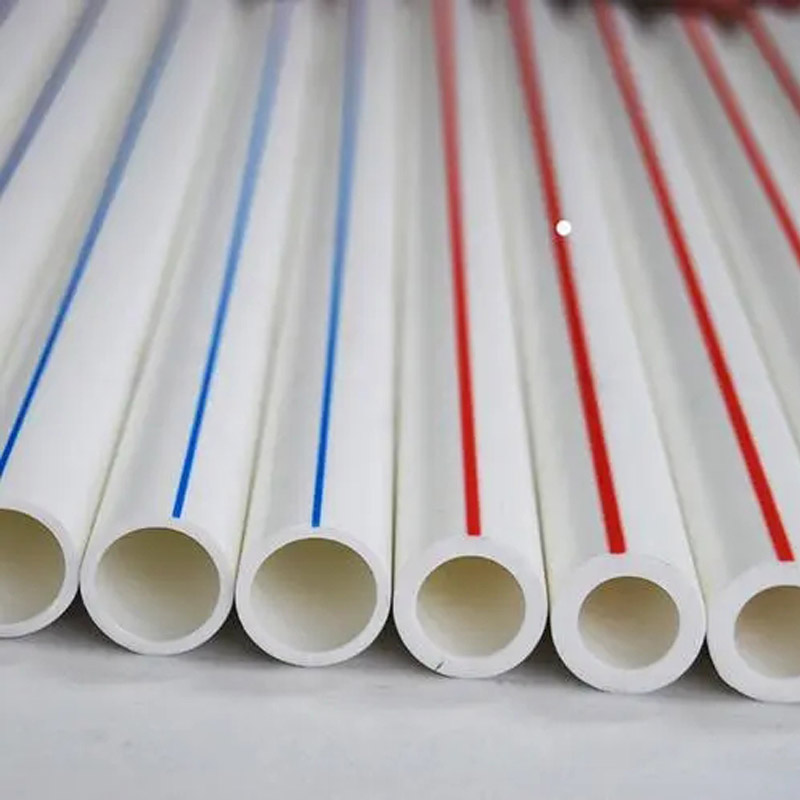
Introduction
Polypropylene Random (PPR) pipe, specifically 40mm diameter, represents a significant advancement in fluid conveyance systems for both potable and non-potable water applications. This technical guide details the properties, manufacturing processes, performance characteristics, potential failure modes, and maintenance protocols related to 40mm PPR pipe produced by a typical PPR pipe factory. PPR pipes are increasingly favored over traditional materials like galvanized steel and PVC due to their superior corrosion resistance, thermal stability, and hygienic properties. They hold a crucial position within the building and construction industry, impacting plumbing, heating, and cooling systems. The core performance characteristics—pressure resistance, temperature tolerance, and chemical inertness—are paramount in ensuring long-term system reliability and minimizing lifecycle costs. This document serves as a comprehensive resource for engineers, procurement managers, and maintenance personnel involved in the specification, installation, and operation of 40mm PPR piping systems.
Material Science & Manufacturing
The foundation of 40mm PPR pipe lies in polypropylene random copolymer, a thermoplastic polymer characterized by its amorphous structure. The raw material is typically sourced from propylene monomer, polymerized via a Ziegler-Natta catalyst process. The 'random' designation indicates the random distribution of comonomers, primarily ethylene, within the polymer chain, conferring enhanced flexibility and impact resistance compared to homopolymer polypropylene. Key physical properties include a density of approximately 0.905 g/cm³, a glass transition temperature around 0°C, and a melting point between 130°C and 170°C depending on the specific copolymer composition. Manufacturing of 40mm PPR pipe generally follows an extrusion process. Polypropylene granules are fed into a hopper and conveyed via a screw mechanism into a heated barrel. The molten polymer is forced through a circular die of 40mm diameter, forming the pipe shape. Critical process parameters include barrel temperature profiling (typically ranging from 190°C to 240°C across multiple zones), screw speed (controlling throughput), and die pressure (influencing dimensional accuracy). Following extrusion, the pipe is cooled via water baths to solidify the material, calibrated to maintain precise dimensions, and cut to desired lengths. Quality control measures involve rigorous testing of melt flow index (MFI), hydrostatic pressure resistance, and dimensional tolerances. Stabilizers, often consisting of antioxidants and UV absorbers, are incorporated into the polypropylene compound to enhance long-term durability and prevent degradation from exposure to heat and light.
Performance & Engineering
The performance of 40mm PPR pipe is governed by its mechanical and thermal properties under various operational conditions. Hydrostatic pressure testing, conducted according to ISO 1167, verifies the pipe’s ability to withstand internal pressure without rupture or leakage. The pressure rating for 40mm PPR pipe typically ranges from PN10 (1.0 MPa) to PN25 (2.5 MPa) depending on the wall thickness and material grade. Thermal expansion and contraction are important engineering considerations. PPR has a coefficient of linear thermal expansion of approximately 0.15 mm/m°C. Engineers must account for this expansion and contraction when designing piping systems, incorporating expansion loops or flexible connectors to prevent stress buildup and potential failure. Chemical resistance is another crucial aspect. PPR is resistant to a wide range of chemicals, including acids, bases, and salts, making it suitable for diverse applications. However, prolonged exposure to certain organic solvents can cause swelling and degradation. The long-term hydrostatic strength (LTHS) of PPR, typically assessed through creep rupture testing, dictates the pipe's operational lifespan under continuous pressure and temperature. Compliance with relevant building codes and standards, such as EN 1610 and ASTM D2837, is essential to ensure system safety and performance. Force analysis during installation and operation requires consideration of tensile stresses during fitting connection (e.g., socket fusion) and bending moments due to pipe supports and weight of the fluid.
Technical Specifications
| Parameter | Unit | PN10 | PN16 |
|---|---|---|---|
| Nominal Diameter | mm | 40 | 40 |
| Wall Thickness | mm | 2.3 | 3.2 |
| Hydrostatic Pressure (23°C) | MPa | 1.0 | 1.6 |
| Burst Pressure (23°C) | MPa | 3.0 | 4.8 |
| Maximum Operating Temperature | °C | 95 | 95 |
| Coefficient of Linear Thermal Expansion | mm/m°C | 0.15 | 0.15 |
Failure Mode & Maintenance
40mm PPR pipe, while robust, is susceptible to specific failure modes. Slow crack growth (SCG), induced by sustained tensile stress and aggressive environments, can lead to brittle failure over time. This is particularly prevalent in areas around fittings or where the pipe is subjected to vibrations. Thermal fatigue, resulting from repeated temperature cycling, can cause cracking and weakening of the pipe material. UV degradation, although mitigated by stabilizers, can occur with prolonged exposure to sunlight, leading to surface embrittlement and reduced impact resistance. Incorrect installation practices, such as insufficient socket fusion heating or excessive bending radius, can create weak points prone to failure. Maintenance involves periodic visual inspections for leaks, cracks, or discoloration. Hydrostatic testing can be conducted to assess the integrity of the system. Regularly flushing the system helps remove sediment buildup that can contribute to corrosion and flow restriction. For minor leaks, repair sleeves or couplings can be used. For significant damage, replacement of the affected pipe section is typically required. Preventive maintenance, including proper insulation to minimize temperature fluctuations and protection from direct sunlight, is crucial for extending the lifespan of the piping system. Failure analysis should always be conducted when a failure occurs to identify the root cause and implement corrective actions to prevent recurrence.
Industry FAQ
Q: What is the impact of water hammer on 40mm PPR pipes and how can it be mitigated?
A: Water hammer, the pressure surge resulting from sudden changes in flow velocity, can induce significant stress on PPR pipes, potentially leading to cracking or joint failure. Mitigation strategies include installing pressure relief valves, using slow-closing valves, and implementing air chambers or surge suppressors to absorb the pressure wave.
Q: Can 40mm PPR pipe be used for compressed air systems?
A: Generally, no. PPR is not recommended for compressed air systems due to its limited pressure rating and potential for permeation of air through the polymer. Specialized materials like polyethylene or metal pipes are more suitable for compressed air applications.
Q: What are the key considerations for joining 40mm PPR pipes and fittings?
A: Proper socket fusion welding is critical. Ensure the heating tool temperature and pressure are accurately controlled according to manufacturer's specifications. Adequate cooling time is essential to achieve a strong, leak-proof joint. The surfaces to be joined must be clean and dry.
Q: How does the quality of the PPR resin affect the long-term performance of the pipe?
A: The quality of the polypropylene resin directly impacts the pipe's mechanical properties, chemical resistance, and thermal stability. Using high-quality, virgin PPR resin with appropriate stabilizer additives is crucial for ensuring long-term durability and preventing premature failure. Recycled materials can compromise performance.
Q: What are the fire safety characteristics of 40mm PPR pipe?
A: PPR is a combustible material. While it doesn’t readily ignite, it will burn if exposed to a sustained flame. PPR pipes typically have a self-extinguishing property; however, they release potentially toxic fumes during combustion. Compliance with relevant fire safety regulations is essential.
Conclusion
40mm PPR pipe represents a technologically advanced solution for fluid conveyance, offering significant advantages in terms of corrosion resistance, thermal performance, and ease of installation. Understanding the material science, manufacturing processes, and engineering principles governing its behavior is vital for ensuring the longevity and reliability of piping systems. Proper selection of materials, adherence to industry standards, and diligent maintenance practices are paramount to maximizing the service life and minimizing the risk of failure.
Future advancements in PPR technology will likely focus on enhancing material properties, such as improved impact resistance and UV stability, and developing more sophisticated joining techniques. Continued research and development efforts are expected to further expand the range of applications for 40mm PPR pipe, solidifying its position as a leading material in the plumbing and infrastructure sectors.
-
DN25 HDPE Compression Fitting-HORON INTERNATIONAL|Reliable Irrigation Solutions
NewsFeb.11,2026
-
hdpe coupling joint product Manufacturing Analysis
News2026-11-18
-
ppr pipe heating time products Performance Analysis
News2026-11-16
-
hdpe pipe sizes factory Performance Analysis
News2026-11-09
-
HDPE Pipe Sizes Service Performance Analysis
News2026-10-26
-
wholesale 15mm ppr pipe Material Science and Performance Analysis
News2026-10-20
-
wholesale pvc pipe price per foot Technical Analysis
News2026-09-21
-
wholesale long pvc pipe Technical Analysis and Manufacturing Specifications
News2026-09-15
-
wholesale plumbing kitchen sink water lines Material Performance
News2026-09-15
-
wholesale hdpe drip irrigation Material Science
News2026-09-15
-
wholesale hot water ppr pipe Performance Analysis
News2026-09-15
-
wholesale ppr plumbing Performance Analysis
News2026-09-15
-
wholesale ppr pipe supplier Performance Analysis
News2026-09-13
-
wholesale 50mm ppr pipe Performance Analysis
News2026-09-13
-
wholesale hdpe drip pipe Performance Analysis
News2026-09-13
-
wholesale hdpe pipe 63mm price Manufacturing Specification and Performance Analysis
News2026-09-13