

Feb . 11, 2026 00:01 Back to list
36 hdpe corrugated pipe Product Performance Analysis

Introduction
36” High-Density Polyethylene (HDPE) corrugated pipe represents a critical component in modern infrastructure, primarily utilized for drainage, culverts, storm sewer systems, and protective conduits. Positioned within the broader realm of subsurface infrastructure, it serves as a lighter-weight, more corrosion-resistant alternative to traditional materials like concrete and steel. Its corrugated structure imparts significant ring stiffness, allowing it to withstand substantial soil and traffic loads. The pipe's key performance characteristics center around hydraulic capacity, structural integrity, and long-term durability, making it a preferred choice in civil engineering projects. A core challenge in the industry surrounds achieving optimal balance between cost-effectiveness and performance criteria in demanding applications, particularly in areas with aggressive soil conditions or heavy traffic loads. Understanding the nuances of HDPE material properties, manufacturing processes, and installation techniques are paramount for ensuring project success and mitigating potential failure points.
Material Science & Manufacturing
The foundational material for 36” HDPE corrugated pipe is high-density polyethylene resin, typically a grade conforming to ASTM D3350. HDPE's characteristics – high tensile strength-to-density ratio, excellent chemical resistance, and flexibility – make it ideal for underground applications. Raw material selection focuses on melt flow index (MFI), which dictates processability during extrusion, and carbon black content, which provides UV protection. The manufacturing process typically involves extrusion and corrugation. First, HDPE resin is melted and extruded through a circular die to form a continuous pipe wall. Simultaneously, a corrugated profile is formed using a series of rollers. Critical process parameters include extrusion temperature (typically 180-210°C), roller gap settings (determining corrugation height and pitch), and cooling rates (controlling pipe dimensional stability). Improper cooling can lead to warping or ovality. The corrugated profile is designed to maximize ring stiffness; the deeper and more frequent the corrugations, the greater the load-bearing capacity. Post-extrusion, the pipe undergoes quality control checks including dimensional accuracy, hydrostatic pressure testing (ASTM F894), and impact resistance testing (ASTM F2412). Ensuring consistent wall thickness and proper fusion of the corrugated sections are crucial for long-term performance. The inclusion of a smooth inner liner is common to reduce friction loss and improve hydraulic flow capacity. This liner is co-extruded with the corrugated outer wall.
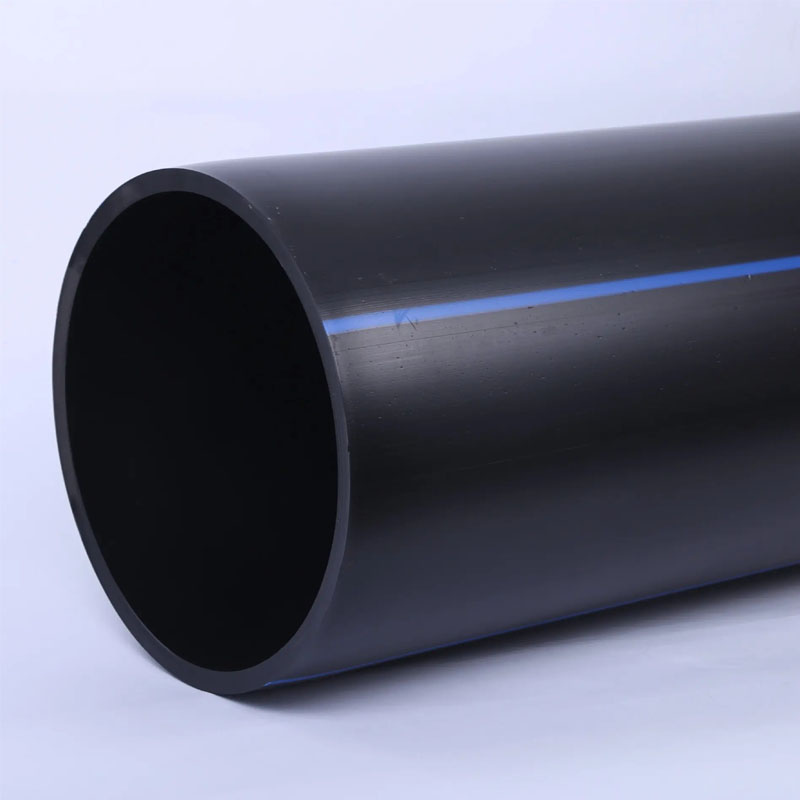
Performance & Engineering
The performance of 36” HDPE corrugated pipe is largely dictated by its structural and hydraulic capabilities. Ring stiffness, measured in psi, is a primary indicator of the pipe’s ability to withstand external loads from soil and traffic. Finite element analysis (FEA) is routinely employed to model load distribution and optimize corrugation profiles for specific applications. Hydraulic performance is assessed by calculating Manning’s roughness coefficient, which determines flow capacity. The smooth inner liner significantly reduces friction losses, increasing flow rates compared to traditional materials. Engineers must consider soil conditions when designing installations. Poorly compacted soils or expansive clays can exert excessive lateral pressure on the pipe, potentially leading to deformation or collapse. Proper bedding and backfill procedures, adhering to ASTM D2321, are essential for load distribution and long-term stability. Environmental resistance is a key advantage of HDPE. It’s highly resistant to most chemicals found in soil and groundwater, eliminating the risk of corrosion. However, prolonged exposure to ultraviolet (UV) radiation can degrade the material; therefore, adequate cover is necessary to protect the pipe. Installation techniques, including joint connections (bell-and-spigot, coupler connections), must be performed correctly to maintain watertight seals and prevent infiltration/exfiltration. Longitudinal joints require careful attention to ensure proper alignment and compression. Compliance with local drainage regulations and permitting requirements is also crucial.
Technical Specifications
| Parameter | Unit | Typical Value (36” HDPE Corrugated Pipe) | Testing Standard |
|---|---|---|---|
| Nominal Diameter | inches | 36 | ASTM D3350 |
| Ring Stiffness | psi | 60-120 (depending on profile) | ASTM F894 |
| Manning’s Roughness Coefficient | - | 0.012 - 0.015 | Calculated |
| Minimum Cover Depth | feet | 3-5 (depending on load) | Manufacturer Recommendation |
| Tensile Strength | psi | 4,000 - 5,000 | ASTM D638 |
| Impact Resistance (Charpy) | ft-lb/in | >20 | ASTM F2412 |
Failure Mode & Maintenance
Failure modes in 36” HDPE corrugated pipe are typically associated with improper installation, excessive loading, or long-term environmental factors. Common failures include: 1) Ovalation & Deformation: Caused by inadequate bedding, excessive load, or uneven soil settlement. 2) Joint Separation: Results from improper joint connection, soil movement, or thermal expansion/contraction. 3) Cracking: Induced by impact damage during installation or from stress concentrations around fittings. 4) Longitudinal Seam Failure: Can occur if the longitudinal weld is compromised during manufacturing or installation. 5) UV Degradation: Prolonged exposure to sunlight can embrittle the material. 6) Root Intrusion: Tree roots can penetrate joints and cause blockages. Preventive maintenance is crucial for extending pipe lifespan. Regular inspections should focus on identifying signs of deformation, joint separation, and root intrusion. Corrective actions include: re-bedding sections experiencing settlement, repairing or replacing damaged joints, clearing blockages, and applying UV protective coatings if necessary. For significant deformation or cracking, complete pipe replacement is often the most reliable solution. Proper backfilling procedures, using appropriate compaction techniques, are the most effective means of preventing long-term failures. Addressing any identified issues promptly can prevent minor problems from escalating into costly repairs or system failures. Conducting CCTV inspections can aid in identifying internal issues not readily visible during surface inspections.
Industry FAQ
Q: What is the maximum allowable soil cover for a 36" HDPE corrugated pipe installation supporting a standard highway load?
A: The maximum allowable soil cover depends on the pipe's ring stiffness and the specific highway loading conditions. Generally, for a ring stiffness of 60-120 psi and AASHTO HS-20 loading, the maximum cover is typically between 8 and 12 feet. It’s crucial to consult the manufacturer's load tables and perform site-specific calculations to ensure adequate support and prevent pipe failure.
Q: How does HDPE corrugated pipe compare to concrete pipe in terms of long-term cost?
A: While concrete pipe often has a lower initial material cost, HDPE offers significant long-term cost advantages. HDPE is lighter, reducing installation costs. Its corrosion resistance eliminates the need for costly repairs or replacements associated with concrete deterioration. Furthermore, HDPE’s hydraulic efficiency can reduce pumping costs in drainage applications.
Q: What are the considerations for installing 36" HDPE corrugated pipe in areas with high groundwater?
A: In high groundwater conditions, ensuring proper joint sealing is paramount to prevent infiltration. Utilizing gasketed joints and following manufacturer’s instructions meticulously is essential. Dewatering the excavation site may be necessary during installation. Furthermore, considering the potential for buoyancy forces and ensuring adequate anchoring or weighting of the pipe may be required.
Q: What is the expected service life of a properly installed 36" HDPE corrugated pipe system?
A: A properly installed and maintained 36" HDPE corrugated pipe system can have a service life exceeding 50 years, and often up to 100 years. HDPE’s inherent resistance to corrosion and chemical degradation contributes to its longevity. Regular inspections and prompt maintenance are key to maximizing its lifespan.
Q: Can 36" HDPE corrugated pipe be used in tidal zones or marine environments?
A: HDPE is generally resistant to saltwater, but prolonged immersion and wave action can pose challenges. Specific HDPE formulations optimized for marine environments are available, often incorporating higher UV stabilizers and impact modifiers. Proper anchoring and consideration of tidal forces are essential for successful installation in these applications.
Conclusion
36” HDPE corrugated pipe stands as a robust and cost-effective solution for a wide array of subsurface drainage and conduit applications. Its inherent material properties – high strength-to-weight ratio, corrosion resistance, and flexibility – coupled with advanced manufacturing techniques, deliver long-term performance and reliability. A thorough understanding of material science, engineering principles, and installation best practices is vital for maximizing its lifespan and ensuring project success.
Looking forward, ongoing advancements in HDPE resin technology and corrugated pipe design will continue to enhance its structural and hydraulic capabilities. The increasing emphasis on sustainable infrastructure solutions and life-cycle cost analysis will further drive adoption of HDPE corrugated pipe as a preferred alternative to traditional materials. Careful consideration of soil conditions, load requirements, and environmental factors will remain paramount for optimizing its performance and ensuring long-term durability.
-
DN25 HDPE Compression Fitting-HORON INTERNATIONAL|Reliable Irrigation Solutions
NewsFeb.11,2026
-
hdpe coupling joint product Manufacturing Analysis
News2026-11-18
-
ppr pipe heating time products Performance Analysis
News2026-11-16
-
hdpe pipe sizes factory Performance Analysis
News2026-11-09
-
HDPE Pipe Sizes Service Performance Analysis
News2026-10-26
-
wholesale 15mm ppr pipe Material Science and Performance Analysis
News2026-10-20
-
wholesale pvc pipe price per foot Technical Analysis
News2026-09-21
-
wholesale long pvc pipe Technical Analysis and Manufacturing Specifications
News2026-09-15
-
wholesale plumbing kitchen sink water lines Material Performance
News2026-09-15
-
wholesale hdpe drip irrigation Material Science
News2026-09-15
-
wholesale hot water ppr pipe Performance Analysis
News2026-09-15
-
wholesale ppr plumbing Performance Analysis
News2026-09-15
-
wholesale ppr pipe supplier Performance Analysis
News2026-09-13
-
wholesale 50mm ppr pipe Performance Analysis
News2026-09-13
-
wholesale hdpe drip pipe Performance Analysis
News2026-09-13
-
wholesale hdpe pipe 63mm price Manufacturing Specification and Performance Analysis
News2026-09-13