

Feb . 11, 2026 00:01 Back to list
20mm pvc pipe product Material Composition

Introduction
Polyvinyl Chloride (PVC) pipe, specifically 20mm diameter variants, represents a foundational material in modern fluid conveyance systems. Positioned within the broader plastics industry, 20mm PVC pipe serves a critical role in potable water distribution, irrigation, drainage, and various industrial applications. Its widespread adoption stems from a compelling combination of cost-effectiveness, durability, and ease of installation. This guide provides a comprehensive technical overview of 20mm PVC pipe, encompassing its material composition, manufacturing processes, performance characteristics, potential failure modes, and relevant industry standards. Core performance metrics include pressure rating, tensile strength, impact resistance, and chemical inertness. The increasing demands for sustainable infrastructure and efficient resource management drive continuous advancements in PVC formulations and manufacturing techniques, necessitating a thorough understanding of its capabilities and limitations.
Material Science & Manufacturing
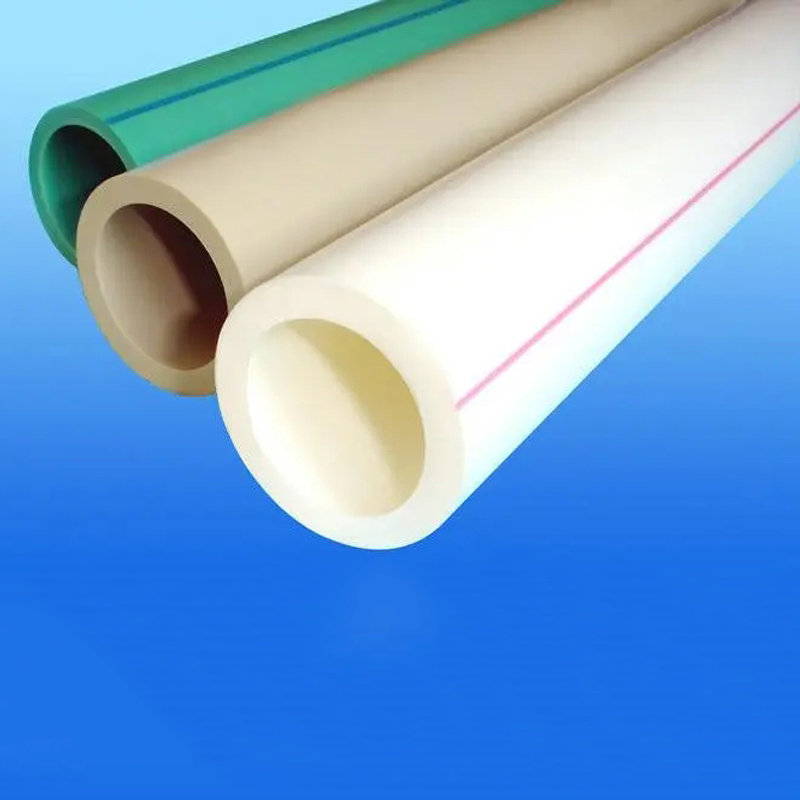
20mm PVC pipe is primarily composed of Polyvinyl Chloride resin, a thermoplastic polymer produced by the polymerization of vinyl chloride monomer (VCM). The resin’s properties are modified through the addition of plasticizers (typically phthalates or alternatives like DINP), stabilizers (often organotin compounds or calcium-zinc stabilizers), lubricants, and pigments. The ratio of these additives significantly influences the pipe's flexibility, impact resistance, and resistance to UV degradation. The raw material, PVC resin, exhibits amorphous characteristics, providing inherent rigidity. Manufacturing typically involves extrusion. PVC compound is fed into a single-screw or twin-screw extruder, where it is heated and homogenized. A die, precisely machined to produce a 20mm internal diameter and specified wall thickness, shapes the molten PVC. Critical parameters during extrusion include barrel temperature profile (typically between 160°C and 210°C), screw speed, die pressure, and cooling rate. Post-extrusion, the pipe is cooled using a water bath to solidify its shape, then cut to desired lengths, and often subjected to hydrostatic testing to ensure pressure integrity. Wall thickness is a crucial parameter, categorized as Schedule 40, Schedule 80, or custom profiles, each influencing burst pressure and structural capacity. Maintaining consistent material composition and precise control over extrusion parameters are essential for producing high-quality 20mm PVC pipe.
Performance & Engineering
The performance of 20mm PVC pipe is governed by several engineering principles. Hydrostatic pressure testing, adhering to standards like ASTM D1598, assesses the pipe's ability to withstand internal fluid pressure without rupture or significant deformation. Force analysis reveals that hoop stress (circumferential stress) is the dominant stress component under pressure, calculated using the Barlow's formula (S = PD/2t, where S is hoop stress, P is internal pressure, D is diameter, and t is wall thickness). Impact resistance, crucial in handling and installation, is evaluated using impact tests (ASTM D2444) which determine the energy required to cause fracture. PVC’s susceptibility to creep (time-dependent deformation under sustained load) must be considered in long-term applications. Environmental resistance is paramount. While PVC exhibits good resistance to many chemicals, prolonged exposure to aromatic hydrocarbons, ketones, and strong oxidizing agents can cause swelling or degradation. UV exposure can lead to embrittlement and discoloration, necessitating the inclusion of UV stabilizers in the formulation. Thermal expansion and contraction are also important considerations, especially in buried applications; a coefficient of thermal expansion of approximately 8 x 10⁻⁵/°C necessitates provisions for expansion loops or flexible joints. Compliance requirements, dictated by local building codes and potable water standards (e.g., NSF/ANSI 61), dictate material limitations and installation practices.
Technical Specifications
| Parameter | Schedule 40 | Schedule 80 | Unit |
|---|---|---|---|
| Nominal Pipe Size | 20 mm | 20 mm | mm |
| Outside Diameter | 21.3 mm | 23.3 mm | mm |
| Wall Thickness | 2.0 mm | 2.6 mm | mm |
| Pressure Rating (at 23°C) | 450 psi | 600 psi | psi |
| Tensile Strength | 55 MPa | 55 MPa | MPa |
| Impact Strength (Izod Notched) | 8 kJ/m2 | 10 kJ/m2 | kJ/m2 |
Failure Mode & Maintenance
20mm PVC pipe is susceptible to several failure modes. Long-term hydrostatic stress can lead to slow crack growth (SCG), particularly in environments with residual stresses or trace contaminants. This manifests as brittle fracture, often initiating at stress concentrators (e.g., fittings). UV degradation causes surface chalking and embrittlement, reducing impact resistance. Exposure to chlorinated water can lead to oxidative degradation of the PVC, affecting its mechanical properties. Chemical attack from incompatible solvents or aggressive chemicals can induce swelling, softening, or cracking. Mechanical damage during installation (e.g., over-tightening of fittings, impact from heavy objects) can create cracks or deform the pipe. Maintenance involves regular visual inspection for cracks, discoloration, or deformation. Proper support and bedding are essential to prevent stress concentration. Avoid exposure to extreme temperatures or incompatible chemicals. For potable water systems, flushing periodically removes sediment and maintains water quality. If cracks are detected, immediate replacement of the affected section is recommended. Proper solvent cementing techniques, adhering to ASTM D3139, are crucial for leak-free joints.
Industry FAQ
Q: What is the long-term impact of soil acidity on buried 20mm PVC pipe?
A: Prolonged exposure to acidic soil can accelerate the degradation of PVC, particularly if the soil contains high concentrations of sulfates or other aggressive ions. The acidity can leach plasticizers from the PVC, leading to embrittlement and reduced flexibility. Furthermore, certain soil microbes can contribute to the breakdown of the polymer chain. Mitigation strategies include using PVC formulations with enhanced chemical resistance, applying a protective coating, or providing adequate drainage to minimize contact with acidic groundwater.
Q: How does the choice of solvent cement affect the long-term integrity of a PVC joint?
A: The solvent cement acts as a chemical welding agent, partially dissolving the surfaces of the PVC pipe and fitting to create a homogenous bond. Using an incorrect cement formulation (e.g., one not specifically designed for PVC, or one that has expired) can result in a weak or brittle joint prone to leaks. Proper application technique, including surface preparation, correct cement viscosity, and adequate curing time, is also critical. Always refer to ASTM D3139 for guidance on solvent cement selection and application.
Q: What is the effect of temperature fluctuations on the pressure rating of 20mm PVC pipe?
A: The pressure rating of PVC pipe decreases with increasing temperature. Elevated temperatures reduce the yield strength and tensile strength of the PVC material. Manufacturers typically provide derating factors for use in higher temperature applications. For example, a pipe rated for 600 psi at 23°C may have a significantly reduced pressure rating at 60°C. It’s crucial to consult the manufacturer's specifications and apply appropriate derating factors when operating at temperatures above the standard test conditions.
Q: Can 20mm PVC pipe be used in compressed air systems? What are the limitations?
A: While PVC can be used in some low-pressure compressed air applications, it is generally not recommended for systems operating at high pressures or temperatures. PVC is prone to brittle failure under cyclic loading and can be susceptible to cracking from the constant pulsating pressure of compressed air. Furthermore, the presence of oil or condensate in the compressed air can accelerate the degradation of the PVC. Materials like polyethylene or nylon are typically preferred for compressed air systems.
Q: What are the key differences between Type I and Type II PVC pipe, and which is better suited for potable water applications?
A: Type I PVC pipe has a higher tensile strength and is typically used for pressure applications such as water distribution. Type II PVC pipe has lower strength characteristics and is commonly used for irrigation or drainage systems. For potable water applications, Type I PVC pipe is the preferred choice due to its superior pressure-bearing capacity and compliance with NSF/ANSI 61 standards, which ensure the water remains safe for consumption. Type I generally features a more consistent and controlled formulation for long-term durability.
Conclusion
20mm PVC pipe remains a dominant material in numerous fluid handling systems due to its advantageous combination of cost, ease of installation, and reasonable durability. A thorough understanding of its material properties, manufacturing processes, and potential failure modes is critical for ensuring long-term system reliability. Careful consideration must be given to environmental factors, chemical compatibility, and operating pressures to optimize performance and prevent premature failure.
Future trends in PVC pipe technology focus on enhancing sustainability through the development of bio-based plasticizers, improved recycling processes, and formulations with increased resistance to degradation. Continued research into polymer blends and nanocomposites holds promise for further enhancing the mechanical properties and lifespan of 20mm PVC pipe, solidifying its position as a versatile and essential component of modern infrastructure.
-
DN25 HDPE Compression Fitting-HORON INTERNATIONAL|Reliable Irrigation Solutions
NewsFeb.11,2026
-
hdpe coupling joint product Manufacturing Analysis
News2026-11-18
-
ppr pipe heating time products Performance Analysis
News2026-11-16
-
hdpe pipe sizes factory Performance Analysis
News2026-11-09
-
HDPE Pipe Sizes Service Performance Analysis
News2026-10-26
-
wholesale 15mm ppr pipe Material Science and Performance Analysis
News2026-10-20
-
wholesale pvc pipe price per foot Technical Analysis
News2026-09-21
-
wholesale long pvc pipe Technical Analysis and Manufacturing Specifications
News2026-09-15
-
wholesale plumbing kitchen sink water lines Material Performance
News2026-09-15
-
wholesale hdpe drip irrigation Material Science
News2026-09-15
-
wholesale hot water ppr pipe Performance Analysis
News2026-09-15
-
wholesale ppr plumbing Performance Analysis
News2026-09-15
-
wholesale ppr pipe supplier Performance Analysis
News2026-09-13
-
wholesale 50mm ppr pipe Performance Analysis
News2026-09-13
-
wholesale hdpe drip pipe Performance Analysis
News2026-09-13
-
wholesale hdpe pipe 63mm price Manufacturing Specification and Performance Analysis
News2026-09-13