

Feb . 11, 2026 00:01 Back to list
20mm pvc pipe manufacturers Performance Analysis
Introduction
Polyvinyl chloride (PVC) pipe, specifically the 20mm diameter variety, represents a critical component in fluid conveyance systems across numerous industries including irrigation, potable water distribution, wastewater management, and chemical processing. This guide provides an in-depth technical overview of 20mm PVC pipe, encompassing its material science, manufacturing processes, performance characteristics, potential failure modes, and relevant industry standards. Its widespread adoption stems from its cost-effectiveness, corrosion resistance, and relative ease of installation. However, proper selection and application are paramount to ensure long-term performance and avoid premature failure. A significant pain point in the industry centers around maintaining consistent quality control during the extrusion process to guarantee dimensional accuracy and adherence to pressure ratings, alongside concerns regarding long-term environmental degradation and the impact of UV exposure. This document aims to address these issues, providing manufacturers, engineers, and procurement professionals with a comprehensive understanding of 20mm PVC pipe technology.
Material Science & Manufacturing
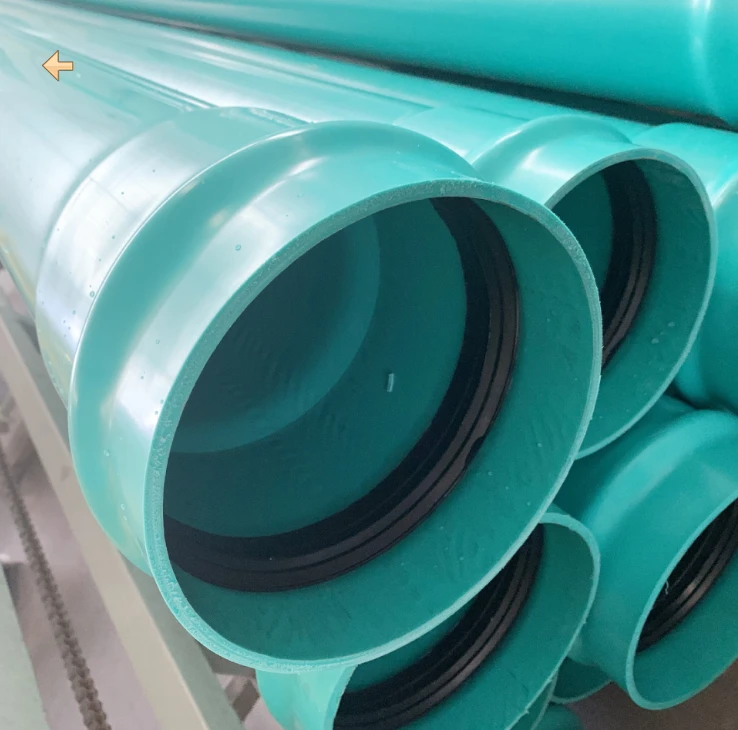
20mm PVC pipe is primarily manufactured from polyvinyl chloride resin, a thermoplastic polymer produced through the polymerization of vinyl chloride monomer (VCM). The resin itself is rarely used in pure form; instead, it’s compounded with various additives to tailor its properties for specific applications. Common additives include plasticizers (e.g., phthalates, DINP) to enhance flexibility, stabilizers (e.g., organotin compounds, calcium-zinc stabilizers) to prevent thermal degradation during processing and UV exposure, lubricants to improve processability, and impact modifiers to increase toughness. The specific formulation dictates the pipe's classification – typically Schedule 40, Schedule 80, or CPVC (chlorinated PVC) – each offering different pressure ratings and temperature resistance.
Manufacturing typically employs extrusion processes. PVC resin and additives are fed into a twin-screw extruder, where they are heated and mixed to a homogenous melt. This melt is then forced through a die of the desired 20mm inner diameter and wall thickness. Critical parameters during extrusion include temperature profiles along the extruder barrel, screw speed, die pressure, and cooling rates. Inconsistent temperatures can lead to material degradation and variations in pipe dimensions. Precise cooling, often utilizing water baths, is vital to solidify the pipe while maintaining its shape and preventing warping. Post-extrusion, the pipe is cut to length, marked with identification details (size, schedule, manufacturer, standards compliance), and subjected to quality control inspections including dimensional checks, hydrostatic pressure testing, and impact resistance testing. Proper control of these parameters is essential to minimize defects such as voids, ovality, and inconsistent wall thickness.
Performance & Engineering
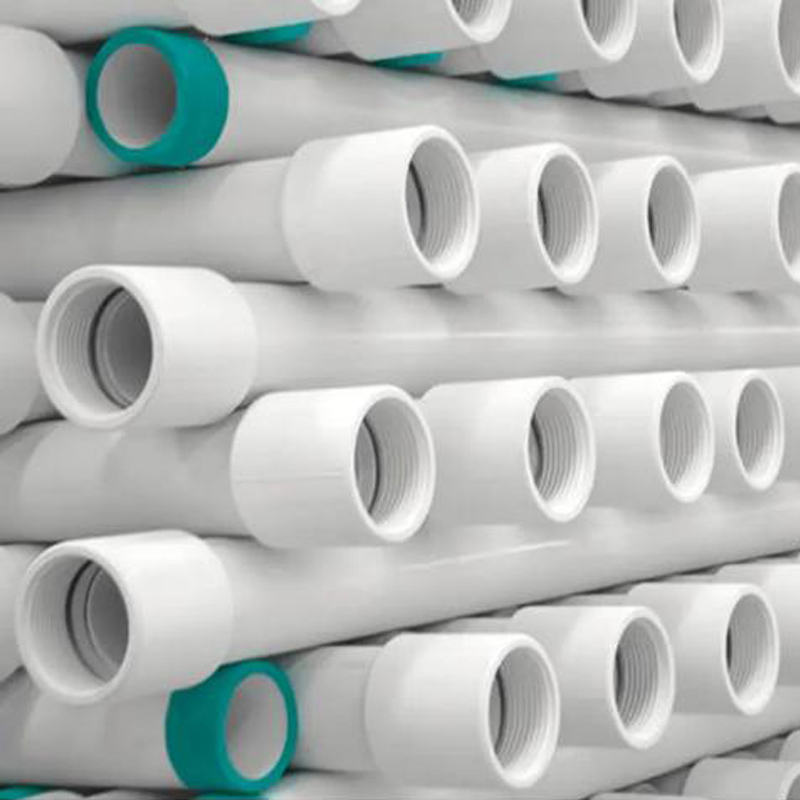
The performance of 20mm PVC pipe is dictated by several engineering considerations. Firstly, hydrostatic strength is crucial, determined by the pipe’s schedule (wall thickness) and the material's inherent properties. Burst pressure testing, as per ASTM D1500, validates these ratings. Secondly, resistance to internal pressure over time is governed by the material's creep characteristics. PVC exhibits some degree of creep, meaning it slowly deforms under sustained stress. This is particularly relevant in applications involving continuous flow and elevated temperatures. Thirdly, soil loading in buried applications requires careful analysis. The pipe must withstand external pressure from soil and potential surcharge loads (e.g., traffic). Furthermore, chemical resistance is critical. While PVC exhibits excellent resistance to many acids and bases, it is susceptible to attack by certain organic solvents and chlorinated hydrocarbons. Long-term UV exposure leads to polymer degradation, causing embrittlement and discoloration. UV stabilizers are added to formulations, but their effectiveness diminishes over time. Finally, thermal expansion and contraction must be accounted for in system design, using expansion joints or flexible connections to prevent stress buildup. Failure to address these factors can lead to cracking, leaks, and system failure.
Technical Specifications
| Parameter | Schedule 40 | Schedule 80 | CPVC (100 PSI @ 150°F) |
|---|---|---|---|
| Nominal Pipe Size (mm) | 20 | 20 | 20 |
| Outside Diameter (mm) | 21.3 | 23.5 | 21.3 |
| Wall Thickness (mm) | 2.0 | 2.6 | 2.4 |
| Pressure Rating (PSI @ 73°F) | 400 | 600 | 100 |
| Burst Pressure (PSI) | 1600 | 2400 | 400 |
| Density (g/cm³) | 1.40 | 1.40 | 1.50 |
Failure Mode & Maintenance
20mm PVC pipe is susceptible to several failure modes. Brittle Fracture: Induced by impact, especially at low temperatures, or stress concentrations around fittings. Stress Cracking: Occurs due to sustained tensile stress, particularly in the presence of certain chemicals. Environmental Stress Cracking (ESC): A specific type of stress cracking caused by the combined effects of stress, a susceptible polymer, and a critical environment. UV Degradation: Leads to embrittlement and discoloration, reducing impact resistance. Thermal Degradation: Exposure to high temperatures (above the material’s glass transition temperature) can cause chain scission and loss of mechanical properties. Joint Failure: Often occurs at solvent-welded joints due to improper priming, insufficient solvent cement, or inadequate curing time. Internal Corrosion/Erosion: Though PVC is corrosion-resistant, abrasive fluids can erode the inner surface over time. Preventative maintenance includes periodic visual inspections for cracks, discoloration, and leaks. Protecting exposed pipe from UV radiation with paint or shielding is crucial. Proper jointing techniques are essential. For systems handling abrasive fluids, consider using thicker-walled pipe or incorporating filters. Regular pressure testing can identify developing leaks before they become catastrophic. Repairing minor cracks with PVC cement is possible, but significant damage necessitates pipe replacement.
Industry FAQ
Q: What is the impact of different plasticizer types on the long-term performance of 20mm PVC pipe?
A: The type of plasticizer significantly affects long-term performance. Phthalate plasticizers, while cost-effective, can migrate over time, leading to embrittlement and reduced flexibility. DINP (diisononyl phthalate) offers improved migration resistance but may still exhibit some plasticizer loss. Alternatives like DOTP (dioctyl terephthalate) are increasingly used due to their enhanced performance and lower toxicity profile, offering greater long-term durability and flexibility retention. The choice depends on the application's temperature range and exposure conditions.
Q: How does the quality of the PVC resin impact the hydrostatic strength of the pipe?
A: The molecular weight and inherent purity of the PVC resin are critical. Higher molecular weight resins generally exhibit greater strength and toughness. Impurities can act as stress concentrators, reducing burst pressure. Resin manufacturers provide detailed specifications, including K-values (measuring molecular weight) and purity levels. Reputable pipe manufacturers use high-quality resins and maintain strict quality control to ensure consistent material properties.
Q: What are the key considerations for solvent welding 20mm PVC pipe to ensure leak-proof joints?
A: Proper solvent welding is paramount. First, ensure surfaces are clean, dry, and free from grease or contaminants. Apply primer evenly to both surfaces to soften the PVC. Immediately apply solvent cement, ensuring full coverage and adequate working time. Align the pipe and fitting quickly, applying slight pressure for approximately 30 seconds. Avoid excessive cement, which can weaken the joint. Allow sufficient curing time, typically 24-72 hours, before pressure testing.
Q: What testing methods are used to verify the chemical resistance of 20mm PVC pipe for a specific application?
A: Immersion testing is the most common method. Samples of the pipe are immersed in the chemical of interest for a specified period and temperature. Changes in weight, dimensions, and mechanical properties (tensile strength, elongation) are then measured. ASTM D543 provides guidance on conducting immersion testing. Accelerated aging studies, simulating long-term exposure, can also be employed.
Q: How does temperature affect the pressure rating of 20mm PVC pipe, and what derating factors should be applied?
A: Pressure ratings decrease with increasing temperature. PVC’s tensile strength and modulus of elasticity decrease as temperature rises. Consult the manufacturer's specifications for derating factors. Typically, the pressure rating is reduced linearly with temperature. For example, a pipe rated for 400 PSI at 73°F might have a reduced rating of 280 PSI at 100°F. Always adhere to the manufacturer’s recommendations to avoid catastrophic failure.
Conclusion
20mm PVC pipe remains a cost-effective and versatile solution for fluid conveyance, provided that its limitations are fully understood and addressed through proper material selection, manufacturing control, installation practices, and ongoing maintenance. The performance and longevity of PVC piping systems are critically dependent on factors such as resin quality, additive formulations, extrusion process parameters, UV exposure, chemical compatibility, and temperature.
Future developments in PVC technology are focused on enhancing material properties through novel plasticizer systems, improved stabilizer formulations, and nano-composite reinforcement. Continued research into ESC mechanisms and the development of more robust jointing techniques will further improve the reliability and durability of 20mm PVC pipe systems. Adherence to relevant industry standards and best practices remains essential for ensuring long-term performance and minimizing the risk of failure.
-
DN25 HDPE Compression Fitting-HORON INTERNATIONAL|Reliable Irrigation Solutions
NewsFeb.11,2026
-
hdpe coupling joint product Manufacturing Analysis
News2026-11-18
-
ppr pipe heating time products Performance Analysis
News2026-11-16
-
hdpe pipe sizes factory Performance Analysis
News2026-11-09
-
HDPE Pipe Sizes Service Performance Analysis
News2026-10-26
-
wholesale 15mm ppr pipe Material Science and Performance Analysis
News2026-10-20
-
wholesale pvc pipe price per foot Technical Analysis
News2026-09-21
-
wholesale long pvc pipe Technical Analysis and Manufacturing Specifications
News2026-09-15
-
wholesale plumbing kitchen sink water lines Material Performance
News2026-09-15
-
wholesale hdpe drip irrigation Material Science
News2026-09-15
-
wholesale hot water ppr pipe Performance Analysis
News2026-09-15
-
wholesale ppr plumbing Performance Analysis
News2026-09-15
-
wholesale ppr pipe supplier Performance Analysis
News2026-09-13
-
wholesale 50mm ppr pipe Performance Analysis
News2026-09-13
-
wholesale hdpe drip pipe Performance Analysis
News2026-09-13
-
wholesale hdpe pipe 63mm price Manufacturing Specification and Performance Analysis
News2026-09-13