

Feb . 11, 2026 00:01 Back to list
20mm ppr pipe price manufacturers Performance Analysis

Introduction
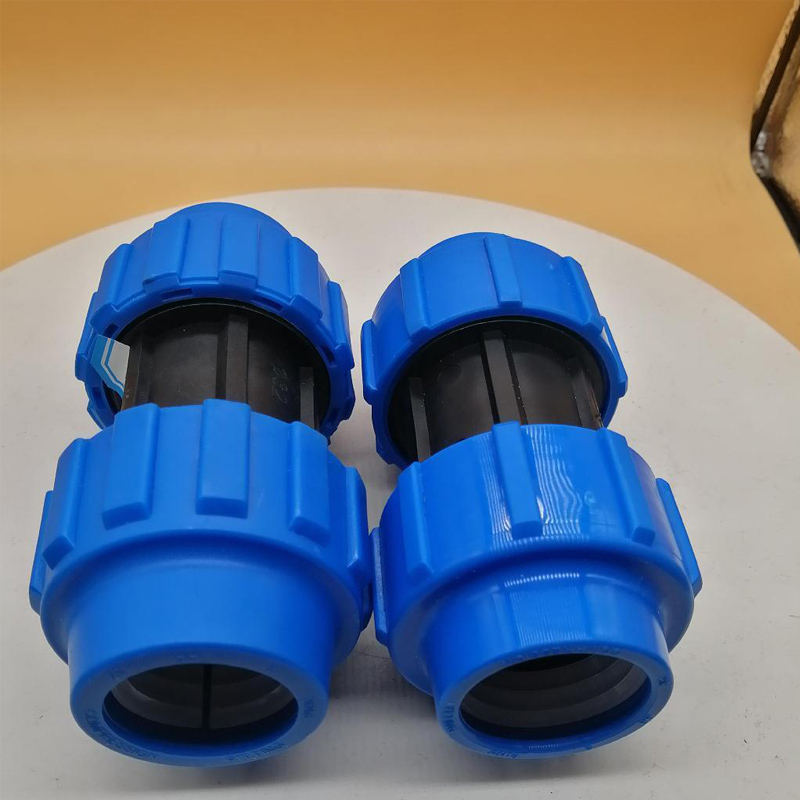
Polypropylene Random Copolymer (PPR) pipe, specifically the 20mm variant, represents a significant material choice within fluid transport systems for both potable and non-potable water, heating, and cooling applications. Manufacturers of 20mm PPR pipe operate within a complex supply chain, bridging the petrochemical industry (propylene production) with the construction, plumbing, and HVAC sectors. Its core performance characteristics – chemical inertness, high flow capacity due to smooth internal surfaces, and thermal resistance – position it as a competitive alternative to traditional metallic piping materials. This guide provides a comprehensive technical overview of 20mm PPR pipe, covering material science, manufacturing processes, performance parameters, failure modes, and relevant industry standards. The 20mm dimension is particularly prevalent in residential and light commercial applications, necessitating a thorough understanding of its limitations and best practices for installation and long-term reliability. The price point, naturally, is influenced by raw material costs (polypropylene homopolymer and random copolymer ratios), manufacturing efficiency, and regional market dynamics.
Material Science & Manufacturing
PPR pipe is primarily constructed from polypropylene (PP) resin, specifically a random copolymer. The copolymerization process introduces ethylene units into the polypropylene chain, disrupting the crystalline structure and imparting enhanced impact resistance and flexibility compared to homopolymer PP. Raw material properties are critical: density (typically 0.905-0.92 g/cm³), melt flow index (MFI – influencing processability), and tensile strength (typically 20-30 MPa) directly impact final product performance. Manufacturing commonly employs extrusion molding. Polypropylene granules are fed into an extruder, heated to a plasticized state (typically 180-240°C), and forced through a circular die to form the pipe. Key parameters during extrusion include die temperature, screw speed, and cooling rate. Precise temperature control is essential to prevent degradation and maintain dimensional accuracy. Following extrusion, pipes are typically marked with dimensions, material specifications, and manufacturer identification via laser printing or embossing. Fusion welding techniques – socket fusion, butt fusion, and electrofusion – are employed to join pipe sections, creating a homogenous, leak-proof joint. The quality of the welding process is heavily reliant on maintaining consistent heating temperatures and applying the correct pressure. Pipe schedule (thickness) influences pressure handling capabilities, and is dictated by the intended application. Chemical compatibility with transported fluids is paramount; PPR exhibits excellent resistance to many common chemicals but can be susceptible to degradation by strong oxidizing agents.
Performance & Engineering
The performance of 20mm PPR pipe is governed by several engineering principles. Hydrostatic pressure testing, conducted according to standards such as ISO 1167, verifies the pipe's ability to withstand internal pressure without failure. Burst pressure, typically exceeding the design working pressure by a significant margin (e.g., 2.5x), is a critical safety factor. Temperature-pressure derating curves are essential for applications involving hot water, as elevated temperatures reduce the allowable operating pressure. The material's coefficient of linear thermal expansion (approximately 0.15 mm/m°C) must be considered during installation to accommodate expansion and contraction, preventing stress on joints. Long-term hydrostatic strength (LTHS) – the pressure a pipe can withstand for 50 years – is a key performance indicator. Creep resistance, the ability to resist deformation under sustained stress, is also important. PPR's relatively low modulus of elasticity necessitates adequate support to prevent sagging or deflection in long runs. The smooth internal surface minimizes frictional losses, resulting in lower pumping energy requirements. Consideration of soil conditions (for buried pipes) is crucial, requiring appropriate bedding and protection against external loads. Environmental resistance – UV exposure can lead to degradation, requiring UV-stabilized formulations for outdoor applications. The flow rate of 20mm PPR pipe is determined by the Darcy-Weisbach equation, factoring in pipe diameter, length, fluid viscosity, and flow velocity.
Technical Specifications
| Parameter | Unit | Typical Value (20mm PPR) | Testing Standard |
|---|---|---|---|
| Nominal Diameter | mm | 20 | ISO 15876 |
| Outside Diameter | mm | 26.8 | ISO 15876 |
| Wall Thickness | mm | 2.3 - 3.2 (Schedule dependent) | ISO 15876 |
| Hydrostatic Pressure (20°C) | MPa | 1.25 - 2.0 (Schedule dependent) | ISO 1167 |
| Burst Pressure (20°C) | MPa | 3.125 - 5.0 (Schedule dependent) | ISO 1167 |
| Long Term Hydrostatic Strength (LTHS) | MPa | 0.8 - 1.6 (Schedule dependent) | ISO 1167 |
| Coefficient of Linear Thermal Expansion | mm/m°C | 0.15 | ASTM E228 |
Failure Mode & Maintenance
Several failure modes can affect 20mm PPR pipe in service. Slow crack growth (SCG) is a common issue, particularly in systems exposed to sustained stress and aggressive chemicals (e.g., chlorine in treated water). This manifests as brittle fracture originating from stress concentrators (e.g., weld joints, fittings). Oxidation, induced by prolonged exposure to high temperatures and oxygen, can lead to material degradation and reduced mechanical properties. UV degradation affects outdoor applications, causing embrittlement and surface cracking. Improper fusion welding – insufficient heating temperature or pressure – results in weak joints prone to leakage. Mechanical damage from external impacts can cause cracking or puncture. Corrosion, while PPR itself is corrosion resistant, can occur in metallic fittings if dissimilar metal corrosion is present. Maintenance primarily involves visual inspection for cracks, leaks, and signs of degradation. Regular pressure testing can detect slow leaks before they become catastrophic. For systems experiencing SCG, reducing operating pressure and optimizing water chemistry (e.g., pH control) can mitigate the issue. Damaged pipe sections should be replaced using proper fusion welding techniques. Proper insulation can protect pipes from extreme temperatures and UV exposure. Regularly check for proper support to avoid excessive stress on joints. Periodic flushing of the system can remove sediment buildup that can contribute to stress corrosion cracking.
Industry FAQ
Q: What is the impact of water hammer on 20mm PPR pipe systems?
A: Water hammer, a pressure surge caused by sudden changes in flow velocity, can exert significant stress on PPR pipe joints, potentially leading to cracking or leakage, especially if inadequate expansion joints or pressure relief valves are not installed. The inherent flexibility of PPR helps to some extent, but robust system design and appropriate protective measures are crucial.
Q: How does the quality of the welding equipment affect the long-term performance of PPR pipe joints?
A: The quality of welding equipment is paramount. Consistent and accurate temperature control is vital for achieving proper fusion. Poorly maintained or calibrated equipment can lead to under-welding (insufficient fusion) or over-welding (material degradation), both compromising joint strength and longevity. Certified welders are recommended.
Q: What are the limitations of using 20mm PPR pipe in industrial applications with corrosive chemicals?
A: While PPR offers good resistance to many common chemicals, it is susceptible to degradation by strong oxidizing agents, aromatic hydrocarbons, and certain solvents. Thorough chemical compatibility testing is essential before deploying PPR in industrial environments. Alternative materials like CPVC or stainless steel may be more appropriate for harsh chemical applications.
Q: Can 20mm PPR pipe be used for compressed air lines?
A: Generally, no. PPR is not typically recommended for compressed air applications due to its limited temperature resistance and potential for permeation of compressed air. The high temperatures generated during compression and the potential for moisture condensation can lead to material degradation and leakage. Specialized materials like polyethylene or nylon are preferred for compressed air systems.
Q: What is the recommended maximum operating temperature for 20mm PPR pipe used in hot water systems?
A: The recommended maximum operating temperature for 20mm PPR pipe in hot water systems is typically 70°C (158°F) at the specified pressure rating. Exceeding this temperature significantly reduces the allowable operating pressure and can lead to premature failure. Temperature-pressure derating charts provided by the manufacturer should always be consulted.
Conclusion
The 20mm PPR pipe represents a cost-effective and reliable solution for a wide range of fluid transport applications, particularly in residential and light commercial settings. Its inherent advantages – corrosion resistance, smooth internal surface, and ease of installation – contribute to its widespread adoption. However, understanding its limitations regarding temperature, chemical compatibility, and potential failure modes is crucial for ensuring long-term performance and system integrity.
Proper material selection, meticulous installation practices (especially welding), and regular maintenance are essential to maximize the lifespan and reliability of 20mm PPR pipe systems. Ongoing research and development efforts focus on improving PPR formulations to enhance their resistance to SCG and UV degradation, further expanding their application range. Adherence to relevant industry standards and best practices is paramount for safe and efficient operation.
-
DN25 HDPE Compression Fitting-HORON INTERNATIONAL|Reliable Irrigation Solutions
NewsFeb.11,2026
-
hdpe coupling joint product Manufacturing Analysis
News2026-11-18
-
ppr pipe heating time products Performance Analysis
News2026-11-16
-
hdpe pipe sizes factory Performance Analysis
News2026-11-09
-
HDPE Pipe Sizes Service Performance Analysis
News2026-10-26
-
wholesale 15mm ppr pipe Material Science and Performance Analysis
News2026-10-20
-
wholesale pvc pipe price per foot Technical Analysis
News2026-09-21
-
wholesale long pvc pipe Technical Analysis and Manufacturing Specifications
News2026-09-15
-
wholesale plumbing kitchen sink water lines Material Performance
News2026-09-15
-
wholesale hdpe drip irrigation Material Science
News2026-09-15
-
wholesale hot water ppr pipe Performance Analysis
News2026-09-15
-
wholesale ppr plumbing Performance Analysis
News2026-09-15
-
wholesale ppr pipe supplier Performance Analysis
News2026-09-13
-
wholesale 50mm ppr pipe Performance Analysis
News2026-09-13
-
wholesale hdpe drip pipe Performance Analysis
News2026-09-13
-
wholesale hdpe pipe 63mm price Manufacturing Specification and Performance Analysis
News2026-09-13