

Feb . 11, 2026 00:01 Back to list
20mm ppr pipe price factories Performance Analysis
Introduction
Polypropylene Random (PPR) pipe, specifically the 20mm variant, represents a significant component within fluid conveyance systems for both potable water and industrial applications. PPR pipe manufacturing is a globally competitive market, with ‘price factories’ representing production hubs primarily located in Asia. This guide provides a comprehensive technical overview of 20mm PPR pipe, covering material science, manufacturing processes, performance characteristics, potential failure modes, and relevant industry standards. Its position in the industry chain is as a direct replacement for traditional metal piping (copper, galvanized steel), offering advantages in cost, corrosion resistance, and ease of installation. Core performance characteristics revolve around pressure resistance, temperature stability, chemical inertness, and long-term durability, all factors heavily influencing its price point and suitability for various applications. Understanding these attributes is crucial for procurement managers, engineers, and installers to ensure optimal system design and performance. The key pain point within the industry lies in quality control; variations in raw material grade, manufacturing process adherence, and substandard welding techniques significantly impact the longevity and reliability of PPR pipe systems. Therefore, a rigorous technical understanding is paramount for sourcing from ‘price factories’.
Material Science & Manufacturing
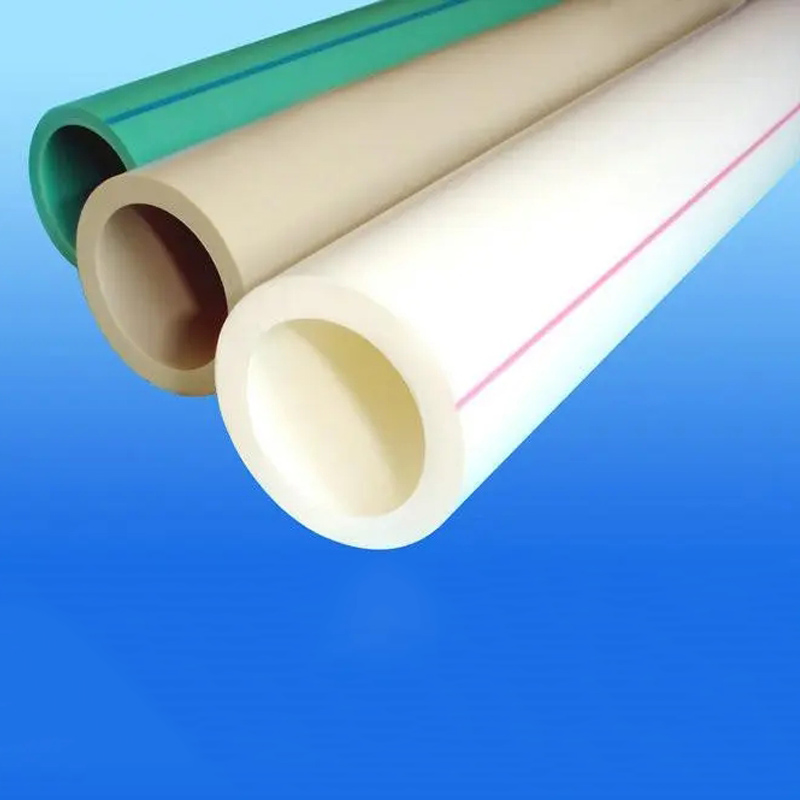
The foundation of 20mm PPR pipe lies in polypropylene random copolymer resin. This material exhibits a unique molecular structure, distinguished by random ethylen groups along the polypropylene backbone. This randomization disrupts the polymer’s crystallinity, resulting in enhanced impact resistance, flexibility, and weldability compared to homopolymer polypropylene. The primary raw material, polypropylene homopolymer and ethylene, is derived from propylene gas through a Ziegler-Natta polymerization process. Key physical properties include a density of approximately 0.905 – 0.92 g/cm³, a tensile strength ranging from 20-30 MPa, and a flexural modulus of 800-1200 MPa. Manufacturing typically involves extrusion. Polypropylene granules are fed into an extruder, heated to a molten state (around 200-240°C), and forced through a die to form the pipe’s cylindrical shape. Critical parameters during extrusion include melt temperature control (±2°C), die pressure stability, and cooling rates. Improper cooling can lead to residual stresses and dimensional inconsistencies. ‘Price factories’ often utilize multi-layer extrusion to incorporate additives. These may include UV stabilizers (carbon black, hindered amine light stabilizers – HALS) to prevent degradation from sunlight exposure, antioxidants to mitigate thermal oxidation, and pigments for color coding (typically green for cold water, red for hot water). Post-extrusion, pipes are typically marked with information including manufacturing date, size, pressure rating (PN), and relevant standards compliance. Welding (fusion welding) is a critical process; butt fusion, socket fusion, and electrofusion are commonly employed, demanding precise temperature and pressure control to achieve homogenous joints with strength comparable to the parent material. Variations in welding parameters, especially pressure duration, significantly impact weld integrity.
Performance & Engineering
The performance of 20mm PPR pipe is dictated by its ability to withstand hydrostatic pressure, thermal stresses, and chemical attack. Hydrostatic pressure testing, conducted according to ISO 1167, is essential for verifying pipe integrity. 20mm PPR pipe typically exhibits a pressure rating (PN) of 16 or 20, corresponding to sustained pressures of 1.6 MPa and 2.0 MPa respectively at 20°C. Force analysis, using Hooke’s Law and considering the pipe’s Young’s modulus, is employed to calculate allowable stress levels under various loading conditions. Thermal expansion is a significant engineering consideration. PPR has a linear coefficient of thermal expansion of approximately 0.15 mm/m°C. Proper allowance for thermal expansion and contraction is crucial in system design to prevent stress concentration at joints and potential pipe failure. Chemical resistance is generally excellent, with PPR demonstrating compatibility with most common water treatment chemicals and domestic fluids. However, prolonged exposure to highly concentrated oxidizing agents (e.g., chlorine, strong acids) can lead to degradation. Environmental resistance focuses on UV stability and low-temperature performance. While UV stabilizers are incorporated, prolonged exposure to direct sunlight reduces pipe lifespan. Low-temperature brittleness becomes a concern below 0°C, increasing the risk of fracture during installation or operation. Compliance requirements vary internationally. European standards (EN ISO 15876) and German standards (DIN 19569) provide comprehensive guidelines for PPR pipe systems, covering material properties, manufacturing processes, installation procedures, and testing protocols. Achieving compliance requires meticulous documentation and quality control throughout the manufacturing process.
Technical Specifications
| Parameter | Unit | PN16 (Typical) | PN20 (Typical) |
|---|---|---|---|
| Nominal Diameter | mm | 20 | 20 |
| Wall Thickness | mm | 2.3 | 2.8 |
| Hydrostatic Pressure (20°C) | MPa | 1.6 | 2.0 |
| Hydrostatic Pressure (60°C) | MPa | 1.1 | 1.4 |
| Maximum Operating Temperature | °C | 95 | 95 |
| Linear Coefficient of Thermal Expansion | mm/m°C | 0.15 | 0.15 |
| Tensile Strength | MPa | 20-25 | 22-28 |
Failure Mode & Maintenance
Several failure modes can compromise the integrity of 20mm PPR pipe systems. Fatigue cracking, particularly at joints subjected to cyclical pressure fluctuations, is a common concern. This is often initiated by stress concentrations resulting from improper welding or pre-existing defects. Slow crack growth (SCG), induced by sustained tensile stress in the presence of certain chemicals, can also lead to failure over time. Delamination, a separation of layers in multi-layer pipes, can occur due to poor adhesion between layers or inadequate processing conditions. Degradation from UV exposure manifests as surface chalking and a reduction in mechanical properties, ultimately leading to brittleness and cracking. Oxidation, accelerated by high temperatures, can cause embrittlement and loss of impact resistance. Maintenance primarily focuses on preventative measures. Regular visual inspections should identify any signs of cracking, discoloration, or deformation. Proper support and anchoring of the pipe system minimize stress and prevent sagging. Avoiding direct sunlight exposure through shielding or UV-resistant coatings extends pipe lifespan. If leaks are detected, the affected section should be cut out and replaced with a properly welded new section. Welding procedures must strictly adhere to manufacturer’s recommendations, utilizing calibrated tools and qualified personnel. Regular pressure testing can proactively identify potential weaknesses before catastrophic failure occurs. When dealing with ‘price factory’ sourced pipes, more frequent and detailed inspection is warranted.
Industry FAQ
Q: What is the impact of varying raw material grades on the long-term performance of PPR pipes sourced from price factories?
A: Varying raw material grades are a primary concern. ‘Price factories’ may utilize lower-grade polypropylene with reduced ethylene content, leading to decreased impact resistance and weldability. This translates to a higher susceptibility to cracking under stress and a shorter service life. Independent laboratory testing verifying resin properties (Melt Flow Index, density, ethylene content) is crucial.
Q: How critical is the welding process, and what specific parameters should be monitored during socket fusion?
A: The welding process is paramount. Poor welding creates weak points prone to failure. For socket fusion, key parameters include heater temperature accuracy (±1°C), insertion depth, holding time, and cooling time. Insufficient heating results in incomplete fusion; overheating can degrade the material. Proper tool calibration and operator training are essential.
Q: What are the implications of exceeding the maximum operating temperature for PPR pipes?
A: Exceeding the 95°C limit significantly reduces the pipe’s pressure rating and accelerates thermal degradation. Prolonged exposure to high temperatures leads to softening, creep, and a loss of mechanical strength, increasing the risk of rupture or deformation.
Q: What level of UV protection is generally sufficient for outdoor PPR pipe applications?
A: While PPR contains UV stabilizers, prolonged direct sunlight exposure will still cause degradation. A carbon black concentration of at least 2% is typically recommended. However, even with UV stabilizers, shielding the pipe with paint or protective coverings is advisable for long-term outdoor installations.
Q: What are the key differences between PN16 and PN20 PPR pipes, and when should each be specified?
A: PN20 pipes have thicker walls and are designed to withstand higher sustained pressures (2.0 MPa vs. 1.6 MPa). PN16 is suitable for typical domestic water supply applications. PN20 is preferred for high-rise buildings, industrial processes, and systems subjected to pressure surges.
Conclusion
The 20mm PPR pipe, while offering a cost-effective and durable alternative to traditional piping materials, requires a thorough understanding of its material properties, manufacturing nuances, and potential failure modes. Sourcing from ‘price factories’ necessitates heightened quality control measures, including rigorous raw material verification, meticulous welding process monitoring, and comprehensive pressure testing. Effective long-term performance hinges on proper system design, installation adhering to industry standards, and regular preventative maintenance.
The industry trend is moving towards higher quality resins and more sophisticated manufacturing processes. A commitment to compliance with international standards (EN ISO 15876, DIN 19569) is critical for ensuring long-term system reliability and minimizing the risk of costly failures. Future developments are focused on enhancing UV resistance and improving low-temperature impact strength, expanding the application range of PPR pipes in demanding environments.
-
DN25 HDPE Compression Fitting-HORON INTERNATIONAL|Reliable Irrigation Solutions
NewsFeb.11,2026
-
hdpe coupling joint product Manufacturing Analysis
News2026-11-18
-
ppr pipe heating time products Performance Analysis
News2026-11-16
-
hdpe pipe sizes factory Performance Analysis
News2026-11-09
-
HDPE Pipe Sizes Service Performance Analysis
News2026-10-26
-
wholesale 15mm ppr pipe Material Science and Performance Analysis
News2026-10-20
-
wholesale pvc pipe price per foot Technical Analysis
News2026-09-21
-
wholesale long pvc pipe Technical Analysis and Manufacturing Specifications
News2026-09-15
-
wholesale plumbing kitchen sink water lines Material Performance
News2026-09-15
-
wholesale hdpe drip irrigation Material Science
News2026-09-15
-
wholesale hot water ppr pipe Performance Analysis
News2026-09-15
-
wholesale ppr plumbing Performance Analysis
News2026-09-15
-
wholesale ppr pipe supplier Performance Analysis
News2026-09-13
-
wholesale 50mm ppr pipe Performance Analysis
News2026-09-13
-
wholesale hdpe drip pipe Performance Analysis
News2026-09-13
-
wholesale hdpe pipe 63mm price Manufacturing Specification and Performance Analysis
News2026-09-13