

Feb . 11, 2026 00:01 Back to list
2 hdpe to pvc coupling factory Performance Engineering
Introduction
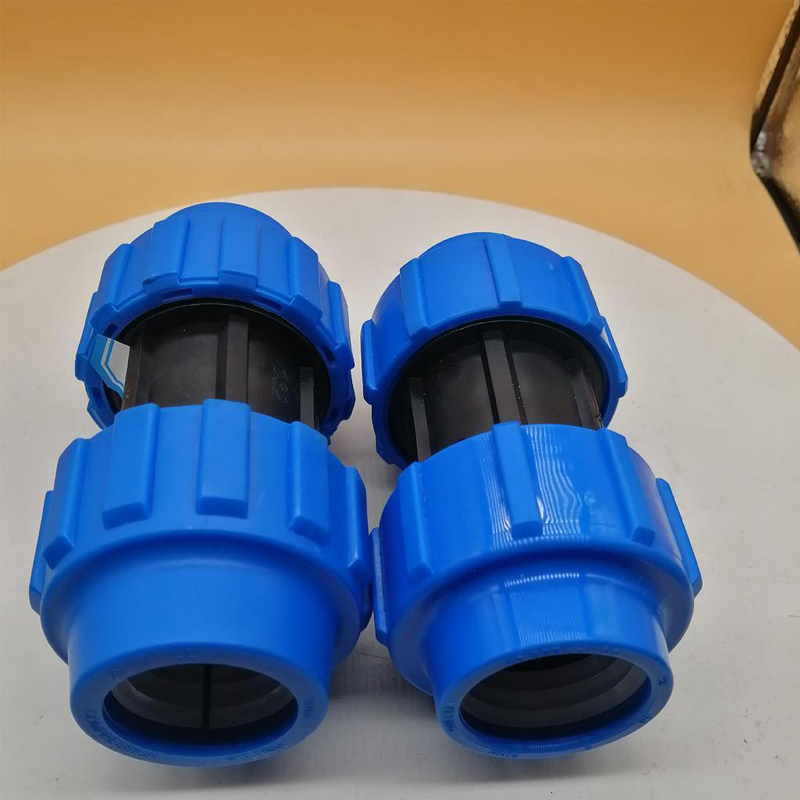
The 2" HDPE to PVC coupling facilitates the transition between High-Density Polyethylene (HDPE) and Polyvinyl Chloride (PVC) piping systems. Crucially positioned within infrastructure networks – specifically water distribution, irrigation, drainage, and wastewater management – this coupling addresses the common need to integrate dissimilar materials. Its primary function is to provide a leak-proof, structurally sound connection, accommodating differential thermal expansion and contraction between HDPE and PVC. Core performance characteristics include pressure rating, chemical resistance (to both conveyed fluids and external environments), and long-term joint integrity. The increasing demand for these couplings stems from the independent advantages of HDPE (flexibility, corrosion resistance, cost-effectiveness) and PVC (rigidity, established installation practices, widespread availability), often requiring integration within a single system. Failure to correctly specify or install these couplings results in significant maintenance costs, potential system failures, and environmental hazards.
Material Science & Manufacturing
HDPE, a thermoplastic polymer derived from ethylene, exhibits a semi-crystalline structure characterized by high tensile strength-to-density ratio. Its manufacturing typically involves Ziegler-Natta or metallocene catalysis, yielding a material with varying molecular weights influencing final product properties. PVC, also a thermoplastic, is produced via the polymerization of vinyl chloride monomer. PVC exists in rigid and flexible forms, with the coupling typically employing rigid PVC formulations containing plasticizers to modulate flexibility and impact resistance. The coupling manufacturing process frequently employs injection molding for both HDPE and PVC components. Critical parameters include melt temperature, mold temperature, injection pressure, and cooling rate. For the HDPE portion, maintaining a consistent crystalline structure is paramount; rapid cooling can lead to warping and reduced long-term creep resistance. PVC injection molding necessitates precise control of plasticizer content to avoid degradation and ensure dimensional stability. The coupling utilizes rubber gaskets (typically EPDM or Nitrile) for sealing. These gaskets’ durometer and chemical compatibility with both HDPE, PVC, and the conveyed fluid are critical. Bonding agents are frequently employed to enhance adhesion between the HDPE, PVC, and gasket components, utilizing chemical etching or plasma treatment to improve surface energy. Post-molding operations include deburring, dimensional inspection, and hydrostatic pressure testing.

Performance & Engineering
The 2” HDPE to PVC coupling’s performance is dictated by several engineering considerations. Firstly, differential thermal expansion between HDPE (coefficient of thermal expansion ~1.7 x 10⁻⁴ /°C) and PVC (~8 x 10⁻⁵ /°C) induces significant stress on the joint. The coupling design must accommodate this movement without compromising the seal. This is often achieved through a sliding or flexible gasket design. Secondly, internal pressure induces hoop stress on both the HDPE and PVC sections, requiring robust wall thicknesses determined by Barlow’s formula (σ = PD/2t, where σ is hoop stress, P is internal pressure, D is diameter, and t is wall thickness). The coupling's pressure rating is the lower of the HDPE and PVC section’s calculated burst pressures, with a substantial safety factor applied. Force analysis considers both static and dynamic loading, including water hammer and soil loading (if buried). Chemical resistance is crucial; prolonged exposure to certain chemicals can lead to gasket degradation or plasticizer leaching from the PVC, compromising the seal. Compliance requirements vary by region, with standards such as NSF/ANSI 61 dictating allowable contaminant levels for drinking water systems. Long-term creep resistance of HDPE must be considered, particularly under sustained pressure and elevated temperatures.
Technical Specifications
| Parameter | HDPE Section | PVC Section | Gasket Material |
|---|---|---|---|
| Nominal Diameter | 2 inches (50.8 mm) | 2 inches (50.8 mm) | N/A |
| Pressure Rating (PN) | PN16 (230 psi) | PN16 (230 psi) | N/A |
| Material Standard | PE100 | PVC-U (Schedule 40) | EPDM |
| Wall Thickness (min.) | 4.0 mm | 3.2 mm | 5.0 mm |
| Operating Temperature Range | -40°C to 60°C | 0°C to 60°C | -30°C to 150°C |
| Chemical Resistance | Excellent to most acids and alkalis | Good to most acids and alkalis (limited by plasticizers) | Excellent to water, wastewater, and many chemicals |
Failure Mode & Maintenance
Common failure modes in 2” HDPE to PVC couplings include gasket failure (due to degradation, improper seating, or damage during installation), cracking of the PVC section (induced by stress concentration, impact, or UV exposure), and creep deformation of the HDPE section (under sustained pressure and temperature). Delamination of the HDPE/PVC bond (if adhesive is used) is another potential failure point, stemming from inadequate surface preparation or adhesive incompatibility. Fatigue cracking can occur in the PVC section due to repeated pressure cycling. Oxidation of the HDPE can lead to embrittlement over extended periods, especially in environments with high oxygen content. Maintenance involves periodic visual inspection for cracks, leaks, or signs of gasket deterioration. Proper installation, adhering to manufacturer’s guidelines, is crucial; excessive torque during tightening can damage the gasket or PVC threads. Should leakage occur, the gasket should be replaced. For PVC cracks, replacement of the entire coupling is recommended. Preventative measures include protecting the coupling from direct sunlight (UV degradation) and avoiding exposure to incompatible chemicals. Regular pressure testing of the pipeline system can identify early signs of leakage and potential failure points.
Industry FAQ
Q: What is the primary advantage of using a 2" HDPE to PVC coupling over a fully HDPE or fully PVC system?
A: The primary advantage lies in the ability to leverage the benefits of both materials. HDPE offers flexibility and corrosion resistance, making it ideal for buried applications or areas prone to ground movement. PVC provides rigidity and a lower initial cost. The coupling allows for integration where one material is preferred for a specific section of the pipeline, rather than being forced to standardize on a single material.
Q: How do I account for thermal expansion differences between HDPE and PVC in a long pipeline run utilizing these couplings?
A: Expansion loops or expansion joints should be incorporated into the pipeline design. These allow for the HDPE section to expand and contract independently of the PVC section without inducing excessive stress on the couplings. The frequency and size of these loops are determined by pipeline length, temperature range, and material coefficients of thermal expansion. The coupling itself should be selected for its ability to accommodate some degree of axial movement.
Q: What types of chemicals are incompatible with the materials used in these couplings, and what are the consequences of exposure?
A: Strong oxidizing agents, aromatic hydrocarbons, and chlorinated solvents can degrade both HDPE and PVC. Specifically, plasticizers in PVC can be leached out by certain solvents, rendering the PVC brittle and prone to cracking. Exposure to incompatible chemicals can also cause gasket swelling, shrinkage, or dissolution, leading to leaks. A chemical compatibility chart should always be consulted before using the coupling in a specific application.
Q: What is the typical lifespan of a properly installed 2" HDPE to PVC coupling, and what factors influence its longevity?
A: A properly installed coupling, operating within its specified parameters, can have a lifespan of 20-50 years. Factors influencing longevity include operating temperature, pressure, exposure to UV radiation, chemical exposure, soil conditions (if buried), and the quality of the materials and manufacturing process. Regular inspection and preventative maintenance are crucial to maximizing lifespan.
Q: What considerations should be made regarding the installation torque of the coupling?
A: Overtightening the coupling can compress the gasket excessively, leading to premature failure or deformation. Undertightening can result in leakage. The manufacturer’s recommended torque specifications, typically provided in Newton-meters (Nm) or foot-pounds (ft-lbs), must be strictly adhered to. Using a calibrated torque wrench is essential. Lubrication of the threads can also influence the torque-tension relationship.
Conclusion
The 2” HDPE to PVC coupling represents a crucial component in modern piping systems, enabling the efficient and reliable integration of two distinct materials. Its performance is governed by a complex interplay of material science, engineering principles, and manufacturing precision. Understanding the material properties of HDPE and PVC, coupled with a thorough consideration of factors like thermal expansion, pressure rating, and chemical compatibility, is essential for ensuring long-term system integrity.
Ultimately, proper selection, installation, and maintenance are paramount to maximizing the service life and minimizing the risk of failure. Continued advancements in coupling design and material science, focusing on improved gasket materials and enhanced bonding techniques, will further solidify the role of these couplings in a wide range of industrial and municipal applications.
-
DN25 HDPE Compression Fitting-HORON INTERNATIONAL|Reliable Irrigation Solutions
NewsFeb.11,2026
-
hdpe coupling joint product Manufacturing Analysis
News2026-11-18
-
ppr pipe heating time products Performance Analysis
News2026-11-16
-
hdpe pipe sizes factory Performance Analysis
News2026-11-09
-
HDPE Pipe Sizes Service Performance Analysis
News2026-10-26
-
wholesale 15mm ppr pipe Material Science and Performance Analysis
News2026-10-20
-
wholesale pvc pipe price per foot Technical Analysis
News2026-09-21
-
wholesale long pvc pipe Technical Analysis and Manufacturing Specifications
News2026-09-15
-
wholesale plumbing kitchen sink water lines Material Performance
News2026-09-15
-
wholesale hdpe drip irrigation Material Science
News2026-09-15
-
wholesale hot water ppr pipe Performance Analysis
News2026-09-15
-
wholesale ppr plumbing Performance Analysis
News2026-09-15
-
wholesale ppr pipe supplier Performance Analysis
News2026-09-13
-
wholesale 50mm ppr pipe Performance Analysis
News2026-09-13
-
wholesale hdpe drip pipe Performance Analysis
News2026-09-13
-
wholesale hdpe pipe 63mm price Manufacturing Specification and Performance Analysis
News2026-09-13