

Feb . 11, 2026 00:01 Back to list
12 pvc pipe price product Performance Analysis
Introduction
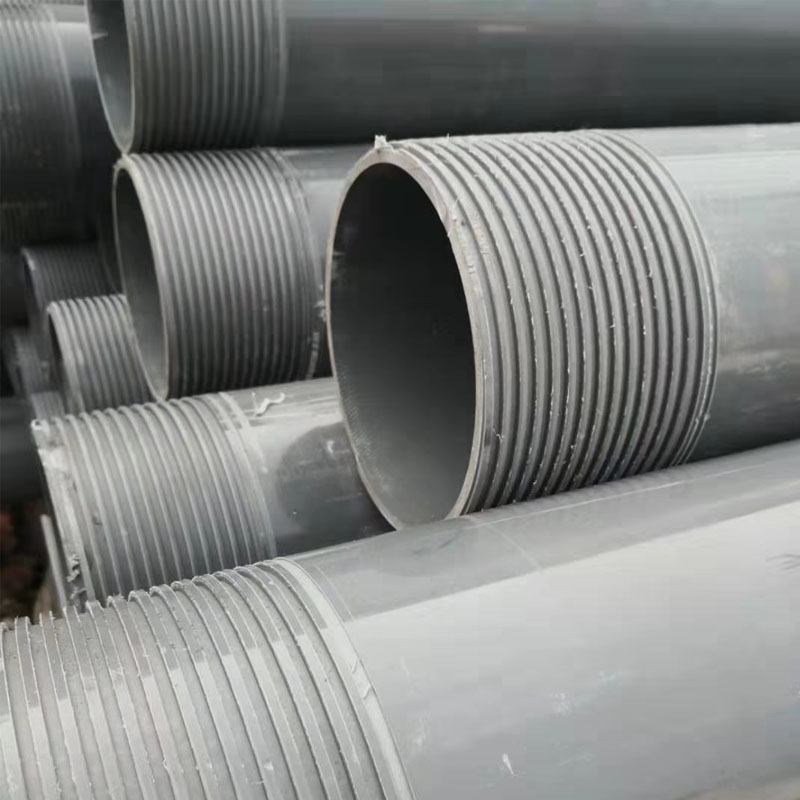
Polyvinyl Chloride (PVC) pipe, specifically 12-inch diameter Schedule 40 and Schedule 80 variants, represents a crucial component in a diverse range of industrial and infrastructural applications. Positioned as a cost-effective and corrosion-resistant alternative to metallic piping systems, PVC pipe finds extensive use in water distribution, irrigation, sewage, drainage, chemical processing, and various industrial fluid transport systems. The “12 pvc pipe price” designation refers to both the nominal pipe diameter and a critical cost consideration for project budgeting. This technical guide will provide an in-depth examination of 12-inch PVC pipe, covering material science, manufacturing processes, performance characteristics, failure modes, maintenance protocols, and relevant industry standards. Core performance characteristics include pressure bearing capability, chemical inertness, and long-term durability, making it a foundational element in numerous engineering designs. A key industry pain point revolves around accurately assessing long-term performance under varying environmental conditions and ensuring consistent material quality across different manufacturers.
Material Science & Manufacturing
12-inch PVC pipe is primarily manufactured from Polyvinyl Chloride resin, a thermoplastic polymer produced through the polymerization of vinyl chloride monomer (VCM). The PVC resin itself is a white, brittle powder. To render it suitable for pipe extrusion, various additives are incorporated, including plasticizers (typically phthalates or non-phthalate alternatives for increased flexibility), stabilizers (to prevent thermal degradation during processing and UV exposure in service – commonly organotin compounds or calcium-zinc stabilizers), lubricants (to facilitate processing), and impact modifiers (to enhance toughness). The specific formulation will dictate the pipe’s Schedule number (40 or 80), influencing wall thickness and pressure rating. Manufacturing typically involves extrusion: PVC compound is fed into a single-screw extruder where it is heated, melted, and forced through a die to form a continuous pipe. Critical parameters during extrusion include barrel temperature profiles (ensuring complete melting without degradation), die temperature, extrusion speed, and cooling rate (using water baths to solidify the pipe). Post-extrusion, pipes are cut to length, marked with relevant information (size, schedule, pressure rating, manufacturer, standards compliance), and subjected to quality control tests, including hydrostatic pressure testing to verify burst strength. The chemical compatibility of PVC is excellent with many substances, but prolonged exposure to highly concentrated aromatic hydrocarbons or ketones can cause swelling and degradation. The glass transition temperature (Tg) of PVC is approximately 80-85°C, influencing its performance at elevated temperatures.

Performance & Engineering
The performance of 12-inch PVC pipe is governed by several engineering principles. Hydrostatic design stress (HDS) is a critical factor, calculated based on the pipe's dimensions, material properties, and desired safety factor. Schedule 80 pipe exhibits a higher HDS than Schedule 40 due to its thicker wall. Force analysis considers both internal pressure (resulting in hoop stress) and external loads (soil loads in buried applications, or dynamic loads from fluid flow). The allowable bending stress is determined by the Young's modulus of PVC (approximately 3-4 GPa). Environmental resistance is paramount. While PVC resists corrosion from many chemicals, prolonged UV exposure can lead to embrittlement. The addition of UV stabilizers mitigates this effect. Temperature fluctuations induce thermal expansion and contraction, requiring expansion joints in long runs to prevent stress buildup. Compliance with standards such as ASTM D1785 (for PVC pipe dimensions) and ASTM D2412 (for PVC pipe performance) is mandatory. Jointing methods, including solvent cementing, gasketed joints, and threaded connections, must be engineered to maintain the pipe’s pressure rating and prevent leaks. A common industry challenge is accounting for soil creep and settlement in buried pipelines, necessitating proper bedding and backfill procedures to avoid pipe deformation and cracking. Consideration must also be given to the effects of ground water and aggressive soil chemistries on long-term pipe integrity.
Technical Specifications
| Parameter | Schedule 40 (inches) | Schedule 80 (inches) | Units |
|---|---|---|---|
| Nominal Pipe Size | 12 | 12 | inches |
| Outside Diameter | 12.68 | 12.68 | inches |
| Wall Thickness | 0.290 | 0.375 | inches |
| Pressure Rating (at 73°F) | 400 | 600 | psi |
| Burst Pressure (Hydrostatic) | 2400 | 3600 | psi |
| Weight per Foot | 1.84 | 2.43 | lbs/ft |
Failure Mode & Maintenance
Common failure modes in 12-inch PVC pipe include: 1) Slow Crack Growth (SCG): induced by sustained tensile stress in the presence of aggressive chemicals (e.g., chlorine in water systems), leading to brittle fracture. 2) Hydrostatic Failure: resulting from exceeding the pressure rating, often due to water hammer or surge pressures. 3) Impact Damage: caused by accidental strikes during installation or operation. 4) UV Degradation: leading to surface cracking and embrittlement, particularly in exposed applications. 5) Joint Failure: stemming from improper solvent cementing techniques or gasket degradation. 6) Soil-induced Cracking: resulting from excessive external loads, soil movement, or aggressive soil chemistry. Maintenance involves regular visual inspections for cracks, leaks, or deformation. Hydrostatic testing can verify the integrity of the pipeline. For SCG prevention, appropriate chemical inhibitors may be required. Joints should be periodically inspected for tightness and gasket condition. In areas prone to impact damage, protective barriers should be installed. Proper bedding and backfill are crucial to minimize soil-induced stress. Repair options include mechanical couplings, cut-and-replace sections, or sleeve repairs, depending on the extent of the damage. A preventative maintenance schedule should be implemented to identify and address potential issues before they lead to catastrophic failure.
Industry FAQ
Q: What is the impact of temperature on the pressure rating of 12-inch PVC pipe?
A: The pressure rating of PVC pipe decreases with increasing temperature. Pressure ratings provided in standards like ASTM D1785 are typically specified at 73°F (23°C). As temperature rises, the material's strength and stiffness decrease, reducing its ability to withstand internal pressure. Derating factors, provided by manufacturers, must be applied to the pressure rating for temperatures exceeding 73°F. These factors account for the reduction in strength and ensure safe operation.
Q: How does soil corrosivity affect the long-term performance of buried 12-inch PVC pipe?
A: Aggressive soil chemistries can significantly impact the long-term performance of buried PVC pipe. Sulfate-rich soils can cause sulfate attack, leading to material degradation. Acidic or alkaline soils can also contribute to chemical attack. Furthermore, stray electrical currents (from nearby metallic infrastructure) can accelerate corrosion. Proper soil testing and the application of protective coatings or cathodic protection (where appropriate) are essential to mitigate these risks.
Q: What are the best practices for solvent cementing 12-inch PVC pipe joints?
A: Proper solvent cementing is critical for ensuring leak-free joints. Surfaces must be clean, dry, and free of contaminants. The correct primer and cement type (matching the PVC compound) must be used. Primer should be applied evenly, followed by a generous and uniform application of cement. Parts should be immediately joined with a slight twisting motion to ensure complete coverage. Sufficient curing time (typically 24 hours) is required before pressurizing the pipeline.
Q: How do I determine the appropriate Schedule (40 or 80) for a specific application?
A: The selection of Schedule 40 or 80 depends on the operating pressure, fluid temperature, and external loads. Schedule 80 provides a higher pressure rating and greater wall thickness, making it suitable for high-pressure applications or those exposed to significant external loads. A thorough engineering analysis, considering all relevant factors, is essential to determine the appropriate Schedule. Consulting with a qualified engineer is recommended.
Q: What are the implications of using recycled PVC in the manufacture of 12-inch pipe?
A: Recycled PVC can be incorporated into pipe manufacturing, but its use is subject to strict quality control measures. The percentage of recycled content must be carefully monitored to ensure that the pipe meets all relevant performance requirements. Recycled PVC can sometimes exhibit slightly different properties compared to virgin PVC, potentially affecting impact resistance or long-term durability. Reputable manufacturers will thoroughly test recycled PVC pipe to verify its conformance to standards.
Conclusion
12-inch PVC pipe represents a versatile and cost-effective solution for a wide array of fluid conveyance applications. Understanding its material science, manufacturing processes, and performance characteristics is crucial for ensuring long-term reliability and safety. Proper installation techniques, adherence to industry standards, and implementation of a robust maintenance program are essential for maximizing the lifespan of PVC pipelines. The continued development of advanced PVC formulations and jointing technologies will further enhance its performance and expand its applicability in increasingly demanding environments.
Future advancements in PVC pipe technology are likely to focus on increasing impact resistance, improving UV stability, and developing more sustainable manufacturing processes. The integration of smart sensors for real-time monitoring of pipeline integrity is also a growing trend. Furthermore, ongoing research into alternative plasticizers and stabilizers will address environmental concerns and enhance the overall sustainability of PVC pipe systems. A comprehensive understanding of these evolving technologies will be vital for engineers and procurement professionals in the years to come.
-
DN25 HDPE Compression Fitting-HORON INTERNATIONAL|Reliable Irrigation Solutions
NewsFeb.11,2026
-
hdpe coupling joint product Manufacturing Analysis
News2026-11-18
-
ppr pipe heating time products Performance Analysis
News2026-11-16
-
hdpe pipe sizes factory Performance Analysis
News2026-11-09
-
HDPE Pipe Sizes Service Performance Analysis
News2026-10-26
-
wholesale 15mm ppr pipe Material Science and Performance Analysis
News2026-10-20
-
wholesale pvc pipe price per foot Technical Analysis
News2026-09-21
-
wholesale long pvc pipe Technical Analysis and Manufacturing Specifications
News2026-09-15
-
wholesale plumbing kitchen sink water lines Material Performance
News2026-09-15
-
wholesale hdpe drip irrigation Material Science
News2026-09-15
-
wholesale hot water ppr pipe Performance Analysis
News2026-09-15
-
wholesale ppr plumbing Performance Analysis
News2026-09-15
-
wholesale ppr pipe supplier Performance Analysis
News2026-09-13
-
wholesale 50mm ppr pipe Performance Analysis
News2026-09-13
-
wholesale hdpe drip pipe Performance Analysis
News2026-09-13
-
wholesale hdpe pipe 63mm price Manufacturing Specification and Performance Analysis
News2026-09-13