

Feb . 11, 2026 00:01 Back to list
12 pvc pipe price manufacturer Technical Analysis

Introduction
Polyvinyl Chloride (PVC) pipe, specifically 12-inch diameter Schedule 40 and Schedule 80 variants, represents a critical component in numerous industrial, municipal, and agricultural applications. Its position in the value chain extends from petrochemical feedstock production through compounding, extrusion, and final distribution. This technical guide will focus on the nuances of 12-inch PVC pipe, its material properties, manufacturing processes, performance characteristics, potential failure modes, and relevant industry standards. The core performance attributes of 12-inch PVC pipe – its corrosion resistance, structural integrity under pressure, ease of installation, and cost-effectiveness – dictate its widespread adoption in water distribution, wastewater conveyance, irrigation, and chemical processing. A key pain point within the industry involves ensuring long-term durability and preventing premature failure due to factors such as UV degradation, improper installation, and chemical attack. Price competitiveness, dictated by resin costs and manufacturing efficiencies, is another significant consideration for procurement managers. This guide aims to address these concerns with a detailed technical analysis.
Material Science & Manufacturing
The primary raw material for PVC pipe is Polyvinyl Chloride resin, a thermoplastic polymer produced through the polymerization of vinyl chloride monomer (VCM). The resin’s molecular weight, degree of polymerization, and the presence of additives dramatically influence the final pipe’s properties. Common additives include heat stabilizers (typically organotin compounds or calcium-zinc stabilizers), lubricants (stearates), plasticizers (phthalates or alternatives like DINCH), and UV stabilizers. The ratio of PVC to plasticizer dictates the pipe’s flexibility and impact resistance. For 12-inch pipe, rigidity is paramount, favoring formulations with lower plasticizer content. Manufacturing typically involves extrusion. PVC resin and additives are blended and fed into a twin-screw extruder, where they are heated and homogenized. The molten PVC is then forced through a die of the desired diameter and wall thickness. Critical process parameters include extrusion temperature (typically 180-210°C), screw speed, die pressure, and cooling rate. The cooling process, often utilizing water baths, must be carefully controlled to prevent warping or cracking. Schedule 40 and Schedule 80 designations refer to the pipe’s wall thickness; Schedule 80 pipes have thicker walls, providing higher pressure ratings. Post-extrusion, pipes are typically cut to length, beveled for solvent welding, and marked with relevant specifications. Quality control involves dimensional checks, hydrostatic pressure testing, and impact resistance testing per ASTM standards.
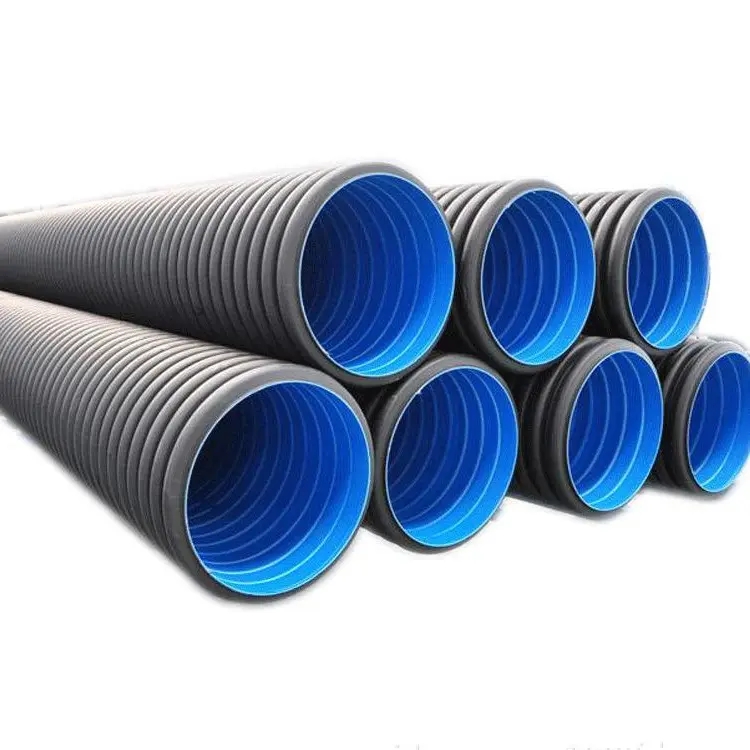
Performance & Engineering
The performance of 12-inch PVC pipe is governed by its mechanical strength, chemical resistance, and thermal properties. The primary engineering consideration is its ability to withstand internal hydrostatic pressure. This is calculated using Barlow’s formula: P = (2S t) / D, where P is the internal pressure, S is the allowable tensile stress of PVC (typically 6,000 psi for Schedule 40 and 8,000 psi for Schedule 80), t is the wall thickness, and D is the outer diameter. Factor of safety is applied to the allowable stress. Long-term hydrostatic strength is also affected by creep, a time-dependent deformation under sustained load. PVC exhibits relatively low creep, but it must be considered in long-term design. Chemical resistance is excellent for most common acids, bases, and salts, but prolonged exposure to ketones, esters, and aromatic hydrocarbons can cause swelling and degradation. UV radiation can also degrade PVC, leading to embrittlement. UV stabilizers are added to the formulation to mitigate this effect, but long-term outdoor exposure still necessitates protective coatings or burial. Installation is critical; proper bedding and backfill are required to prevent stress concentrations and potential cracking. Joint integrity is typically achieved via solvent welding, which creates a chemical bond between pipe sections. Compliance requirements vary by region, often adhering to AWWA standards for water distribution systems and ASTM standards for material specifications.
Technical Specifications
| Specification | Schedule 40 (inches) | Schedule 80 (inches) | ASTM Standard |
|---|---|---|---|
| Nominal Pipe Size | 12 | 12 | D1785 |
| Outside Diameter | 12.68 | 12.68 | D1785 |
| Wall Thickness | 0.290 | 0.375 | D1785 |
| Pressure Rating (at 73°F) | 360 psi | 540 psi | D1785 |
| Hydrostatic Design Stress | 6000 psi | 8000 psi | D1785 |
| Long-Term Hydrostatic Strength (LTHS) | 400 psi | 500 psi | D1785 |
Failure Mode & Maintenance
Common failure modes for 12-inch PVC pipe include cracking due to overpressure, impact damage during handling or installation, chemical attack, UV degradation, and joint failure. Stress cracking can occur from sustained tensile stress, particularly in the presence of certain chemicals. Impact damage typically results in localized cracks or shattering. UV degradation manifests as surface crazing and loss of impact strength. Joint failure can result from improper solvent welding techniques (insufficient solvent application, improper fit-up, or inadequate curing time) or soil movement causing stress on the joint. Fatigue cracking can also occur under cyclic pressure loading. Maintenance involves regular visual inspections for cracks, deformations, or leaks. Proper bedding and backfill are crucial preventative measures. Damaged sections should be replaced using solvent welding. For buried pipes, cathodic protection may be considered in corrosive soil environments. Pressure testing should be conducted periodically to verify the integrity of the system. Avoid exposing PVC pipe to temperatures exceeding its maximum operating temperature (typically 140°F), as this can lead to softening and reduced strength. Promptly address any signs of chemical attack by replacing affected sections with chemically resistant pipe materials. Conducting routine soil analysis will assist in identifying corrosive elements that can accelerate pipe degradation.
Industry FAQ
Q: What is the impact of soil corrosivity on the lifespan of 12-inch PVC pipe?
A: Highly corrosive soils, particularly those with high sulfate or chloride content, can accelerate the degradation of PVC pipe. Sulfate attack can cause leaching of plasticizers and embrittlement, while chlorides can promote stress corrosion cracking. Conducting a soil resistivity test is crucial. For highly corrosive environments, consider using PVC pipe with enhanced chemical resistance or implementing cathodic protection.
Q: What are the critical parameters for ensuring a successful solvent weld?
A: Successful solvent welding requires proper surface preparation (cleaning and deburring), correct solvent application (sufficient quantity and uniform coverage), proper pipe alignment and insertion, and adequate curing time. The solvent type must be compatible with the PVC formulation. Ambient temperature and humidity also influence curing time. Following ASTM F493 guidelines is essential.
Q: How does the Schedule number (40 vs. 80) affect the long-term performance of the pipe?
A: Schedule 80 pipe, with its thicker wall, provides a higher pressure rating and greater resistance to impact damage and creep. This translates to a longer lifespan, especially in applications involving high pressures or significant external loads. While Schedule 40 is sufficient for many applications, Schedule 80 offers an increased margin of safety and durability.
Q: What are the primary causes of UV degradation in PVC pipe, and how can it be mitigated?
A: UV radiation breaks down the polymer chains in PVC, leading to embrittlement and surface cracking. Mitigation strategies include incorporating UV stabilizers into the PVC formulation, applying UV-resistant coatings, or burying the pipe to shield it from sunlight. Regular inspection for surface crazing is also recommended.
Q: What is the significance of the Hydrostatic Design Stress (HDS) and Long-Term Hydrostatic Strength (LTHS) values?
A: HDS represents the short-term tensile strength of the PVC material used in the pipe, while LTHS represents the maximum sustained pressure the pipe can withstand over an extended period (typically 50 years) with an acceptable level of creep. LTHS is a critical design parameter for ensuring long-term reliability.
Conclusion
12-inch PVC pipe represents a robust and cost-effective solution for a wide range of fluid conveyance applications. Its inherent corrosion resistance, combined with appropriate material selection, manufacturing control, and installation practices, ensures long-term performance and reliability. Understanding the material science principles governing PVC’s behavior, including its susceptibility to UV degradation, chemical attack, and creep, is crucial for successful system design and maintenance.
Future trends in 12-inch PVC pipe technology will likely focus on developing more sustainable PVC formulations, incorporating enhanced UV stabilizers, and improving installation techniques. Continued adherence to rigorous quality control standards and industry best practices will be essential to maintaining the integrity and longevity of PVC piping systems. Procurement professionals should prioritize suppliers demonstrating a commitment to these principles.
-
DN25 HDPE Compression Fitting-HORON INTERNATIONAL|Reliable Irrigation Solutions
NewsFeb.11,2026
-
hdpe coupling joint product Manufacturing Analysis
News2026-11-18
-
ppr pipe heating time products Performance Analysis
News2026-11-16
-
hdpe pipe sizes factory Performance Analysis
News2026-11-09
-
HDPE Pipe Sizes Service Performance Analysis
News2026-10-26
-
wholesale 15mm ppr pipe Material Science and Performance Analysis
News2026-10-20
-
wholesale pvc pipe price per foot Technical Analysis
News2026-09-21
-
wholesale long pvc pipe Technical Analysis and Manufacturing Specifications
News2026-09-15
-
wholesale plumbing kitchen sink water lines Material Performance
News2026-09-15
-
wholesale hdpe drip irrigation Material Science
News2026-09-15
-
wholesale hot water ppr pipe Performance Analysis
News2026-09-15
-
wholesale ppr plumbing Performance Analysis
News2026-09-15
-
wholesale ppr pipe supplier Performance Analysis
News2026-09-13
-
wholesale 50mm ppr pipe Performance Analysis
News2026-09-13
-
wholesale hdpe drip pipe Performance Analysis
News2026-09-13
-
wholesale hdpe pipe 63mm price Manufacturing Specification and Performance Analysis
News2026-09-13