

Feb . 11, 2026 00:01 Back to list
hdpe coupling price products Performance Analysis
Introduction
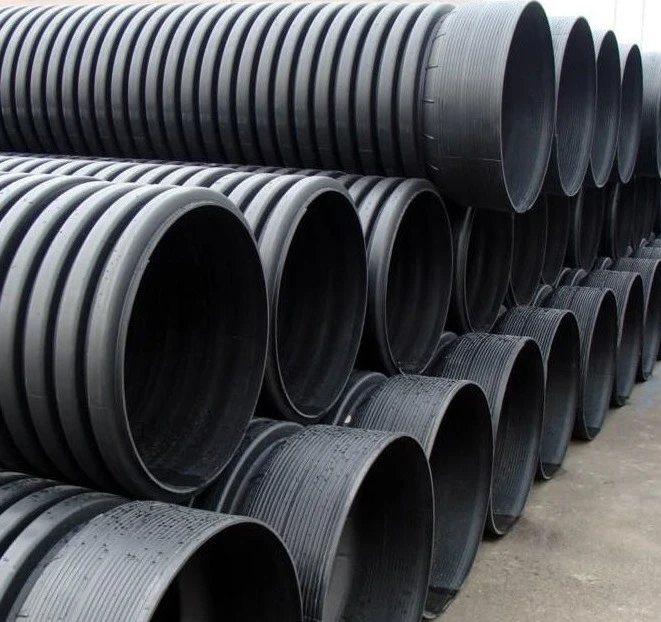
High-Density Polyethylene (HDPE) couplings are integral components in pipeline systems used for the conveyance of fluids and gases across diverse industries, including municipal water distribution, industrial processing, mining, and irrigation. These couplings serve as a robust and reliable method for joining HDPE pipes, offering a cost-effective alternative to traditional joining methods like welding or solvent cementing, particularly in situations requiring frequent assembly, disassembly, or relocation. Their significance stems from HDPE's inherent properties - high chemical resistance, durability, and flexibility – coupled with the coupling's ability to facilitate secure, leak-proof connections. The 'price' aspect of HDPE couplings is critically tied to material grade, size, pressure rating, and the specific coupling mechanism employed (e.g., mechanical, flanged, or compression). This guide provides a comprehensive technical overview of HDPE couplings, delving into material science, manufacturing processes, performance characteristics, failure modes, and applicable industry standards.
Material Science & Manufacturing
HDPE couplings are predominantly manufactured from high-density polyethylene resin, a thermoplastic polymer derived from the polymerization of ethylene. The resin’s density (typically between 0.931 and 0.965 g/cm³) dictates its mechanical properties, with higher density generally correlating with increased strength and rigidity. The manufacturing process begins with the selection of appropriate HDPE grades – typically those conforming to PE100 or PE80 standards (detailed in Section 7). Raw material quality control is paramount, focusing on molecular weight distribution, melt flow index (MFI), and carbon black content (for UV resistance).
Coupling production typically utilizes injection molding for smaller diameter couplings and rotational molding for larger sizes. Injection molding involves injecting molten HDPE into a closed mold cavity, followed by cooling and ejection. Critical parameters include mold temperature (typically 60-80°C), injection pressure (50-150 MPa), and cooling time. Rotational molding, on the other hand, involves introducing HDPE powder into a mold which is then rotated biaxially while heated, resulting in a hollow, seamless part. For mechanically restrained couplings, components like steel rings or locking mechanisms are integrated during or after the molding process. Surface finish and dimensional accuracy are rigorously controlled through quality inspection procedures, including coordinate measuring machines (CMM) and visual assessments. Chemical compatibility testing, specifically resistance to commonly transported fluids, is a vital step in the quality assurance process. Any variation in these parameters can negatively affect the long-term performance and structural integrity of the coupling.
Performance & Engineering
The performance of HDPE couplings is dictated by their ability to withstand internal pressure, external loads, and environmental stresses. Internal pressure resistance is a function of the coupling’s geometry, material strength, and the pipe's outer diameter. Engineering calculations based on Barlow’s formula or finite element analysis (FEA) are employed to determine the maximum allowable operating pressure (MAOP). External loads, such as soil overburden or traffic loads, necessitate couplings with adequate buckling resistance and impact strength. Mechanical couplings often incorporate restrainer mechanisms to prevent pull-out under tensile loads.
Environmental resistance is a crucial consideration. HDPE exhibits excellent resistance to most chemicals, but prolonged exposure to strong oxidizing agents or UV radiation can lead to degradation. Couplings intended for outdoor applications frequently incorporate UV stabilizers, such as carbon black, to mitigate degradation. Temperature fluctuations induce thermal expansion and contraction, which must be accommodated by the coupling design to prevent stress cracking. Long-term creep behavior is another important factor; HDPE can exhibit time-dependent deformation under sustained load. Compliance requirements, such as those stipulated by AWWA (American Water Works Association) or EN (European Norms) standards, dictate minimum performance criteria for pressure testing, leakage rates, and material properties. Force analysis, often utilizing FEA modeling, is essential to verify the structural integrity of the coupling under various loading scenarios.
Technical Specifications
| Parameter | Units | PE100 Coupling (Typical) | PE80 Coupling (Typical) |
|---|---|---|---|
| Material | - | High-Density Polyethylene (PE100) | High-Density Polyethylene (PE80) |
| Pressure Rating | PSI | 200-350 | 160-250 |
| Temperature Range | °C | -40 to +60 | -40 to +40 |
| Diameter Range | inches | 0.5 to 63 | 0.5 to 48 |
| Joint Type | - | Mechanical, Compression, Flanged | Mechanical, Compression |
| UV Resistance | Hours (ASTM D4455) | >1000 | >500 |
Failure Mode & Maintenance
HDPE couplings, while durable, are susceptible to several failure modes. Slow Crack Growth (SCG), induced by sustained tensile stress and aggressive environments, is a common concern, particularly in mechanically restrained couplings. SCG manifests as cracks propagating slowly through the HDPE material. Another failure mode is brittle fracture, which can occur under impact loads or at low temperatures. Corrosion, while HDPE itself is corrosion-resistant, can affect metallic components in mechanically restrained couplings, leading to galvanic corrosion if dissimilar metals are used. Degradation due to UV exposure, particularly in the absence of adequate UV stabilizers, can cause embrittlement and cracking.
Maintenance involves periodic visual inspections for cracks, deformation, or corrosion. For mechanically restrained couplings, the integrity of the restrainer mechanism should be checked regularly. Leakage tests, using hydrostatic pressure, can identify potential failures. Preventative maintenance includes ensuring proper installation procedures are followed (correct torque settings, proper pipe insertion depth) and protecting couplings from excessive UV exposure. If SCG is detected, the affected coupling should be replaced immediately. For corrosion-related issues, sacrificial anodes or coatings can be employed to mitigate the problem. Proper storage of couplings, protecting them from direct sunlight and extreme temperatures, also contributes to their longevity.
Industry FAQ
Q: What is the impact of pipe ovality on the performance of a mechanical HDPE coupling?
A: Pipe ovality significantly reduces the effectiveness of mechanical couplings, especially those relying on compression or interference fit. Ovality creates uneven pressure distribution, leading to potential leakage and reduced holding strength. Couplings are designed for pipes with a specific roundness tolerance; exceeding this tolerance compromises the seal and structural integrity. Prior to installation, pipe ends should be checked for ovality and corrected if necessary using pipe re-rounding tools.
Q: How does the choice of gasket material affect the chemical resistance of an HDPE coupling?
A: The gasket material is critical for maintaining a leak-proof seal while ensuring compatibility with the conveyed fluid. Common gasket materials include EPDM, NBR, and Viton. EPDM is generally suitable for water and many chemicals, but it is not resistant to petroleum-based products. NBR offers good resistance to oils and fuels, while Viton provides superior resistance to a broad range of aggressive chemicals and high temperatures. Selecting the correct gasket material is paramount to prevent degradation and failure.
Q: What are the long-term effects of soil movement on HDPE couplings with mechanical restraints?
A: Soil movement, particularly differential settlement, can impose significant tensile loads on HDPE pipelines and their couplings. Mechanical restraints are designed to resist pull-out, but excessive movement can exceed their capacity, leading to joint separation and leakage. Proper bedding and backfilling practices, along with the use of flexible couplings or expansion joints, are essential to mitigate the effects of soil movement. Periodic monitoring of pipeline alignment is recommended in areas prone to ground instability.
Q: What is the role of carbon black in extending the service life of HDPE couplings exposed to sunlight?
A: Carbon black is a UV stabilizer commonly incorporated into HDPE formulations. It absorbs UV radiation, preventing it from penetrating the polymer matrix and causing chain scission and degradation. The concentration of carbon black directly influences the level of UV protection; higher concentrations provide greater resistance to sunlight. However, excessive carbon black can also affect the mechanical properties of the HDPE.
Q: How do I determine the correct coupling size for joining two HDPE pipes with slightly different outer diameters?
A: Using a coupling designed for the smaller of the two pipe diameters is generally recommended. This ensures a secure fit and prevents over-compression, which could damage the pipe. However, it’s crucial to verify that the coupling can accommodate the difference in diameter without compromising the seal. In some cases, a reducer coupling may be necessary to provide a smooth transition between the two pipe sizes. Always consult the manufacturer’s specifications for guidance.
Conclusion
HDPE couplings represent a critical joining technology for polyethylene piping systems, offering a balance of durability, cost-effectiveness, and ease of installation. The selection and application of appropriate couplings depend heavily on a thorough understanding of material science, manufacturing nuances, and performance parameters. Ensuring compliance with relevant industry standards and performing proper installation and maintenance are crucial to maximizing the longevity and reliability of these essential components.
Future advancements in HDPE coupling technology will likely focus on developing enhanced restrainer mechanisms, improved UV stabilization techniques, and the integration of smart monitoring systems to detect potential failures proactively. Furthermore, the development of couplings with wider diameter ranges and higher pressure ratings will expand their applicability to increasingly demanding infrastructure projects. Continued research and development in these areas will solidify the position of HDPE couplings as a cornerstone of modern pipeline construction.
-
DN25 HDPE Compression Fitting-HORON INTERNATIONAL|Reliable Irrigation Solutions
NewsFeb.11,2026
-
china pvc pipe vs ppr pipe Performance Analysis
News2026-06-08
-
china irrigation hdpe pipe Performance Analysis
News2026-06-08
-
china hdpe pvc coupling Performance Analysis
News2026-06-08
-
china pvc pipe list Technical Analysis
News2026-06-08
-
china ppr water pipe suppliers Performance Analysis
News2026-06-08
-
china 3 4 ppr pipe price Performance Analysis
News2026-06-07
-
china underground pvc pipe Material and Manufacturing
News2026-06-07
-
china type of hdpe pipe Technical Performance Analysis
News2026-06-07
-
china upvc Performance Analysis
News2026-06-07
-
china outside diameter of pvc pipe Dimensional Analysis
News2026-06-07
-
china ppr water pipe price Performance Analysis
News2026-06-06
-
china ppr composite pipe Performance Analysis
News2026-06-06
-
china ppr pipe 25mm price Performance Analysis
News2026-06-06
-
china ppr pipe use Performance Analysis
News2026-06-06
-
china pvc sewer pipe Technical Performance
News2026-06-06