

Feb . 11, 2026 00:01 Back to list
hdpe corrugated pipe service Performance Analysis

Introduction
High-Density Polyethylene (HDPE) corrugated pipe represents a significant advancement in subsurface drainage and conduit solutions. Positioned within the broader piping industry, it serves as a lighter-weight, corrosion-resistant alternative to traditional materials like concrete, steel, and PVC. Its primary function is fluid conveyance – stormwater management, sanitary sewer systems, agricultural drainage, and protective conduit for utilities. Core performance characteristics revolve around ring stiffness (resistance to collapse under load), flow capacity (determined by Manning’s equation and pipe diameter), and long-term durability in challenging subsurface environments. A key industry pain point addressed by HDPE corrugated pipe is the escalating cost of material and installation associated with conventional piping, coupled with growing concerns regarding material lifespan and environmental impact. The inherent flexibility of HDPE also mitigates issues related to ground settlement and seismic activity, areas where rigid pipes often fail.
Material Science & Manufacturing
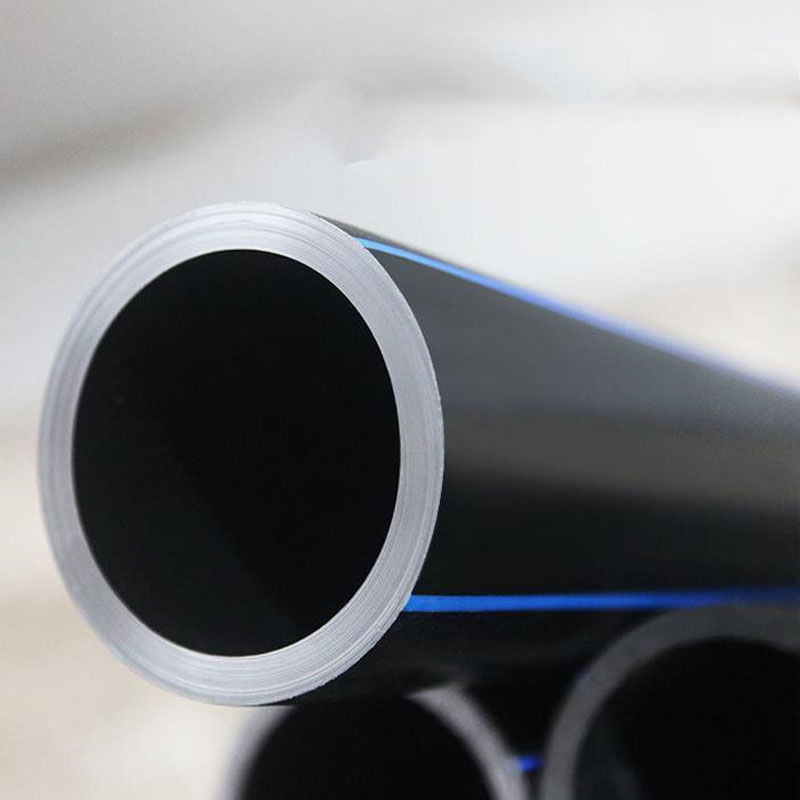
HDPE corrugated pipe relies on the properties of high-density polyethylene resin, typically produced via the Ziegler-Natta or metallocene polymerization process. Key material properties include a density between 0.941 and 0.965 g/cm³, a tensile strength ranging from 20 to 30 MPa, and a relatively low coefficient of friction. These characteristics contribute to the pipe's durability and efficient flow characteristics. Manufacturing involves extrusion, where the HDPE resin is melted and forced through a die to create a corrugated profile. This is typically a double-wall configuration, providing enhanced ring stiffness. Crucial parameters during extrusion include maintaining precise temperature control (melt temperature typically between 180-210°C) to ensure consistent wall thickness and prevent degradation. Cooling rates are also critical, utilizing air or water cooling to solidify the corrugated shape. Post-extrusion, the pipe may undergo hydrostatic pressure testing to verify its structural integrity. The corrugation profile itself is engineered to maximize ring stiffness, with parameters such as corrugation height, pitch, and wall thickness carefully optimized. Chemical compatibility is paramount; HDPE exhibits excellent resistance to a broad range of chemicals, but prolonged exposure to strong oxidizing agents should be avoided.
Performance & Engineering
Performance of HDPE corrugated pipe is heavily dictated by external loading conditions and soil characteristics. Force analysis, utilizing the finite element method (FEM), is routinely employed to predict pipe deflection and stress under various load scenarios – including soil overburden, traffic loads, and hydrostatic pressure. Ring stiffness, measured in psi (pounds per inch of deflection), is a critical engineering parameter. Higher ring stiffness indicates greater resistance to collapse. Environmental resistance is another vital consideration. While HDPE is inherently resistant to many chemicals, UV degradation can occur with prolonged exposure to sunlight. Therefore, pipes intended for above-ground applications typically incorporate UV stabilizers. Furthermore, the pipe's long-term creep behavior (gradual deformation under sustained load) must be accounted for in design calculations. Compliance requirements are often governed by local regulations and industry standards (detailed in the footer). Joint design is also critical; typically, bell-and-spigot joints with gasket seals are used to ensure watertight connections. The gasket material (typically EPDM or a similar elastomer) must be compatible with the conveyed fluid and the surrounding environment.
Technical Specifications
| Diameter (in) | Ring Stiffness (psi) | Wall Thickness (in) | Maximum Cover (ft) |
|---|---|---|---|
| 12 | 56 | 0.43 | 8 |
| 18 | 62 | 0.55 | 12 |
| 24 | 71 | 0.67 | 16 |
| 30 | 78 | 0.79 | 20 |
| 36 | 85 | 0.91 | 24 |
| 48 | 92 | 1.03 | 30 |
Failure Mode & Maintenance
Failure modes in HDPE corrugated pipe are typically related to external loads exceeding design capacity, material degradation, or improper installation. Fatigue cracking can occur under repeated loading cycles, especially in areas with concentrated stress. Delamination, though less common, can result from poor manufacturing processes or damage during handling. Environmental degradation, specifically UV exposure and chemical attack, can reduce the pipe’s long-term strength. Oxidation can occur at elevated temperatures or in the presence of oxidizing agents. A common failure point is at the joints, due to improper gasket seating or damage during backfilling. Maintenance typically involves regular visual inspections for cracks, deformations, or joint leaks. Sediment buildup within the pipe can reduce flow capacity and should be addressed through periodic cleaning. For damaged sections, repair sleeves or localized replacements are common solutions. Preventive measures include ensuring proper compaction of backfill material to provide uniform support, avoiding the use of heavy machinery directly over the pipe, and implementing UV protection for above-ground installations.
Industry FAQ
Q: What is the expected service life of HDPE corrugated pipe compared to concrete pipe?
A: HDPE corrugated pipe generally boasts a significantly longer service life than concrete pipe, often exceeding 100 years. Concrete pipe is susceptible to corrosion, cracking, and deterioration due to freeze-thaw cycles, while HDPE’s inherent corrosion resistance and flexibility provide superior longevity. However, this is contingent upon proper installation and protection from UV exposure when applicable.
Q: How does HDPE corrugated pipe perform in seismic zones?
A: HDPE corrugated pipe excels in seismic zones due to its flexibility. The pipe can deform with ground movement without fracturing, unlike rigid pipes that are prone to cracking. This inherent flexibility significantly reduces the risk of catastrophic failure during an earthquake.
Q: What considerations are important when selecting the appropriate ring stiffness for a given application?
A: Ring stiffness selection is dictated by the anticipated load conditions, including soil overburden, traffic loads, and hydrostatic pressure. Higher ring stiffness is required for applications with heavier loads or deeper burial depths. Geotechnical investigations should be conducted to accurately assess soil properties and design the appropriate pipe system.
Q: Can HDPE corrugated pipe be used for gravity flow and pressure applications?
A: HDPE corrugated pipe is primarily designed for gravity flow applications, such as stormwater management and drainage. While it can withstand some internal pressure, it is not typically recommended for high-pressure applications. For pressure applications, solid-wall HDPE pipe is more suitable.
Q: What are the typical jointing methods for HDPE corrugated pipe and what are their limitations?
A: The most common jointing method is using bell-and-spigot connections with elastomeric (EPDM) gaskets. These provide a watertight seal. Limitations include ensuring proper gasket seating during installation, avoiding over-compression of the gasket, and protecting the gasket from damage during backfilling. Alternative methods include heat fusion welding for larger diameter pipes, but require specialized equipment and skilled technicians.
Conclusion
HDPE corrugated pipe offers a compelling solution for a wide range of subsurface drainage and conduit applications. Its combination of lightweight construction, exceptional corrosion resistance, flexibility, and long service life addresses key pain points within the industry. Careful consideration of material properties, manufacturing processes, and engineering principles – including ring stiffness, load analysis, and environmental factors – are paramount to ensuring optimal performance and longevity.
Future developments are likely to focus on incorporating recycled HDPE content into the pipe material, further enhancing its sustainability profile. Continued advancements in polymer technology may also lead to improved material properties, such as increased tensile strength and UV resistance. Proper installation practices and adherence to relevant industry standards will remain crucial for maximizing the benefits of this versatile piping solution.
-
DN25 HDPE Compression Fitting-HORON INTERNATIONAL|Reliable Irrigation Solutions
NewsFeb.11,2026
-
china 2.5 pvc pipe Performance Analysis
News2026-06-13
-
china ppr pipe coupling Performance Analysis
News2026-06-13
-
china hdpe pipe used for Performance Analysis
News2026-06-13
-
china 300mm pvc pipe Performance Analysis
News2026-06-13
-
china ppr pipe 40mm Performance Analysis
News2026-06-13
-
china ppr pipes in full Performance Engineering
News2026-06-12
-
china 63mm ppr pipe Technical Analysis
News2026-06-12
-
china pvc pipe is used for Performance Analysis
News2026-06-12
-
china hdpe pipe price list Performance Analysis
News2026-06-12
-
china ppr hot and cold water pipe Performance Analysis
News2026-06-12
-
china 12 pvc pipe price Performance Analysis
News2026-06-11
-
china ppr pipe 50mm Performance Analysis
News2026-06-11
-
china pvc stormwater pipe Performance Analysis
News2026-06-11
-
china ppr plumbing fittings Performance Analysis
News2026-06-11
-
china 25mm pvc pipe Technical Analysis
News2026-06-11