

Feb . 11, 2026 00:01 Back to list
hdpe corrugated pipe factories Performance Analysis
Introduction
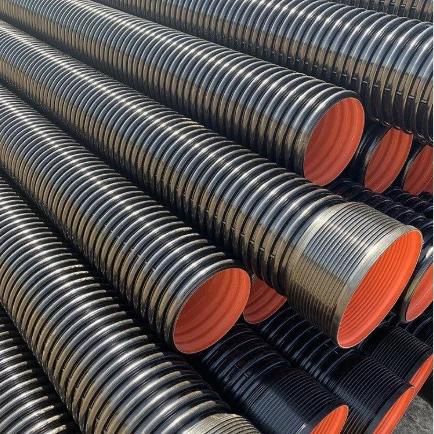
High-Density Polyethylene (HDPE) corrugated pipe represents a significant advancement in subsurface drainage and conveyance systems. Positioned within the broader infrastructure sector, specifically as a non-metallic piping solution, HDPE corrugated pipe serves as a direct substitute for traditional materials like concrete, PVC, and steel in applications ranging from storm water management and agricultural drainage to sanitary sewer extensions and culverts. Its defining characteristic lies in its corrugated outer wall, providing enhanced ring stiffness and load-bearing capacity, coupled with the inherent chemical resistance and durability of HDPE. Core performance metrics center around its hydraulic capacity, structural integrity under load (soil cover, traffic), and long-term resistance to corrosion and abrasion. The growing adoption of HDPE corrugated pipe is driven by reduced installation costs, extended service life, and minimized maintenance requirements, representing a key shift in infrastructure design and construction practices.
Material Science & Manufacturing
The foundational material, HDPE, is a thermoplastic polymer produced from the polymerization of ethylene. Critical material properties include a density ranging from 0.941 to 0.965 g/cm³, a tensile strength typically between 20-30 MPa, and a relatively high impact resistance, even at low temperatures. The resin used in HDPE corrugated pipe production must meet stringent quality standards (ASTM D3350, for example) to ensure consistent performance. Manufacturing typically involves extrusion. HDPE resin is melted and forced through a circular die, creating a continuous pipe profile. This is immediately followed by the corrugation process, where rollers with specialized profiles form the characteristic corrugated outer wall. Precise control of extrusion temperature (typically 180-220°C), cooling rates, and corrugation pressure are vital. Incorrect temperature can lead to material degradation or inconsistent wall thickness. Inadequate cooling can cause deformation of the corrugated profile. Post-extrusion, pipes are often subjected to hydrostatic pressure testing (ASTM F894) to verify their structural integrity and leak resistance. Furthermore, UV stabilization additives are frequently incorporated into the HDPE resin to enhance resistance to degradation from prolonged sun exposure. Quality control measures throughout the process include continuous monitoring of resin melt flow index, pipe diameter, wall thickness, and corrugation profile geometry.
Performance & Engineering
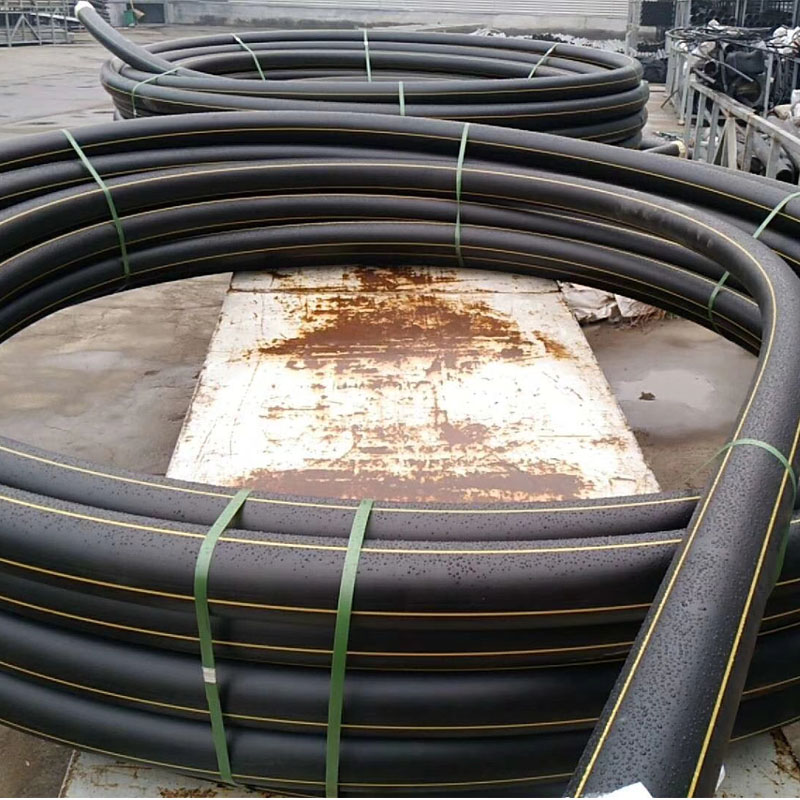
The performance of HDPE corrugated pipe is fundamentally governed by its ability to withstand external loads and maintain hydraulic efficiency. Force analysis involves consideration of vertical loads from soil cover and traffic, as well as horizontal loads due to earth movement or seismic activity. Ring stiffness, a critical parameter, quantifies the pipe’s resistance to flattening under external pressure. Higher ring stiffness values (measured in psi) indicate greater load-bearing capacity. Engineering designs must account for Manning’s equation to determine flow rates and headloss within the pipe. The corrugated profile increases the wetted perimeter, which can enhance hydraulic capacity compared to smooth-walled pipes, but also increases friction. Environmental resistance is a key factor; HDPE is inherently resistant to most acids, alkalis, and common soil chemicals. However, long-term exposure to oxidizing acids or concentrated solvents should be avoided. Compliance requirements are dictated by regional regulations and application-specific standards. For stormwater applications, compliance with local municipality regulations regarding pipe strength, joint integrity, and discharge water quality is essential. For sanitary sewer extensions, adherence to standards like ASTM F894 and local plumbing codes is critical. Installation procedures, including proper bedding and backfill compaction, significantly influence long-term performance; improper installation can lead to premature failure. Detailed design calculations are often required, especially for large diameter pipes or challenging soil conditions, utilizing software like HEC-RAS for hydraulic modeling and finite element analysis (FEA) for structural analysis.
Technical Specifications
| Parameter | Units | Typical Value (12-inch Pipe) | Testing Standard |
|---|---|---|---|
| Nominal Diameter | inches | 12 | ASTM F894 |
| Ring Stiffness | psi | 42 | ASTM D2412 |
| Pipe Stiffness | psi | 30 | ASTM D2412 |
| Tensile Strength at Yield | psi | 4,000 | ASTM D638 |
| Elongation at Break | % | 400 | ASTM D638 |
| Hydrostatic Design Stress | psi | 1,600 | ASTM F894 |
Failure Mode & Maintenance
HDPE corrugated pipe, while robust, is susceptible to several failure modes. Fatigue cracking can occur under repeated loading and unloading, especially in areas of stress concentration (e.g., joints). Delamination, the separation of layers within the pipe wall, can result from poor material bonding during manufacturing or damage during installation. Environmental stress cracking (ESC) can arise from exposure to certain chemicals or sustained tensile stress. Oxidation, while HDPE is generally oxidation-resistant, can occur over very long periods, particularly in the presence of UV radiation. Abrasion from soil particles can also lead to wall thinning. Failure analysis often involves visual inspection, hydrostatic testing, and material analysis to identify the root cause. Maintenance is typically limited to routine inspections to identify signs of damage or deformation. Joint integrity should be periodically checked. For minor damage, repair sleeves can be used. However, extensive damage usually necessitates pipe replacement. Proper installation techniques, including adequate bedding and compaction, are the most effective preventative measures. Careful material selection, ensuring the HDPE resin meets required specifications, and avoiding exposure to incompatible chemicals are also crucial for extending service life. Regular cleaning to remove debris and sediment can help prevent blockages and maintain hydraulic capacity.
Industry FAQ
Q: What are the key advantages of HDPE corrugated pipe over concrete pipe in stormwater applications?
A: HDPE corrugated pipe offers several advantages. It is significantly lighter than concrete, reducing transportation and installation costs. It is corrosion-resistant, eliminating the need for protective coatings or cathodic protection. It has a smoother interior, leading to higher hydraulic capacity. HDPE is also more flexible, allowing it to conform to ground movements and reducing the risk of cracking. Finally, HDPE is typically more cost-effective on a lifecycle basis due to its longer service life and reduced maintenance requirements.
Q: How does the corrugated profile affect the hydraulic performance of the pipe?
A: The corrugated profile increases the wetted perimeter, which can enhance flow capacity. However, it also introduces additional friction. The net effect depends on the pipe diameter, flow rate, and the severity of the corrugations. Generally, for larger diameter pipes and higher flow rates, the increased wetted perimeter provides a greater benefit. Hydraulic modeling software is often used to optimize pipe design and ensure adequate capacity.
Q: What is the impact of soil conditions on the load-bearing capacity of HDPE corrugated pipe?
A: Soil conditions have a significant impact. Poorly compacted soils or soils with high water content reduce the support provided to the pipe, increasing the risk of deformation and failure. Proper bedding and backfill compaction are critical, following guidelines established by ASTM D2321. The type of soil also matters; granular soils provide better support than clay soils. Engineering designs must account for soil properties and expected load conditions.
Q: What is the expected service life of HDPE corrugated pipe?
A: The expected service life is typically 50-100 years or more, depending on the application and environmental conditions. However, this assumes proper installation, material quality, and adherence to design specifications. Factors like UV exposure, chemical exposure, and abrasive soils can reduce service life. Regular inspections and preventative maintenance can help maximize longevity.
Q: What jointing methods are commonly used for HDPE corrugated pipe, and what are their respective strengths and weaknesses?
A: Common jointing methods include bell-and-spigot joints with rubber gaskets, split barrel couplings, and welded joints. Bell-and-spigot joints are relatively easy to install and provide a watertight seal. Split barrel couplings are versatile and can be used for quick repairs. Welded joints offer the highest strength and leak resistance but require specialized equipment and skilled personnel. The selection of the appropriate jointing method depends on the application, pipe diameter, and soil conditions.
Conclusion
HDPE corrugated pipe represents a compelling solution for a wide range of subsurface drainage and conveyance applications. Its inherent material properties – durability, chemical resistance, and flexibility – coupled with efficient manufacturing processes, contribute to a lifecycle cost advantage over traditional materials. Understanding the intricacies of material science, structural engineering, and installation best practices is paramount to ensuring long-term performance and maximizing the benefits of this technology.
Looking ahead, advancements in HDPE resin formulations, such as incorporating recycled content or enhancing UV resistance, will further enhance the sustainability and cost-effectiveness of corrugated pipe systems. Continued research into innovative jointing techniques and improved installation methods will optimize performance and minimize the risk of failure. The adoption of smart monitoring systems, capable of detecting leaks or structural anomalies, will enable proactive maintenance and extend the service life of these critical infrastructure components.
-
DN25 HDPE Compression Fitting-HORON INTERNATIONAL|Reliable Irrigation Solutions
NewsFeb.11,2026
-
china 2.5 pvc pipe Performance Analysis
News2026-06-13
-
china ppr pipe coupling Performance Analysis
News2026-06-13
-
china hdpe pipe used for Performance Analysis
News2026-06-13
-
china 300mm pvc pipe Performance Analysis
News2026-06-13
-
china ppr pipe 40mm Performance Analysis
News2026-06-13
-
china ppr pipes in full Performance Engineering
News2026-06-12
-
china 63mm ppr pipe Technical Analysis
News2026-06-12
-
china pvc pipe is used for Performance Analysis
News2026-06-12
-
china hdpe pipe price list Performance Analysis
News2026-06-12
-
china ppr hot and cold water pipe Performance Analysis
News2026-06-12
-
china 12 pvc pipe price Performance Analysis
News2026-06-11
-
china ppr pipe 50mm Performance Analysis
News2026-06-11
-
china pvc stormwater pipe Performance Analysis
News2026-06-11
-
china ppr plumbing fittings Performance Analysis
News2026-06-11
-
china 25mm pvc pipe Technical Analysis
News2026-06-11