

Feb . 11, 2026 00:01 Back to list
hdpe pipe suppliers products Performance Analysis

Introduction
High-Density Polyethylene (HDPE) pipe is a thermoplastic pipe widely utilized across diverse industries including municipal water and sewer, oil and gas, mining, agriculture, and industrial applications. Positioned as a critical component within fluid and solid conveyance systems, HDPE pipe offers a robust, lightweight, and corrosion-resistant alternative to traditional materials like ductile iron, steel, and concrete. Its primary performance characteristics include high tensile strength, flexibility, excellent chemical resistance, and a long operational lifespan. The core industry pain point addressed by HDPE pipe is the mitigation of long-term corrosion and the reduction of installation and maintenance costs associated with traditional piping materials, particularly in demanding environments. This guide will delve into the material science, manufacturing processes, performance characteristics, failure modes, and relevant standards governing HDPE pipe systems.
Material Science & Manufacturing
HDPE pipe is manufactured from polyethylene resin, specifically high-density polyethylene (HDPE), which is a thermoplastic polymer produced through the catalytic polymerization of ethylene. The HDPE resin exhibits a highly linear structure with minimal branching, resulting in high crystallinity and a consequent increase in density, tensile strength, and chemical resistance. Raw material properties are crucial; melt flow index (MFI), density (typically ranging from 0.93 to 0.97 g/cm³), and molecular weight distribution directly influence the final pipe performance.
The predominant manufacturing process is extrusion. HDPE resin is fed into an extruder, where it is heated and melted. The molten polymer is then forced through a die to form a continuous pipe shape. Critical parameters in the extrusion process include barrel temperature profile (typically ranging from 180°C to 240°C, depending on the HDPE grade), screw speed, and die pressure. Precise control of these parameters is vital for achieving consistent wall thickness, diameter, and surface finish. Several extrusion methods exist, including conventional extrusion, spiral mandrel extrusion (for larger diameter pipes), and bimodal extrusion (utilizing two extruders for enhanced layer control). Following extrusion, the pipe is cooled, calibrated, and cut to length. Butt fusion, electrofusion, and socket fusion are the primary joining techniques, all reliant on precise temperature and pressure control to create structurally sound, leak-proof joints. Quality control measures during manufacturing include hydrostatic testing (to verify burst pressure and leak tightness) and dimensional inspections to ensure adherence to industry standards. The polyethylene grade used must be compliant with PE 100, PE 80 or PE 63 standards which dictates the minimum required strength properties for the pipe.
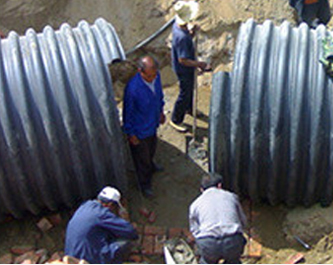
Performance & Engineering
HDPE pipe performance is governed by several key engineering principles. The material exhibits a high strength-to-weight ratio, simplifying installation and reducing support requirements. Its flexibility allows for pipe to accommodate ground movement and seismic activity without fracturing. Stress analysis, particularly in buried applications, considers factors such as soil load, internal pressure, and temperature variations. The long-term hydrostatic strength (LTHS) of HDPE is a critical parameter, calculated using established equations (such as those outlined in ISO 1167) that account for the effects of sustained pressure and temperature on creep resistance.
Environmental resistance is another crucial aspect. HDPE is virtually inert to most chemicals, including acids, bases, and solvents, making it suitable for corrosive environments. However, prolonged exposure to oxidizing agents and UV radiation can cause degradation. UV stabilization additives are typically incorporated into the HDPE resin to mitigate this effect. Regarding compliance, HDPE pipe used for potable water applications must meet stringent requirements related to extractables and leachables, ensuring no harmful substances contaminate the water supply. The pipe’s performance in terms of pressure rating (PN – Nominal Pressure) is dependent on the pipe’s diameter and wall thickness. Additionally, surge pressure events (water hammer) must be accounted for in the system design to prevent pipe rupture. Proper anchoring and expansion joints are essential to manage thermal expansion and contraction of the pipe.
Technical Specifications
| Parameter | Units | PE 100 | PE 80 |
|---|---|---|---|
| Minimum Required Strength (MRS) | MPa | 10.0 | 8.0 |
| Density | g/cm³ | 0.95 – 0.97 | 0.93 – 0.95 |
| Hydrostatic Design Stress (HDS) | MPa | 8.0 | 6.4 |
| Burst Pressure (20°C) | MPa | >24 | >19 |
| Operating Temperature Range | °C | -40 to +60 | -40 to +60 |
| Long-Term Hydrostatic Strength (LTHS) Factor | - | 1.6 | 1.6 |
Failure Mode & Maintenance
HDPE pipe, while durable, is susceptible to specific failure modes. Slow Crack Growth (SCG) is a primary concern, induced by sustained tensile stress in conjunction with aggressive chemicals or environmental factors. This manifests as brittle fractures originating at stress concentrators. Another failure mode is Rapid Crack Propagation (RCP), a catastrophic failure occurring when a pre-existing crack propagates rapidly under pressure. UV degradation, particularly in exposed applications, leads to embrittlement and cracking. Joint failures can occur due to inadequate fusion parameters (insufficient heat, pressure, or cooling time) or improper joint preparation. Ground movement and excessive loads can cause pipe deformation and cracking.
Preventative maintenance is crucial. Regular inspections should focus on visually identifying cracks, deformations, and signs of UV degradation. Hydrostatic testing can assess the integrity of existing pipelines. For SCG prevention, careful material selection and avoidance of aggressive environments are essential. Proper joint fusion procedures, adherence to manufacturer recommendations, and qualified personnel are critical for ensuring joint integrity. Protection against UV exposure (e.g., burial, protective coatings) extends pipe lifespan. In the event of a detected crack, the affected section should be cut out and replaced with a properly fused section of HDPE pipe. Periodic cathodic protection assessments are recommended in corrosive soil environments.
Industry FAQ
Q: What is the impact of varying soil corrosivity on the lifespan of HDPE pipe?
A: Soil corrosivity primarily affects metallic components within the HDPE pipe system, such as any metallic fittings or anchoring systems. While HDPE itself is corrosion-resistant, corrosive soils can degrade these metallic components, leading to potential failures. Proper selection of corrosion-resistant alloys and the implementation of cathodic protection measures can mitigate this risk and extend the overall system lifespan.
Q: How does temperature fluctuation affect the pressure rating of HDPE pipe?
A: Elevated temperatures reduce the hydrostatic design stress (HDS) of HDPE, effectively lowering the pressure rating. Conversely, lower temperatures generally increase HDS. The long-term hydrostatic strength (LTHS) calculations must account for the maximum operating temperature to ensure the pipe can withstand sustained pressure. Thermal expansion and contraction also induce stresses that need to be managed through proper design and anchoring.
Q: What are the key differences between PE 100 and PE 80 in terms of application suitability?
A: PE 100 offers a higher Minimum Required Strength (MRS) and, consequently, a higher HDS compared to PE 80. This makes PE 100 suitable for higher-pressure applications and demanding environments. PE 80 is often utilized in lower-pressure systems, such as irrigation or drainage, where the cost savings outweigh the performance benefits of PE 100.
Q: What measures can be taken to prevent SCG in HDPE pipes conveying chemically aggressive fluids?
A: Selecting a HDPE grade specifically designed for resistance to the conveyed fluid is paramount. Reducing operating stress through appropriate pipe sizing and supporting infrastructure is essential. Maintaining a consistent, non-turbulent flow regime can also minimize SCG risk. Periodic inspections and monitoring for early signs of cracking are critical preventative measures.
Q: How does the quality of the fusion joint impact the overall integrity of an HDPE pipeline?
A: The fusion joint is often the weakest link in an HDPE pipeline. Improper fusion parameters—insufficient temperature, pressure, or cooling time—result in incomplete fusion and a weakened joint. Thorough operator training, strict adherence to manufacturer's specifications, and regular quality control checks, including visual inspection and pull testing, are crucial to ensure joint integrity and prevent failures.
Conclusion
HDPE pipe represents a significant advancement in fluid and solid conveyance technology, offering a compelling combination of durability, cost-effectiveness, and environmental benefits. Its material properties, coupled with controlled manufacturing processes, enable reliable performance in diverse and demanding applications. Understanding the engineering principles governing its behavior, including stress analysis, environmental resistance, and failure modes, is essential for ensuring long-term system integrity.
Looking ahead, continued advancements in HDPE resin formulations and extrusion technologies will further enhance the performance and broaden the application scope of HDPE pipe. Greater emphasis on standardized quality control procedures and operator training will be crucial for maximizing the benefits of this versatile material. Adherence to relevant international standards and best practices remains paramount to maintain the reliability and safety of HDPE pipe systems worldwide.
-
DN25 HDPE Compression Fitting-HORON INTERNATIONAL|Reliable Irrigation Solutions
NewsFeb.11,2026
-
china ppr pipes in full Performance Engineering
News2026-06-12
-
china 63mm ppr pipe Technical Analysis
News2026-06-12
-
china pvc pipe is used for Performance Analysis
News2026-06-12
-
china hdpe pipe price list Performance Analysis
News2026-06-12
-
china ppr hot and cold water pipe Performance Analysis
News2026-06-12
-
china 12 pvc pipe price Performance Analysis
News2026-06-11
-
china ppr pipe 50mm Performance Analysis
News2026-06-11
-
china pvc stormwater pipe Performance Analysis
News2026-06-11
-
china ppr plumbing fittings Performance Analysis
News2026-06-11
-
china 25mm pvc pipe Technical Analysis
News2026-06-11
-
china pvc tubing Performance Analysis
News2026-06-10
-
china 1 2 ppr pipe Technical Analysis
News2026-06-10
-
china hdpe sewer pipe Performance Analysis
News2026-06-10
-
china dual wall corrugated pipe Performance Analysis
News2026-06-10
-
china pvc to hdpe coupling Performance Analysis
News2026-06-10