

Feb . 11, 2026 00:01 Back to list
hdpe pipe suppliers product Performance Engineering
Introduction
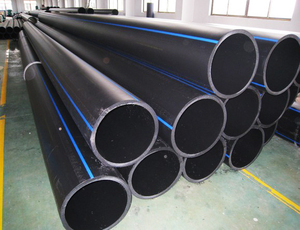
High-Density Polyethylene (HDPE) pipe represents a significant advancement in fluid transfer systems across diverse industries including municipal water distribution, industrial process piping, oil & gas, and irrigation. Positioned as a cost-effective and durable alternative to traditional materials like ductile iron, steel, and PVC, HDPE pipe leverages the inherent properties of polyethylene – flexibility, chemical resistance, and weldability. Its technical position within the supply chain is increasingly prominent, driven by demands for long-term reliability, reduced maintenance, and sustainable infrastructure solutions. Core performance characteristics revolve around its pressure bearing capacity, resistance to corrosion and abrasion, and its ability to accommodate ground movement without fracturing. Selection criteria for HDPE pipe centers around understanding specific application requirements concerning pressure, temperature, chemical exposure, and burial depth.
Material Science & Manufacturing
HDPE pipe is fabricated from high-density polyethylene resin, typically grades meeting or exceeding ASTM D3350 standards. The raw material’s key properties include a high degree of crystallinity (resulting in rigidity and tensile strength), a relatively low coefficient of friction (facilitating flow), and excellent chemical inertness. Manufacturing processes primarily involve extrusion. The polyethylene resin is melted and forced through a die to create a continuous pipe profile. Parameter control during extrusion is critical. Temperature control within the extruder barrel must be precise to prevent thermal degradation of the polymer. Die geometry dictates pipe diameter and wall thickness, requiring meticulous calibration. Cooling rates after extrusion impact crystallinity and dimensional stability. Post-extrusion, pipes undergo quality control checks including hydrostatic testing to verify pressure resistance and dimensional accuracy. Fusion welding techniques, such as butt fusion, socket fusion, and electrofusion, are commonly employed for joining pipe sections. These methods create a homogenous weld, achieving strength comparable to the base material. Proper welding parameter control – heat time, cooling time, and applied force – is paramount to weld integrity. The polymer’s molecular weight distribution also impacts processability and final product properties; a broader distribution generally improves processability, while a narrower distribution enhances strength.

Performance & Engineering
HDPE pipe performance is fundamentally governed by its ability to withstand internal pressure and external loads. Force analysis considers hoop stress (circumferential stress due to internal pressure) and longitudinal stress. According to Barlow's formula (σ = PD/2t, where σ is stress, P is pressure, D is diameter, and t is wall thickness), increasing wall thickness proportionally reduces stress. External loads include soil overburden, traffic loads, and hydrostatic uplift. The pipe's flexibility allows it to distribute these loads, minimizing stress concentrations. Environmental resistance is a critical engineering consideration. While HDPE exhibits excellent chemical resistance to most acids, bases, and solvents, long-term exposure to UV radiation can lead to degradation. UV stabilizers are typically incorporated into the polyethylene resin to mitigate this effect. Temperature variations impact the pipe's modulus of elasticity and creep resistance. Lower temperatures increase brittleness, while higher temperatures can reduce stiffness. Compliance requirements are dictated by industry-specific standards. For potable water applications, NSF/ANSI 61 certification verifies that the pipe material does not leach harmful contaminants into the water supply. For gas distribution, compliance with DOT regulations (49 CFR Part 192) is mandatory. Proper installation practices, including appropriate bedding and backfill materials, are essential to ensure long-term performance and prevent damage. Furthermore, stress cracking, particularly in the presence of certain chemicals, needs to be addressed through material selection and protective measures.
Technical Specifications
| Parameter | Units | ASTM D3350 PE 3408 | ASTM D3350 PE 4710 |
|---|---|---|---|
| Hydrostatic Design Basis (HDB) | psi | 800 | 1600 |
| Hydrostatic Design Stress (HDS) | psi | 400 | 800 |
| Density | g/cm³ | 0.941 - 0.965 | 0.953 - 0.974 |
| Carbon Black Content | % | 2.0 - 6.0 | 2.0 - 6.0 |
| Oxidation Induction Time (OIT) | minutes | >120 | >180 |
| Complete Oxidation Time (COT) | minutes | >30 | >40 |
Failure Mode & Maintenance
HDPE pipe, while durable, is susceptible to specific failure modes. Slow Crack Growth (SCG) is a prevalent issue, particularly in environments with sustained tensile stress and exposure to aggressive chemicals. This manifests as brittle fractures initiating at stress concentrators. Fatigue cracking can occur under cyclic loading, such as from ground movement or water hammer. Oxidation, accelerated by elevated temperatures and UV exposure, leads to material embrittlement. Joint failures are commonly attributed to improper welding procedures, contamination during welding, or inadequate fusion. Abrasion, particularly in slurry applications, can wear down the pipe wall over time. Maintenance strategies focus on preventative measures. Regular visual inspections should be conducted to identify signs of SCG, cracks, or deformation. Pressure testing can detect leaks and assess overall system integrity. For buried pipelines, proper cathodic protection (if required based on soil resistivity) can mitigate corrosion. When repairs are necessary, proper welding techniques and qualified personnel are essential. Damage from external forces (excavation, impact) should be promptly addressed. Periodic cleaning to remove internal deposits can maintain flow capacity and prevent abrasion. Furthermore, ensuring proper backfill compaction during installation minimizes stress on the pipe and reduces the risk of future failures. Consideration of soil composition and its chemical interaction with HDPE is also critical.
Industry FAQ
Q: What is the long-term creep rupture strength of HDPE pipe, and how does it affect pipeline design?
A: Creep rupture strength refers to the pipe's ability to withstand sustained internal pressure over an extended period. It's a critical parameter for pipeline design, as HDPE exhibits time-dependent deformation under constant stress. Lower HDB (Hydrostatic Design Basis) materials exhibit lower creep rupture strength. Design calculations must account for creep rupture strength, utilizing appropriate safety factors based on the expected service life and operating conditions. Higher-quality HDPE resins with optimized molecular weight distributions generally offer superior creep resistance.
Q: How does the polyethylene resin’s molecular weight distribution influence the weldability of HDPE pipe?
A: A broader molecular weight distribution (MWD) generally improves weldability. Lower molecular weight fractions enhance flow during welding, promoting better fusion and penetration. However, an excessively broad MWD can lead to reduced tensile strength. A balanced MWD is optimal, providing sufficient flow for welding without compromising mechanical properties. Narrower MWD resins tend to be more challenging to weld consistently.
Q: What are the key considerations for protecting HDPE pipe from UV degradation in above-ground applications?
A: HDPE is susceptible to UV degradation, leading to surface cracking and embrittlement. The primary protection method is incorporating UV stabilizers (typically carbon black or hindered amine light stabilizers - HALS) into the resin formulation. Applying UV-resistant coatings is another option, but these require periodic reapplication. Proper installation practices, such as minimizing exposure duration during construction and using UV-protective covers, are also important. The concentration of UV stabilizers diminishes over time, so regular inspection and potential coating refurbishment are necessary.
Q: How do different bedding and backfill materials affect the stress distribution around buried HDPE pipe?
A: Bedding and backfill materials significantly influence stress distribution. Granular materials (sand, gravel) provide uniform support and minimize stress concentrations. Clayey soils, however, can exert uneven pressures, leading to localized stress. Proper compaction is crucial to ensure adequate support and prevent voids. The use of controlled low-strength material (CLSM) or flowable fill provides excellent support and conforms to the pipe's shape. In areas with rocky or unstable soil, additional protective layers (geotextiles, sand blankets) may be required.
Q: What are the typical failure rates associated with HDPE pipe joints compared to mechanical joints (e.g., rubber gasket joints) in water distribution systems?
A: Properly executed fusion-welded HDPE joints typically exhibit lower failure rates than mechanical joints in water distribution systems. Fusion welding creates a homogenous connection, eliminating potential leak paths. Mechanical joints, relying on gaskets and compression, are susceptible to gasket degradation, loosening, and corrosion of hardware. However, the success of fusion welding hinges on qualified personnel, proper equipment, and strict adherence to welding procedures. Statistical analysis shows that fusion-welded joints, when correctly performed, offer a significantly longer service life and reduced maintenance requirements.
Conclusion
HDPE pipe represents a robust and versatile solution for a broad spectrum of fluid transfer applications. Its inherent material properties – flexibility, chemical resistance, and weldability – combined with proper engineering design and installation, deliver long-term reliability and reduced lifecycle costs. Understanding the nuances of material science, manufacturing processes, and potential failure modes is paramount for successful implementation. The selection of appropriate HDPE resin grades, optimized welding parameters, and preventative maintenance strategies are critical for maximizing pipeline performance and minimizing operational disruptions.
The continued adoption of HDPE pipe is driven by increasing demands for sustainable infrastructure and cost-effective solutions. Future advancements in resin technology, welding techniques, and non-destructive testing methods will further enhance its performance and broaden its applicability. A holistic approach encompassing material selection, installation best practices, and ongoing monitoring is essential to realize the full potential of HDPE pipe systems. Investing in quality control and skilled personnel remains a cornerstone of long-term success.
-
DN25 HDPE Compression Fitting-HORON INTERNATIONAL|Reliable Irrigation Solutions
NewsFeb.11,2026
-
china ppr pipes in full Performance Engineering
News2026-06-12
-
china 63mm ppr pipe Technical Analysis
News2026-06-12
-
china pvc pipe is used for Performance Analysis
News2026-06-12
-
china hdpe pipe price list Performance Analysis
News2026-06-12
-
china ppr hot and cold water pipe Performance Analysis
News2026-06-12
-
china 12 pvc pipe price Performance Analysis
News2026-06-11
-
china ppr pipe 50mm Performance Analysis
News2026-06-11
-
china pvc stormwater pipe Performance Analysis
News2026-06-11
-
china ppr plumbing fittings Performance Analysis
News2026-06-11
-
china 25mm pvc pipe Technical Analysis
News2026-06-11
-
china pvc tubing Performance Analysis
News2026-06-10
-
china 1 2 ppr pipe Technical Analysis
News2026-06-10
-
china hdpe sewer pipe Performance Analysis
News2026-06-10
-
china dual wall corrugated pipe Performance Analysis
News2026-06-10
-
china pvc to hdpe coupling Performance Analysis
News2026-06-10