

Feb . 11, 2026 00:01 Back to list
hdpe couplings service Technical Analysis

Introduction
High-Density Polyethylene (HDPE) couplings represent a critical joining component in fluid and gas transmission systems, primarily within the industrial, municipal, and agricultural sectors. Their function centers on creating leak-proof connections between HDPE pipes, accommodating varying pressure and temperature requirements. Unlike traditional metallic couplings, HDPE couplings offer inherent corrosion resistance, lightweight properties, and reduced installation costs. This guide provides a comprehensive technical analysis of HDPE couplings, encompassing material science, manufacturing processes, performance characteristics, failure modes, and relevant industry standards. A key industry pain point is maintaining long-term joint integrity under fluctuating operational stresses and ensuring compatibility with diverse chemical media. This guide aims to address these challenges by providing detailed insights into design, material selection, and best practices for service and maintenance.
Material Science & Manufacturing
HDPE couplings are typically manufactured from high-density polyethylene resin, conforming to ASTM D3350 or equivalent international standards. The resin's properties – molecular weight distribution, density (typically 0.941-0.965 g/cm³), and melt flow index – significantly influence the coupling’s strength, ductility, and resistance to environmental stress cracking (ESC). Raw material selection is paramount; virgin HDPE is preferred for critical applications, while recycled HDPE may be suitable for non-critical uses, provided its properties are thoroughly characterized. Manufacturing processes vary depending on the coupling type. Electrofusion couplings involve heating the coupling and pipe ends to melt and fuse them together, creating a homogenous joint. This process requires precise control of temperature (typically 130-180°C) and pressure to ensure adequate molecular entanglement. Butt fusion, commonly used for larger diameter pipes, employs a heated tool to melt and fuse the pipe and coupling ends, again requiring careful temperature and pressure regulation. Injection molding is utilized for smaller, molded couplings, where precise mold design and control of injection parameters (temperature, pressure, cooling rate) are critical to minimize residual stress and ensure dimensional accuracy. Socket fusion involves heating both the pipe and fitting socket before joining; this demands consistent heating element temperature and precise insertion depth to achieve a robust weld. Parameter control is achieved through automated fusion machines equipped with sensors and feedback loops, ensuring consistent weld quality and traceability.
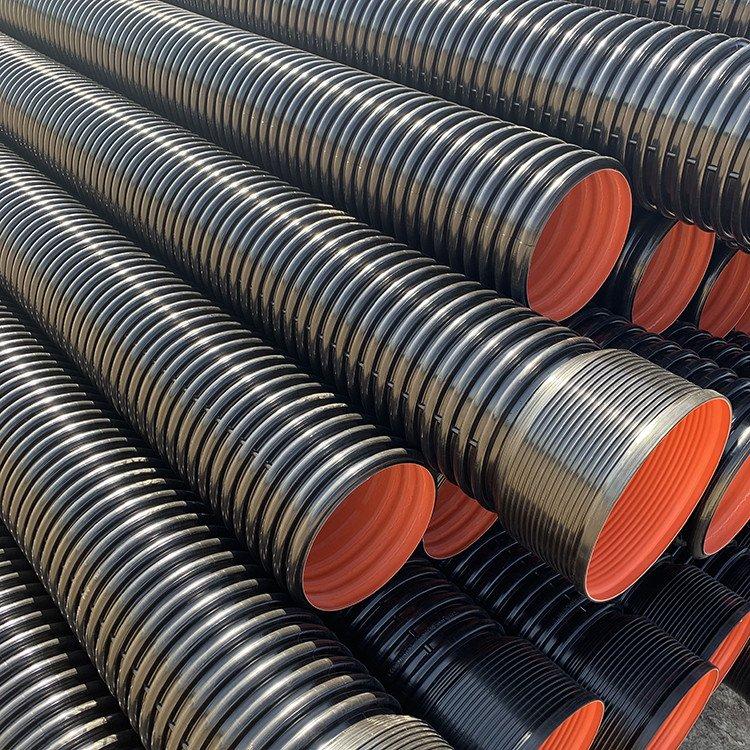
Performance & Engineering
The performance of HDPE couplings is governed by several engineering principles. Pressure rating, determined through hydrostatic pressure testing according to ISO 15874, is a primary consideration. Coupling strength is assessed through burst pressure and tensile strength testing, evaluating the joint’s ability to withstand internal pressure and external loads. Long-term hydrostatic strength (LTHS) is crucial for predicting service life under sustained pressure, typically calculated using empirical models based on temperature and material properties. Environmental resistance encompasses resistance to chemical attack, UV degradation, and slow crack growth (SCG). HDPE exhibits excellent resistance to most common acids, bases, and solvents, but susceptibility to oxidative degradation necessitates the inclusion of UV stabilizers in the resin formulation. Fatigue analysis is essential for applications involving cyclical loading, considering stress concentration at the weld joint. Finite Element Analysis (FEA) is increasingly employed to optimize coupling geometry and predict stress distribution under various loading conditions. Compliance with industry standards – such as AWWA C906 for potable water systems and ASTM F439 for gas distribution – mandates specific performance criteria and testing procedures. Maintaining proper joint alignment is critical; misalignment introduces bending stresses that can compromise joint integrity. Thermal expansion and contraction of HDPE must be accounted for in system design, employing expansion joints or flexible couplings to mitigate stress.
Technical Specifications
| Parameter | Typical Value (Electrofusion Coupling, SDR 17, 6-inch) | Test Standard | Units |
|---|---|---|---|
| Nominal Pipe Size | 6 | ASTM D2412 | inches |
| Standard Dimension Ratio (SDR) | 17 | ASTM D2412 | - |
| Pressure Rating (LTHS) | 160 | ISO 15874 | psi |
| Burst Pressure | 640 | ASTM D1597 | psi |
| Operating Temperature Range | -40 to 60 | ASTM D3350 | °C |
| UV Resistance | > 1000 hours (ASTM G154) | ASTM G154 | hours |
Failure Mode & Maintenance
HDPE coupling failures typically stem from several modes. Environmental Stress Cracking (ESC) is a common failure mechanism, particularly in the presence of detergents or aggressive chemicals. Slow Crack Growth (SCG) can occur over extended periods due to sustained tensile stress and minor flaws. Fatigue cracking arises from cyclical loading, leading to crack initiation and propagation at the weld joint. Joint separation can occur due to inadequate fusion, misalignment, or excessive external loads. Oxidation can degrade the HDPE material, reducing its mechanical properties. Maintenance involves regular visual inspections for cracks, leaks, and signs of deformation. Hydrostatic testing can be performed to verify joint integrity. Proper backfilling and support are crucial to prevent excessive stress on the couplings. For ESC and SCG prevention, using high-quality HDPE resin with adequate ESC resistance and avoiding contact with incompatible chemicals is essential. When repairing a damaged coupling, complete replacement is generally recommended over attempting a patch repair, as partial repairs often compromise long-term reliability. Periodic assessment of soil conditions and cathodic protection (if applicable) are vital to mitigate external corrosion influences.
Industry FAQ
Q: What is the impact of soil corrosivity on HDPE coupling performance?
A: While HDPE itself is corrosion-resistant, highly corrosive soil conditions can indirectly affect coupling performance. Corrosion of surrounding metallic components (e.g., tracing wires, nearby pipes) can induce stress and potential damage to the HDPE coupling. Additionally, changes in soil pH can accelerate ESC. Cathodic protection and proper soil stabilization are recommended in corrosive environments.
Q: How does temperature affect the long-term performance of electrofusion couplings?
A: Elevated temperatures reduce the LTHS of HDPE couplings. Increased temperature accelerates creep deformation and oxidative degradation. Derating factors, as specified in ISO 15874, must be applied to the pressure rating based on the operating temperature. Conversely, very low temperatures can increase brittleness.
Q: What are the key considerations for selecting the appropriate HDPE coupling for a specific application?
A: Key considerations include operating pressure, temperature, chemical compatibility, soil conditions, and the presence of cyclical loading. The coupling material should be compatible with the fluid being transported. The SDR should be chosen to provide adequate safety factors. Electrofusion couplings are generally preferred for critical applications requiring high joint integrity.
Q: What are the best practices for storing HDPE couplings prior to installation?
A: HDPE couplings should be stored in a cool, dry, and well-ventilated area, away from direct sunlight and heat sources. Protect them from physical damage and contamination. Avoid storing them on concrete floors without a protective barrier. Follow the manufacturer’s recommendations for storage temperature and humidity.
Q: How can I verify the quality of an electrofusion weld after installation?
A: Visual inspection for uniform weld beads and absence of defects is the initial step. Non-destructive testing (NDT) methods, such as ultrasonic testing, can be used to detect internal flaws. Hydrostatic testing is the most reliable method for verifying joint integrity, applying a test pressure exceeding the operating pressure.
Conclusion
HDPE couplings represent a robust and reliable joining solution for a wide range of piping applications. Their inherent corrosion resistance, lightweight properties, and ease of installation offer significant advantages over traditional metallic couplings. However, ensuring long-term performance necessitates careful material selection, adherence to established manufacturing and installation procedures, and diligent maintenance practices. Understanding the potential failure modes – ESC, SCG, fatigue cracking, and joint separation – is crucial for mitigating risks and maximizing service life.
Future advancements in HDPE coupling technology will likely focus on developing enhanced materials with improved ESC resistance and increased temperature capabilities. Integration of smart sensors for real-time monitoring of joint stress and temperature will enable proactive maintenance and prevent catastrophic failures. Continued refinement of FEA modeling techniques will optimize coupling designs for specific application requirements, further enhancing their performance and reliability.
-
DN25 HDPE Compression Fitting-HORON INTERNATIONAL|Reliable Irrigation Solutions
NewsFeb.11,2026
-
china pvc tubing Performance Analysis
News2026-06-10
-
china 1 2 ppr pipe Technical Analysis
News2026-06-10
-
china hdpe sewer pipe Performance Analysis
News2026-06-10
-
china dual wall corrugated pipe Performance Analysis
News2026-06-10
-
china pvc to hdpe coupling Performance Analysis
News2026-06-10
-
china purple pvc pipe Performance Analysis
News2026-06-09
-
china 15mm pvc pipe Performance Analysis
News2026-06-09
-
china ppr pipe 20mm price Performance Analysis
News2026-06-09
-
china hdpe pipe size chart Technical Specifications
News2026-06-09
-
china corrugated hdpe drain pipe Performance Analysis
News2026-06-09
-
china pvc pipe vs ppr pipe Performance Analysis
News2026-06-08
-
china irrigation hdpe pipe Performance Analysis
News2026-06-08
-
china hdpe pvc coupling Performance Analysis
News2026-06-08
-
china pvc pipe list Technical Analysis
News2026-06-08
-
china ppr water pipe suppliers Performance Analysis
News2026-06-08