

Feb . 11, 2026 00:01 Back to list
hdpe couplings factory Performance Engineering
Introduction
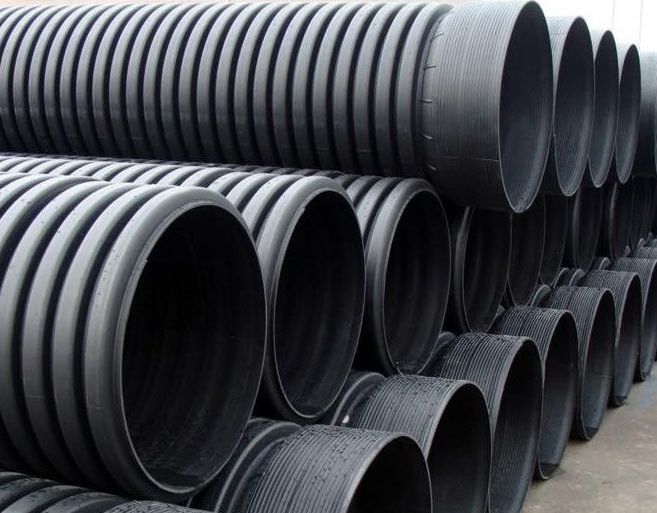
High-Density Polyethylene (HDPE) couplings are integral components in pipeline systems across diverse industries, including water distribution, gas transmission, industrial processing, and agricultural irrigation. They provide a reliable, corrosion-resistant, and cost-effective method for joining HDPE pipes. Positioned within the broader piping infrastructure supply chain, HDPE couplings represent a critical interface element, influencing system integrity and long-term performance. These couplings are distinct from metallic counterparts, offering advantages in chemical resistance and weight, albeit with different considerations regarding temperature limitations and mechanical strength. Core performance characteristics include pressure rating, leak-proof sealing, and resistance to environmental stress cracking (ESCR). The demand for HDPE couplings is driven by infrastructure development, replacement of aging systems, and the growing adoption of plastic piping solutions due to their lifecycle cost benefits.
Material Science & Manufacturing
HDPE couplings are predominantly manufactured from high-density polyethylene resin, a thermoplastic polymer produced from the polymerization of ethylene. Raw material properties are crucial; resin density (typically between 0.93 and 0.97 g/cm³), molecular weight distribution, and additive packages (stabilizers, UV inhibitors, carbon black for UV protection) significantly impact the final coupling's performance. Manufacturing processes commonly employed include injection molding and butt fusion. Injection molding is utilized for smaller diameter couplings and fittings, where the HDPE resin is heated, injected into a mold, and cooled to form the desired shape. Key parameters during injection molding include melt temperature, mold temperature, injection pressure, and cooling rate; deviations can lead to warping, sink marks, or internal stresses. Butt fusion, primarily for larger diameter couplings and connecting pipes directly, involves heating the joining surfaces of the pipe and coupling to a semi-molten state and then pressing them together. Precise temperature control (typically 130-180°C depending on resin grade and pipe size) and pressure application are essential to achieve a homogenous weld. Quality control during manufacturing includes dimensional checks, hydrostatic pressure testing, and ESCR testing to ensure adherence to industry standards. Chemical compatibility with conveyed fluids is also verified, avoiding exposure to strong oxidizing agents or solvents which can degrade the HDPE material. The crystalline structure of HDPE, influenced by cooling rates during molding and fusion, dictates its mechanical properties and resistance to creep.
Performance & Engineering
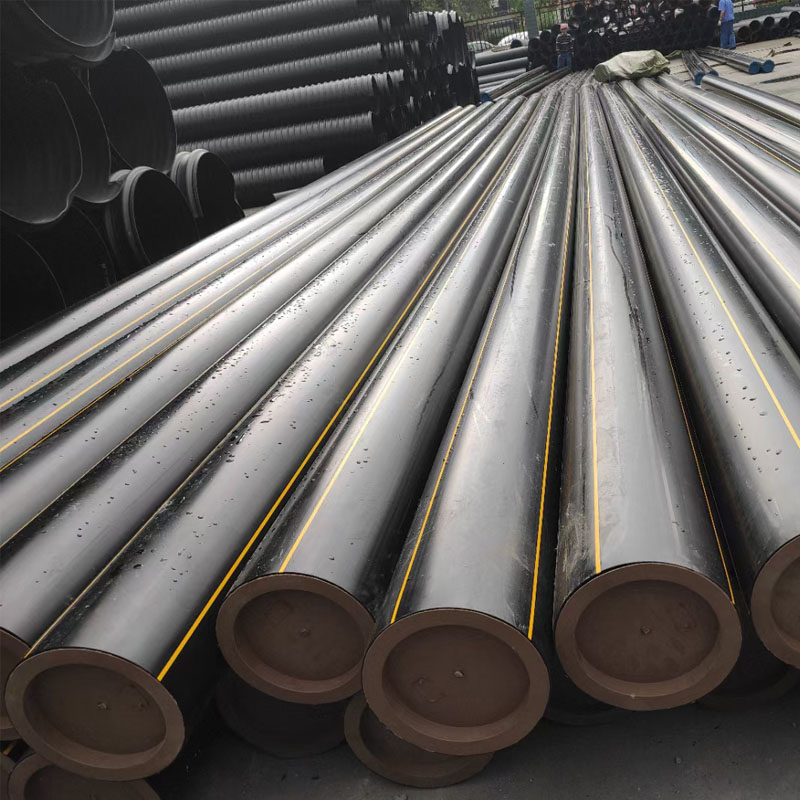
The performance of HDPE couplings is fundamentally governed by principles of stress analysis and fluid mechanics. Coupling design must withstand internal hydrostatic pressure, external loads (soil burial, traffic loads), and thermal stresses caused by temperature fluctuations. Force analysis considers hoop stress (resulting from internal pressure), longitudinal stress (from pressure and external forces), and bending stress (during installation or ground movement). HDPE’s relatively low modulus of elasticity necessitates careful consideration of creep, the tendency of the material to deform slowly under sustained load. Environmental resistance is critical; HDPE couplings exhibit excellent chemical resistance to acids, bases, and salts, but are susceptible to degradation from prolonged UV exposure and oxidative attack. UV stabilizers are therefore incorporated into the resin formulation. Compliance requirements dictate pressure ratings (typically ranging from PN6 to PN16 or higher, depending on coupling size and material grade) and adherence to relevant standards. Engineering considerations include selecting the appropriate coupling type (socket fusion, spigot end, flanged) based on application requirements, ensuring proper installation techniques (butt fusion parameters, socket insertion depth), and incorporating expansion loops or flexible joints to accommodate thermal expansion and contraction of the piping system. Leak-proof sealing relies on proper gasket selection (typically EPDM or NBR) and compression, ensuring a tight interface between the coupling and the pipe. Finite Element Analysis (FEA) is often employed during design to optimize coupling geometry and validate structural integrity.
Technical Specifications
| Parameter | Unit | Specification Range (Typical) | Test Standard |
|---|---|---|---|
| Nominal Pipe Size | mm | 20 - 630 | ISO 4427 |
| Pressure Rating (PN) | bar | 6 - 16 (Higher ratings available) | ISO 14236 |
| Material | - | HDPE (PE100, PE80) | ISO 4427 |
| Density | g/cm³ | 0.93 - 0.97 | ASTM D1505 |
| Environmental Stress Crack Resistance (ESCR) | Hours to Failure | > 1000 (F50) | ASTM D1694 |
| Hydrostatic Pressure Test | bar | ≥ 2.4 x Rated Pressure (for 5 minutes) | ISO 14236 |
Failure Mode & Maintenance
HDPE couplings, while durable, are susceptible to several failure modes. Environmental Stress Cracking (ESCR) is a primary concern, arising from the combined effects of stress (residual stress from manufacturing, external loads) and exposure to aggressive chemicals. Slow Crack Growth (SCG) is a related phenomenon, where cracks propagate slowly over time. Fatigue cracking can occur under cyclic loading conditions, particularly in buried pipelines subjected to traffic loads or ground movement. Oxidation can degrade the HDPE material, reducing its mechanical properties and increasing its susceptibility to cracking, especially at elevated temperatures. Joint failures can occur due to improper installation (insufficient fusion time, incorrect insertion depth, inadequate gasket compression), leading to leaks. Delamination can occur in multi-layer couplings or fittings. Maintenance strategies include regular visual inspections for cracks, leaks, or signs of deformation. Pressure testing can identify leaks or weaknesses in the system. For butt-fused joints, non-destructive testing methods like ultrasonic testing can assess weld quality. Proper burial depth and backfilling practices are crucial to protect couplings from mechanical damage and UV exposure. If a coupling fails, it should be replaced with a compatible component and the installation procedure meticulously followed. Preventative maintenance programs, including periodic inspections and cleaning, can extend the service life of HDPE couplings and minimize the risk of failures.
Industry FAQ
Q: What is the impact of temperature variations on HDPE coupling performance?
A: HDPE exhibits a relatively high coefficient of thermal expansion. Significant temperature fluctuations can induce stresses in the coupling and the connected pipe. Proper installation practices, including the use of expansion loops or flexible joints, are crucial to accommodate thermal movement. Operating temperatures should remain within the specified limits of the HDPE resin to prevent softening or embrittlement.
Q: How does the chemical composition of the conveyed fluid affect the longevity of an HDPE coupling?
A: While HDPE possesses excellent chemical resistance, prolonged exposure to strong oxidizing agents, concentrated acids, or certain solvents can cause degradation. Compatibility charts should be consulted to ensure the HDPE coupling is suitable for the intended application. Additives in the conveyed fluid, such as chlorine in water systems, can also contribute to degradation over time.
Q: What are the critical parameters to monitor during butt fusion of HDPE couplings?
A: Precise control of heating plate temperature, heating time, and fusion pressure are essential. The heating plate temperature must be optimized for the specific HDPE resin grade and pipe size. Insufficient heating can result in an incomplete fusion, while excessive heating can cause material degradation. Proper pressure application ensures adequate contact between the joining surfaces. A visual inspection of the weld bead is also critical.
Q: How can I identify potential Environmental Stress Cracking (ESCR) in an HDPE coupling?
A: ESCR often manifests as fine cracks, typically originating at stress concentrators (e.g., weld beads, sharp corners). Regular visual inspections are crucial. Look for crazing (a network of micro-cracks) or discoloration near stress points. If ESCR is suspected, a destructive test (e.g., slow bend test) may be necessary to confirm the diagnosis.
Q: What are the advantages of HDPE couplings over metallic couplings in corrosive environments?
A: HDPE couplings offer superior corrosion resistance compared to metallic couplings, particularly in applications involving aggressive chemicals or saline environments. They do not rust or corrode, eliminating the need for protective coatings or cathodic protection. This translates to lower maintenance costs and a longer service life, especially in harsh operating conditions.
Conclusion
HDPE couplings represent a vital connection technology in modern piping systems, offering a compelling combination of corrosion resistance, cost-effectiveness, and ease of installation. Understanding the underlying material science, manufacturing processes, and engineering principles governing their performance is essential for ensuring long-term reliability and system integrity. Careful consideration must be given to factors such as temperature variations, chemical compatibility, installation procedures, and potential failure modes to maximize their service life.
Future advancements in HDPE coupling technology will likely focus on developing higher-performance resins with enhanced ESCR and temperature resistance, as well as improving non-destructive testing methods for weld quality assessment. The continued adoption of smart piping systems incorporating sensors and data analytics will also drive the need for robust and reliable coupling solutions that can withstand the rigors of continuous monitoring and control.
-
DN25 HDPE Compression Fitting-HORON INTERNATIONAL|Reliable Irrigation Solutions
NewsFeb.11,2026
-
china pvc tubing Performance Analysis
News2026-06-10
-
china 1 2 ppr pipe Technical Analysis
News2026-06-10
-
china hdpe sewer pipe Performance Analysis
News2026-06-10
-
china dual wall corrugated pipe Performance Analysis
News2026-06-10
-
china pvc to hdpe coupling Performance Analysis
News2026-06-10
-
china purple pvc pipe Performance Analysis
News2026-06-09
-
china 15mm pvc pipe Performance Analysis
News2026-06-09
-
china ppr pipe 20mm price Performance Analysis
News2026-06-09
-
china hdpe pipe size chart Technical Specifications
News2026-06-09
-
china corrugated hdpe drain pipe Performance Analysis
News2026-06-09
-
china pvc pipe vs ppr pipe Performance Analysis
News2026-06-08
-
china irrigation hdpe pipe Performance Analysis
News2026-06-08
-
china hdpe pvc coupling Performance Analysis
News2026-06-08
-
china pvc pipe list Technical Analysis
News2026-06-08
-
china ppr water pipe suppliers Performance Analysis
News2026-06-08